Government advised to set up slurry register
Report recommends an organic fertiliser database, similar to the National Fertiliser Database
While the initial review focus of a working group was on sludges, it became apparent to the group that a wide range of other organic fertilisers is applied to land, and it was agreed to extend their review to include other organic fertilisers.

While the initial review focus of a working group was on sludges, it became apparent to the group that a wide range of other organic fertilisers is applied to land, and it was agreed to extend their review to include other organic fertilisers.

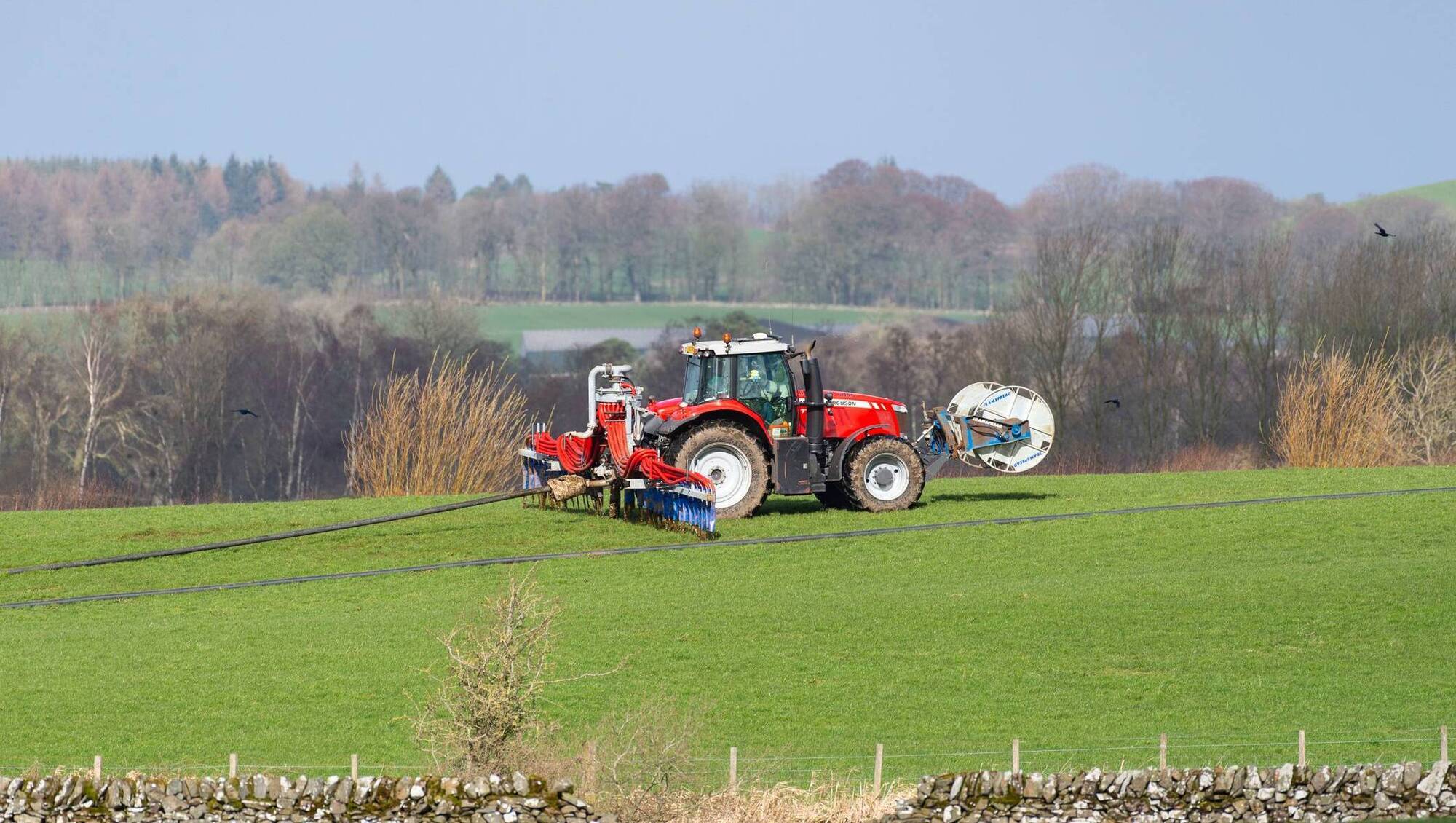
The Government has been advised to set up a slurry register, similar to the National Fertiliser Database already in place.

Since last year, farmers who want to purchase fertiliser must register on the database, which records all fertiliser movements. After the fertiliser spreading season, farmers must report their closing stocks of fertiliser. 

There are similar record-keeping requirements for agri-merchants, including every consignment of fertiliser going to a farmer.

Now, a report to the Government recommends it be used as a template for a wider organic fertiliser database.

This arises from the 2022–2025 Nitrates Action Programme published by the Departments of Local Government and Agriculture, which required a review of sludges and biosolids applied to land, to be carried out by the National Technical Implementation Group (NTIG), which oversees implementation of the River Basin Management Plan (RBMP).

While the initial review focus of an NTIG working group was on sludges, it became apparent to the group that a wide range of other organic fertilisers is applied to land, and it was agreed to extend their review to include other organic fertilisers.

Now, its report says local authorities have difficulty enforcing regulations for land-spreading sludges and organic fertilisers, due to "the lack of timely information sharing". Hence, the working group's recommendation to develop a national register and database for sludges, biosolids, and other organic fertilisers spread on farmland.

According to the report: "In the absence of a single national register for all land-spreading, there are gaps in chains of custody, which is problematic in terms of tracking loads being applied to lands from multiple sources, creating a risk of accumulation of contaminants, or a higher loss of nutrients locally. 

"The absence of a single database or formal process for data-sharing also creates potential for farms or individual fields to receive repeat or excessive loads from multiple sources, which could have a potential negative impact on water quality, and creates difficulties when responding to or investigating complaints. 

"The tracking and verification of movements requires simple and timely data-sharing amongst all relevant authorities. The need for a centralised organic fertiliser database was discussed by the working group. The new DAFM National Fertilisconer Database for tracking the movement of chemical fertilisers has proven to be successful and could act as a template for a wider organic fertiliser database."A national register and database should "include all steps in the chain, including primary producers, contractors, and importing farms".

"It was agreed the DAFM would be best placed to develop this national register/database". But any solutions for the tracking and verification of land spreading "must not be overly burdensome".

The NTIG working group also recommended training for local authority inspections should include reviewing and approving of Nutrient Management Plans. 

"It is imperative that local authorities are adequately resourced to undertake inspections and monitoring of land-spreading locations. An inspection regime to verify land-spreading locations should be incorporated into the local authority and DAFM GAP inspections".

According to the report, of all the nitrogen that goes onto land, 57% comes from livestock manure, 38% from chemical fertiliser, and 5% from sewage and other sludges.

The report says the new 2025 four-day notification period for movement of farmyard/livestock manures and slurries between farm holdings needs to be improved, for sharing of data with local authorities regarding the generator, contractor, and the receiving farm, and regarding compliance with Good Agricultural Practice.

Recommendations were also made for the sewage and other sludges which supply 5% of the nitrogen that goes onto land. The main forms include sewage sludge from urban wastewater treatment plants, sludge from domestic wastewater treatment systems, pig slurry and poultry litter from EPA-licenced installations, anaerobic digestate, industrial wastewater sludges, dissolved air flotation sludge, paunch (organic waste from meat processing), manure from bedding, lairage slurry, dairy sludges, sludge from fish processors, spent mushroom compost, food waste compost, wash water, and contaminated milk.

Already, farmers must keep a record of sludges, biosolids and other organic fertilisers imported onto their farms.

Their use is controlled by local authorities through registers, inspection, and enforcement.

Use of sewage-derived products is prohibited on Bord Bia Sustainable Beef & Lamb Assurance Scheme certified farms. However, local authorities say there is no way for them to check if a farm is Bord Bia-approved. Now, the NTIG working group has recommended closer contact between local authority environment sections with Uisce Éireann, the EPA, and Bord Bia.

The Irish Grain Assurance Scheme Code of Practice also excludes grain grown on land treated with organic municipal and industrial material/sludges.

The NTIG working group said recycling of sludges to land could be economically favourable for circularity of waste streams. But they may contain contaminants such as metals, pathogens, chemicals (including pesticides), microplastics and medicinal residues. 

Land spreading concentrated on a small number of farms may pose a more significant risk to individual water bodies. A national assessment of sewage sludge on farm was suggested, in the context of hazardous substances.

It was noted some EU member states have more stringent national controls, and they dispose of sewage sludge via alternative routes, such as incineration or landfill.

In Ireland, Uisce Éireann relies solely on land-spreading for disposal of biosolids from its plants. With volumes projected to increase, and only a small number of registered farms available, there is increasing pressure on the land bank, storage facilities, and receiving catchments. 

The impact on sludge storage capacity must be considered, because timing of land spreading is critical in order to minimise nutrient losses to water, with land-spreading on tillage land in the autumn presenting a higher risk.

The working group recommended farmer training on use of sludge and other organic fertilisers, and that regulation ensure farmers receive only sludge that is beneficial to agriculture, with the nutrients stated, which does not exceed acceptable limits of contaminants or pathogens.

The NTIG Sludges, Biosolids and other Organic Fertilisers working group had representatives from the Environmental Protection Agency; the Department of Agriculture; Department of Environment; Department of Local Government; Uisce Éireann; Local Authority Waters Programme; Food Safety Authority of Ireland; the Department of Agriculture, Environment and Rural Affairs in Northern Ireland; and the county councils of Kildare, Louth, Meath, Monaghan, and Roscommon.

x

More in this section

Farming

Newsletter

Stay ahead of the season. Sign up for insights, expert advice and stories shaping Irish agriculture.

Cookie Policy Privacy Policy Brand Safety FAQ Help Contact Us Terms and Conditions

© Examiner Echo Group Limited