From flower to fortune: How one Italian farmer turns 1kg of saffron into half his income
Discover how Alessandro Mazzouli’s dedication to saffron farming in Umbria sustains centuries-old traditions and delivers priceless returns
From flower to fortune: How one Italian farmer turns 1kg of saffron into half his income

Saffron farming in Italy.
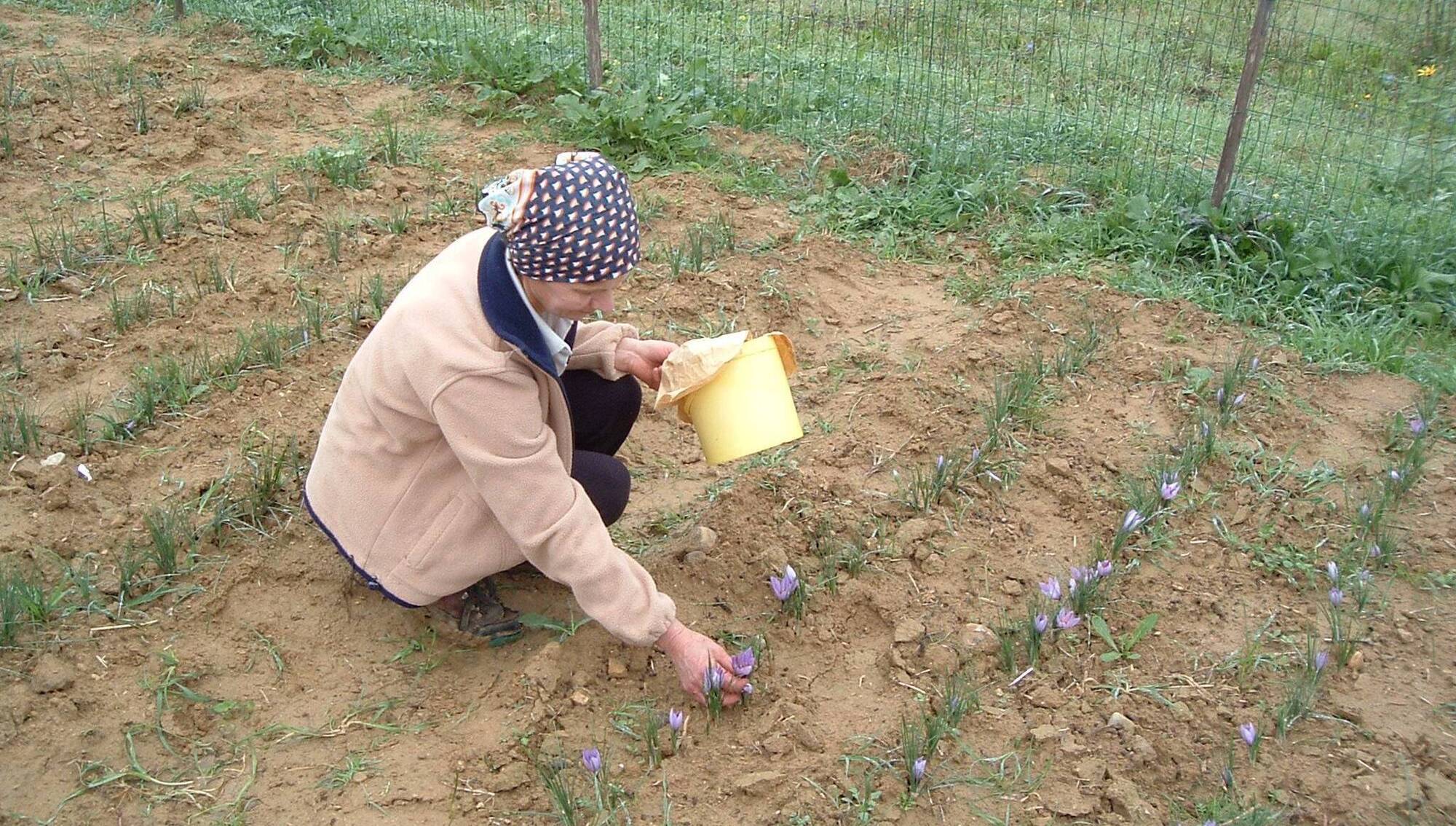
Italian farmer Alessandro Mazzuoli might only produce just 1,000g of his star crop a year, but the revenue it brings in makes up around half of his income.

Mr Mazzouli, who farms in Umbria, is the president of the Consortium for the Protection and Promotion of il Croco di Pietro Perugino, which takes its name from the famous Italian painter born in the nearby city Città della Pieve in 1446.

Mr Mazzouli was also a co-founder of the Association of Italian Saffron Producers, which operates at a national level.

He explained saffron production in the city can be traced back as far as the Middle Ages, with some evidence it might have even been cultivated in Italy before the fall of the Roman Empire. Although, in early times it was mainly used for its pigment properties as a dye for clothing, with its reputation as a culinary delicacy only following in more recently.

Today, there are around 50 growers in Umbria, but there are other growers in other parts of Italy, particularly Lombardy, Sicily, and Sardinia.

Mr Mazzouli’s 50-hectare organic farm includes five hectares of vineyards, 500 holly tree plants, olive trees, and cereal crops.

Saffron farming in Italy.

He started growing the crop as a pastime for his wife and children in 2002.

“But soon, it became one of the most important crops produced on my farm,” he explained.

In the years which followed, he has since devoted much of his life to promoting the crop, giving lectures, developing technical innovations in growing the bulbs, and has even built a museum dedicated to all things saffron.

His holding produces around 1,000g of saffron a
year on a 3,000sq m plot, rotated in a different area of the farm each year to avoid the build-up of fungal diseases in the soil, which is one of the biggest challenges for growers.

“It’s important to change the production area every year because the bulbs grow better in virgin soil,” he explained.

“In Iran, they will leave them in the same place for five to six years. It means less work, but the flowers are smaller, and the stigmas are smaller, too.”

Yields can also vary from year to year.

“Sometimes it’s slightly less, others slightly more. Last year, production was down because the climate is changing,” he explained.

“It’s a little part of my farm, but it’s 50% of my income. It’s a crop so precious, it’s not counted in kilos, but instead in grams.

Mr Mazzouli said that while you might see it cheaper in a supermarket, it’s usually not the “true saffron”, not in flower, is around €40/g.

The price has remained the same for the last 10 years. But of course, with a premium like this, fraud has become a major challenge for producers.

“It’s a big problem, particularly with the powdered form, where other yellow plants are often ground up and added,” he said.

“There is nothing we can do about it. It’s better to buy stigmas because then you know what you are getting.

“But in North Africa, the markets will sell another type of plant that is visually very similar to saffron. The word for saffron in Arabic means ‘yellow’. Sometimes, people will tell me they have bought one kilo of saffron for €10, but that is impossible for it to actually be saffron.”

Through the consortium, producers have come up with innovative packaging to make saffron more accessible to the public. All the producers in the consortium use this same packaging, and the only change is the name of the producer.

These include a glass vial containing a quarter of a gram, and a pack of five sachets each containing a tenth of a gram in each — the right amount to cook for four people — along with a recipe from Italian TV chef Giorgio Barchiesi.

“We don’t put 20g, 30g in the vial, because it is too much. So we sell a quarter of a gram —that’s enough for eight to 10 dishes because it’s very strong. You only need a little bit of saffron,” Mr Mazzouli said.

“The boxes each contain
a tenth of a gram because
that is the right amount to cook for four people. It makes it easier to use. People normally don’t know how to use saffron because they aren’t using it frequently. Customers like this one the most. We sell between 2,000 and 3,000 of these packs a year.

“If you don’t make nice packaging and speak with people about how to use it, it’s difficult to get that €40 price, so the consortium helps us all to get that premium price.”

Labour intensive

There are a lot of different kinds of crocus, but only
one produces spice. Mazzouli uses the offspring from the same bulbs he bought 25 years ago.

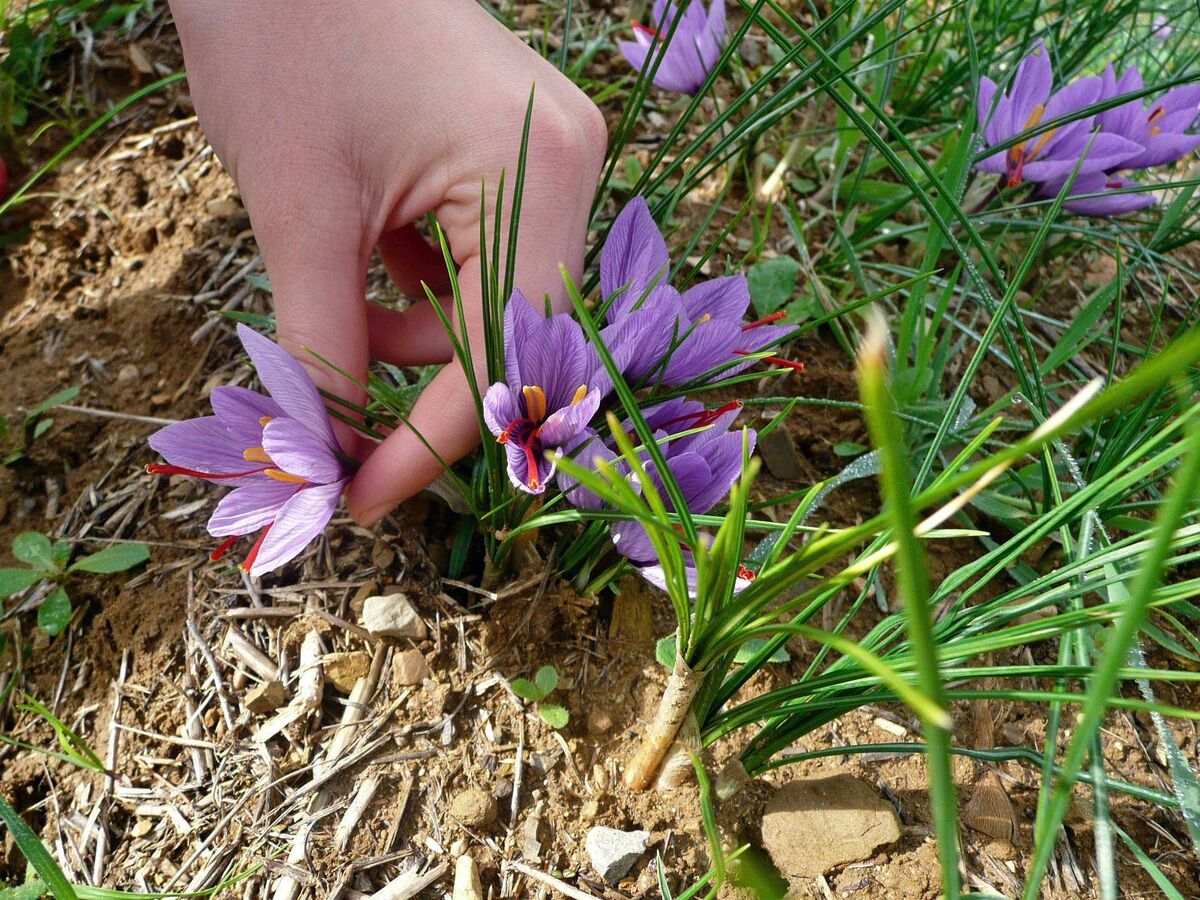
“We plant the bulbs in August. And then in October, we harvest the flower,” he explained. “We have to pick the flowers every morning because they don’t all flower together.

“Some days, you might pick 100 flowers; the day after, it might be 2,000 flowers. The day after, 5,000.”

It might seem like a strange way to break up the job, but growers have little choice when harvesting takes place as soon as the flowers appear.

They must pick the flowers in the morning when the flowers are still closed because the wind and rain can damage the precious stigmas. Weather and growth stages dictate timing and progress.

All the work is done by hand, and it’s a big job.

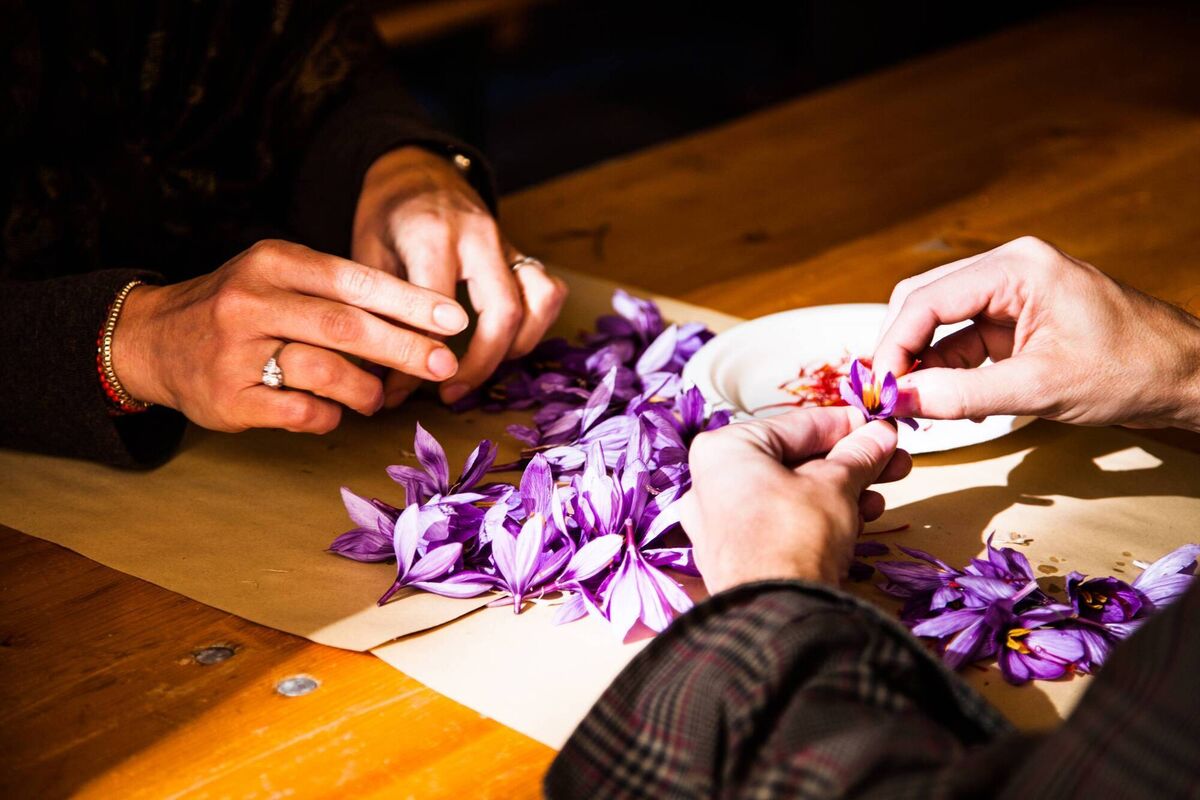
“Sometimes, we have to pick up 20,000 flowers. We pick in the morning, and in the afternoon we have to clean. In one hour, one person can clean 40-100 flowers, but not more,” he said.

It’s a process which involves opening the flower and picking out the stigmas with tiny tweezers. Employs up to six people to help with.

“This must all be done in the same day we harvest, said. “We can’t wait because the quality will go down.

“If you don’t have a passion, you can’t produce saffron,” he said.

“It’s a lot of work. In 20 days, we have to pick all 100,000 flowers, so every day we have to work from early in the morning till late in the night and then begin again.

“Sometimes I go to the field in the morning, and I hope there are no flowers,” he laughs.

More in this section

Farming

Newsletter

Keep up-to-date with all the latest developments in Farming with our weekly newsletter.

Cookie Policy Privacy Policy Brand Safety FAQ Help Contact Us Terms and Conditions

© Examiner Echo Group Limited