Could you be the most sustainable grassland farmer in Ireland?
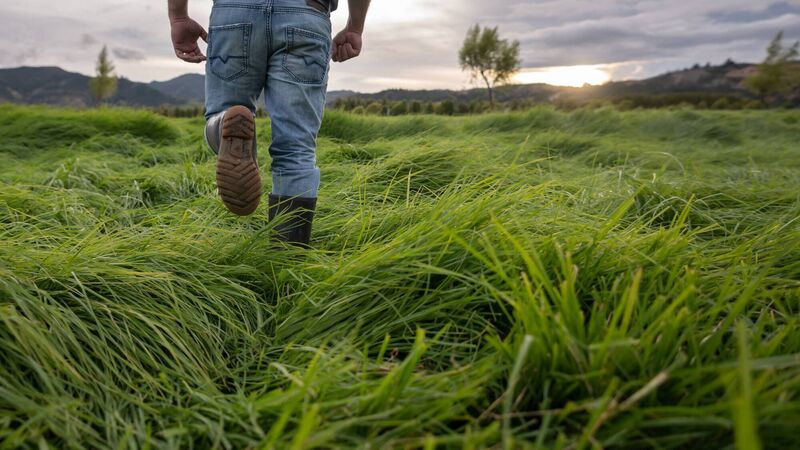
This is the eighth year of the competition, and the organisers are looking for farmers who are growing and utilising high levels of grass in a sustainable way.
The most sustainable grassland farmers in Ireland are being sought out.
The Sustainable Grassland Farmer of the Year competition for 2024 is open for entries.
This is the eighth year of the competition, and the organisers are looking for farmers who are growing and utilising high levels of grass in a sustainable way.
For 2024, the competition has a number of categories with an overall prize fund of €35,000. Seven prizes will be awarded, including in nutrient management and use efficiency, organic farming, and young farmer categories.
The closing date for entries is Friday, September 6.
Launching this year's competition, Agriculture Minister Charlie McConalogue said that grass is a "valuable asset, that gives our farmers a natural advantage over our international counterparts".
"Earlier this year, I had the pleasure of seeing the first Irish Grass Fed Beef with Protected Geographical Indication status being placed on supermarket shelves," Mr McConalogue said.
"This EU PGI quality scheme recognises the distinctive qualities and characteristics of Irish Grass Fed Beef and highlights its place of origin and our unique grass-based farming system.
"It’s important that we maximise the efficiencies of our grass-based systems to make them more profitable and environmentally sustainable."
Head of the Teagasc Grass10 programme John Maher added that grass is crucial to "sustainable livestock systems both in terms of economic and environmental sustainability".
"The Grass10 campaign has shown how better grassland management and utilisation has not only improved profitability on farms, but also helped to reduce greenhouse gas and ammonia emissions," Mr Maher said.
"More and more farmers are using protected urea fertiliser, recycling the nutrients in slurry through the use of low emission slurry spreading equipment, and incorporating white clover, red clover, and multispecies swards to reduce their use of chemical nitrogen."