Calves galore and making a splash into spring for the McCarthys
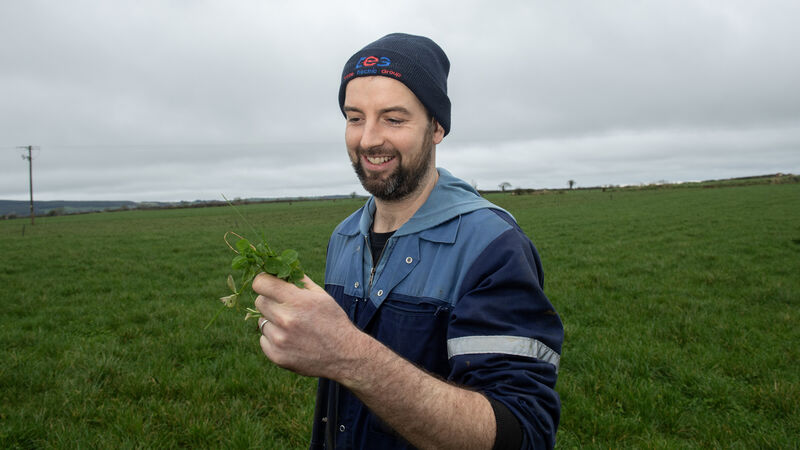
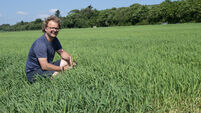
Dairy farmer Alex McCarthy says he plans to increase the area of clover swards his farm in Feenagh, Co Limerick, this year. Picture: Dan Linehan
Farming is full of challenges and opportunities alike. February thus far has definitely lived up to this. With the excitement of newborn calves on the farm and getting back into the routine of milking and cows being outdoors, grazing again has been very enjoyable. The weather, however, has made grazing tricky.
We are lucky that our milking platform is mainly free-draining soils, so this allows us to continue to get grass into the cows on a daily basis. We have been using on-off grazing for the past few weeks. Over the years, we have seen that grazed grass is a huge driver of profitability.
Cows are milked at 7am and left out to grass for as many hours as possible. Evening milking takes place at 4pm, and if the conditions allow, cows are let out to grass for a further few hours and brought in at 8pm when doing the final check of the cubicle house for the night.
In other years, we would have had the cows full-time at this stage, but you have to take what you get and make the most of the opportunities to graze when they present themselves.
As of February 20, we had over 20% grazed. Currently, we are following the cows with 2,000 gallons of slurry to the acre. We have not applied any chemical fertilizer yet for 2024.
We have purchased some protected urea and 18-6-12 for the year ahead. It is important to have it ready for when the opportunity presents itself. Good grazing infrastructure is key to getting early spring grazing complete. We have multiple access points to paddocks with numerous gap handles for the challenging paddocks. The location of water troughs is also important for when we strip graze and put up back fences.
Over the next couple of weeks, we will be completing our bull selection. We have used sexed semen over the past number of years and are very happy with the results. We plan to use up to 70 straws this year.
We are also planning some reseeding again this year. We will be using a grass and white clover seed mixture across the 20 acres we are hoping to complete.
We are very happy with the progress we have made on the farm over the past number of years in relation to establishing clover and maintaining it with reduced chemical N on some paddocks and no chemical N on other paddocks. They receive slurry and parlour washings which provide organic N.
We work closely with our local Teagasc Dairy, Agricultural Sustainability Support and Advisory Programme (ASSAP), and Signpost advisors. We meet our dairy advisor, Deirbhíle Browne, every month for group meetings and organise farm visits and consultations with her during the year. Our Signpost and climate advisor in Limerick is Tom O’Connor.
He has called out to us in 2023, and he put a plan together with us on how we can reduce our carbon footprint further. We hope to meet Tom again this year and check our progress is moving in the right direction. Padraig Fitzgerald is our ASSAP advisor in Limerick. We meet with Padraig a number of times each year.
In August 2022, we created a settlement pond and planted trees around it to act as a buffer zone. The tree types planted included birch and hazel, and we are looking forward to seeing how the area establishes over the next year.
Water samples will be taken from the pond and analysed at several intervals. This pond was located in a wetter area of the farm, and it is hoped it will help trap nutrients that would have otherwise entered the watercourse located at the bottom of the field.
Another focus of ours for the early spring this year is somatic cell count. Last year, our average SCC was 116. In February 2023, our SCC was 204, with it being 99 in March. We are working hard this spring to keep it down as we achieved 143 of a SCC in February 2022.
Some of the practices we use include having a fresh cow group and regular changing of gloves. When cows are indoors due to poor weather, we would pre and post milking teat spray if necessary.
We had our first milk recording of the year on February 19. Even though all our cows aren’t calved yet, we find it very beneficial to record early to assess how the dry period went. As we are using selective dry cow therapy it’s very important for us to be able to act early if we have any issues after the dry period.
As the evenings get brighter, we look forward to the cows getting out to grass full-time. It’s refreshing to see the daffodils blooming around the farm and the new life beginning once again.
- Alex McCarthy farms alongside his mother and father, Mary Ita and Michael, in Feenagh, Co Limerick, and is a Dairy Signpost Demonstration Farmer on the Teagasc Kerry Agribusiness Joint Programme.