Producers question their future in 'volatile' egg industry
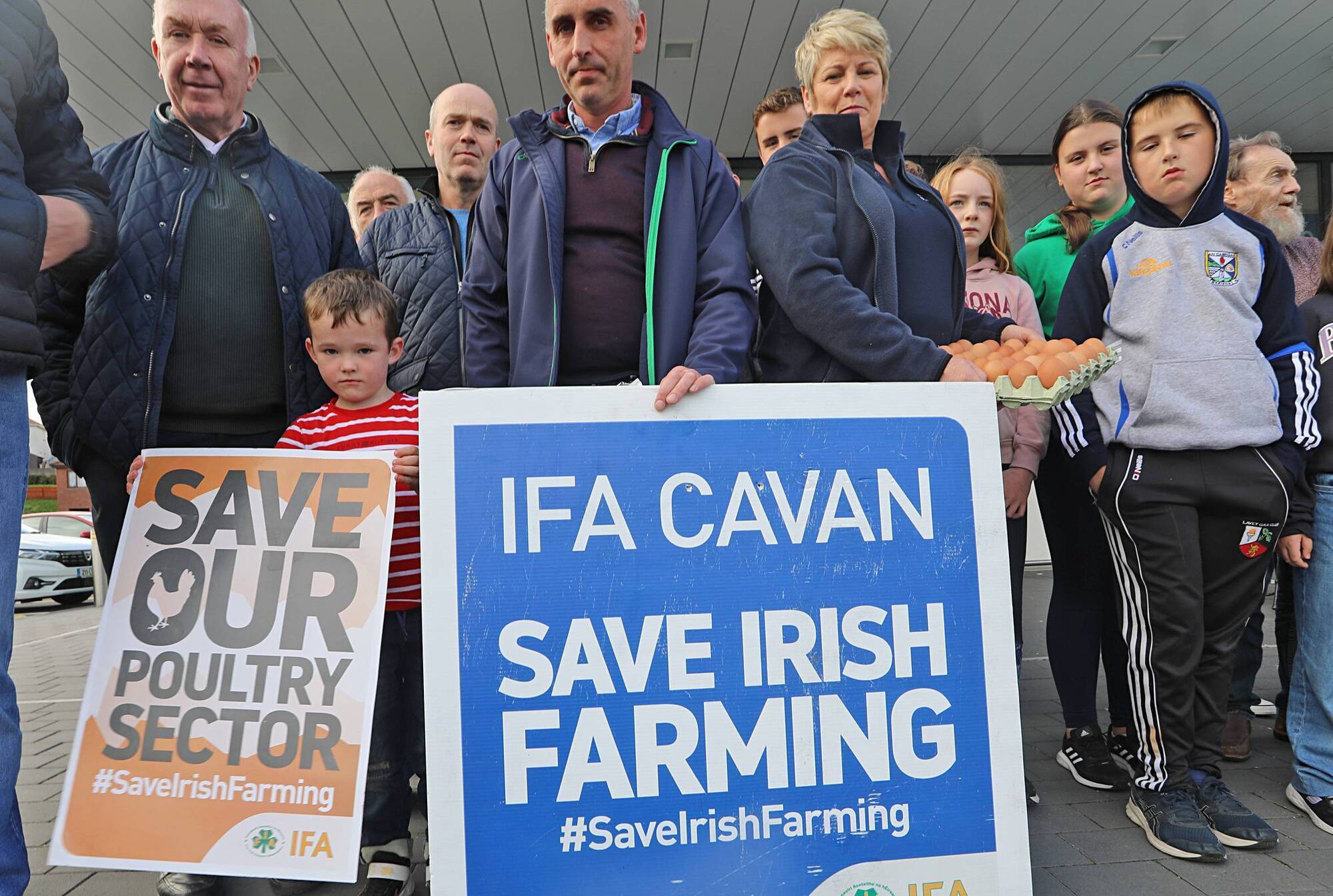
Brendan Soden (centre), vice chairman of the Irish Farmersâ Association's poultry committee during protests in 2022 targeting retailers over the price paid for eggs. Picture: Lorraine Teevan
The poultry industry has been âtoo volatileâ in the last couple of years with producers questioning their futures, as they are just about âkeeping the bills paid on a very small marginâ.Â
Farmers have been extremely exposed to high input costs, poor returns, and the threat of disease to their flocks.
Egg producers had entered 2023 in a "very bad situation", according to Brendan Soden, vice chairman of the Irish Farmersâ Association's poultry committee.
This followed after events in 2022 where farmers targeted retailers as part of protests, blocking the entrance for deliveries, leading to shop shelves in Co Cavan being empty of fresh produce for several days.Â
Mr Soden said at the time that farmers were looking for 2c more per egg to be paid back to producers â otherwise, the supply of eggs would be in jeopardy.
According to the IFA, major players have met producers' demands in the past year, however, one packer continues to be âlagging behind others when it comes to priceâ and producers are urging for this increase that equates to 3c per dozen to be passed back.
âAt a time when retail, processing, and wholesale markets are flourishing, returning an additional 3c per dozen (âŹ0.0025 per egg) to producers should be a simple task, especially since it has already been secured from retailers,â IFA poultry chairman Nigel Sweetnam has said this week.
Brendan Soden told the that overall, there has been a recognition by most packers and retailers that there is a âneed for some sort of stabilisation of the price paid to producersâ.
What producers have been seeking for the past two years is ânot a big ask, weâre getting into very small money at this stage - I donât think it would matter a lot to them but it makes a big difference to the farmerâ, according to Mr Soden.
âMargins will still be tight, weâre surviving â keeping the bills paid. Thatâs a big improvement from two years ago when the bills couldnât be paid,â he said.
âIf we had to take the UKâs attitude and close the doors, maybe weâd have been better off today when you see what the UK prices are running at - but we decided weâll keep going.
âThatâs the Irish attitude to not give up and we kept at it and slowly [the increase] came in dribs and drabs to a point where we just have a very small margin - but enough to keep things going.âÂ
It is estimated that producers get less than âŹ1.50 per dozen of eggs.
Mr Soden said that egg supplies are âtight at the minuteâ, and producers have exited the sector.
The age profile of farmers is a big factor, Mr Soden said. Existing farmers are finding it too expensive to put money into improving their infrastructure, and the sector is âtoo volatile for the last couple of yearsâ to expect young people to be attracted to it. Producers are also struggling to source labour.
Securing the future of the sector depends largely âon the attitude of the retailers and the packers, whether they want to see us continue or notâ, Mr Soden said.
âYou have to make a certain income to survive,â he continued.
âEverything has got so expensive and it takes so much money to run a house and to keep things going. Everybody has so much coming in their front door that has to be paid for now, so you have to pick whatâs going to leave you with a sustainable living and whatâs going to give a quality of life.âÂ
When it comes to inputs, ânothing really has come back yetâ.
The haulage costs of manure disposal and labour costs have increased, along with parts and maintenance having âgone through the roofâ too.
The majority of eggs produced here are for the domestic market.
Exporting eggs âis something we had looked intoâ, so that producers could sell their eggs where higher returns are being paid, according to Mr Soden.
âThe UK market is a lot better at the minute, but we just havenât gone to that extent, weâre hoping we wouldnât have to go to them lengths to keep it going,â Mr Soden said.
Producers are âkeeping the bills paid on a very small marginâ, the vice chairman said, but overall, while challenges remain and producers will continue to seek higher prices, the outlook for the sector is âmore positive than two years agoâ.
The IFA remains adamant that farmers will not tolerate any reduction in the margin they receive if retail price wars intensify.
Mr Soden said that he does not âmind the retailer taking down the price for customers as long as they donât take down the price for the farmerâ.
âTheyâre quite entitled to take it out of their margin if they want, but not to take it out of mine,â he said.
Mr Soden went as far as to thank consumers for their support for Irish eggs in recent years despite them costing more on the shelves.
âTheyâre buying as much Irish as they ever were. Itâs great to see that thereâs such support for farmers,â he added.
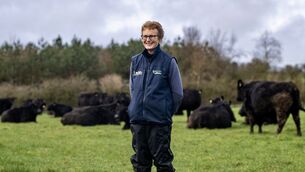
Garret Bannon in Bawnboy, Co Cavan, keeps cattle alongside poultry, with 20,000 free range laying hens.
He has been in poultry since 2010 when he built his first shed for it.
He was part-time farming at the time, and in 2013 he expanded and went into it full-time, and built a second shed in 2020.
Prior to supplying his current packer, Mr Bannon said that from 2020, it had been âdownhill ever since unfortunatelyâ.
âItâs been horrendous to the point I felt like I built my own prison,â he said.
âUnfortunately we had no protection out there, so hopefully the food regulator can help in future.âÂ
Producers feel they are in a very precarious situation with a lack of âsecurityâ around contracts and prices, according to Mr Bannon.Â
He is finding that inputs are âstill going up unfortunatelyâ, and if farmers are in a position of making money, they âreinvest itâ.Â
The poultry industry in Ireland is âin a state of limboâ according to Mr Bannon.
âThere is expansion needed, caged egg is being phased out, I donât know where the reinvestment is going to come from,â he said.
âI donât see a long-term future in poultry for a lot of people.âÂ
As environmental regulation continues to come from Europe, Mr Bannon said that âweâd all love to be sustainable, but sustainability starts with a fair priceâ.
âIf I could afford it Iâd have solar PV panels on my roof, Iâll plant loads of trees, but if you canât financially sustain that then you canât do that.â He believes his own business âwill survive â but with no money to reinvestâ going forward.
âI have a shed 12 years of age, it needs reinvestment. I am not going to take a loan out to reinvest without some security,â he said.
âI have been down that road before, I want it that if things go south again, I can just shut up the sheds if needs be.
âI have no confidence in industry.âÂ
With milk for example, âno matter how badâ the price gets, there is intervention Mr Bannon said, âthereâs always some sort of mechanismâ and support to ensure supply continues.
However, in the poultry sector, the same âwillingnessâ doesnât exist. He is urging for that to change, and for industry and Government to support producers when they need it.Â
âWeâre not like any other product - the product only has to be collected and graded, run through a machine and put into a packet," Mr Bannon continued.
âItâs a stable, high-quality protein with not a huge amount of manufacturing required - thereâs no reason why thereâs no more in the margin for everybody.âÂ
The recent increases passed on to the producers have helped and "allowed us to pay our bills", but âwe were looking for that two years ago - two years ago that would have made a huge difference, we, unfortunately, need more to cover costs nowâ.