Hen Harrier Threat Response Plan needs 'long-standing and tangible' farmer supports
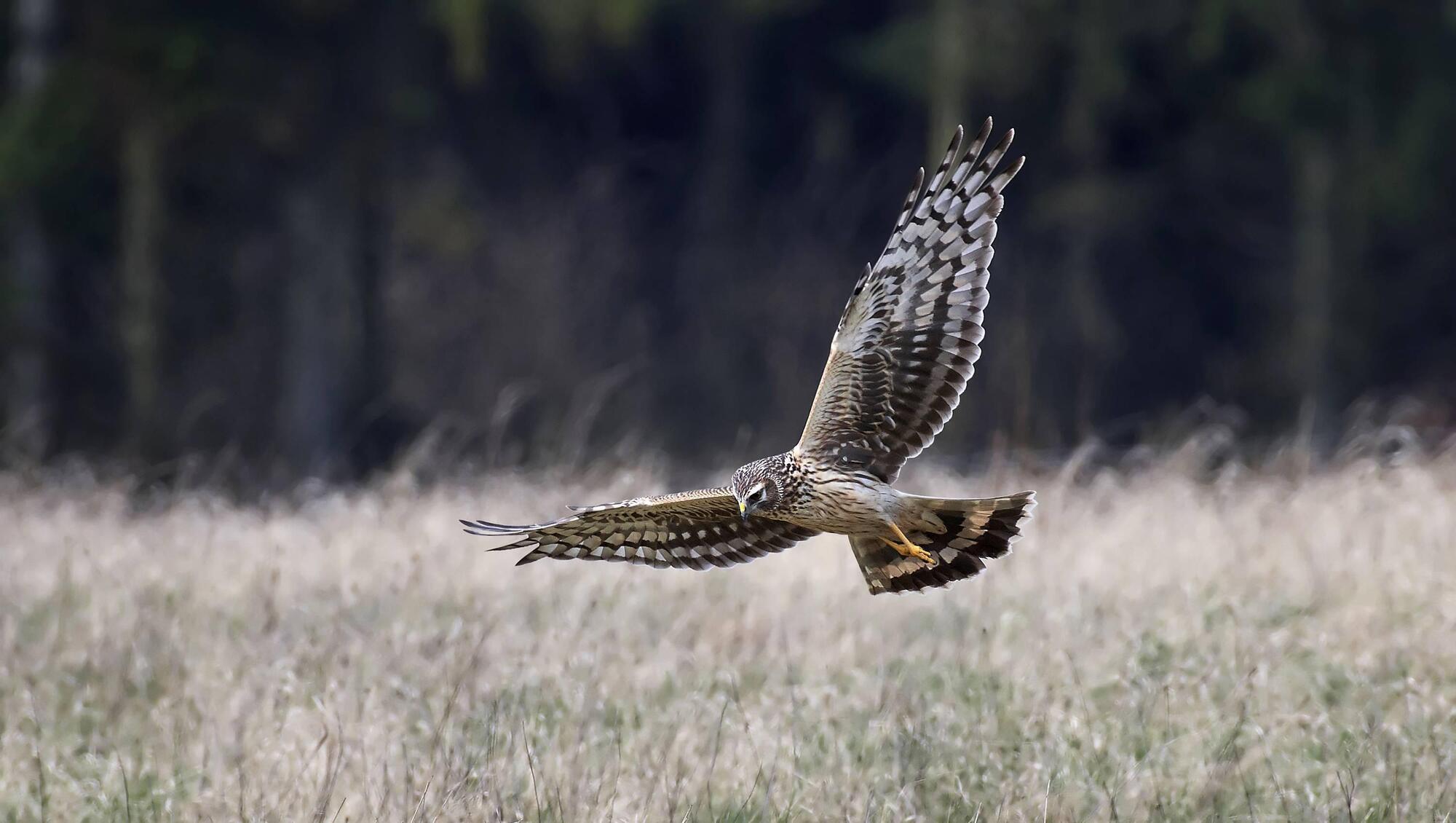
Recent national surveys show that the hen harrier is declining in both numbers and in range.
More "targeted, long-standing and tangible supports" both advisory and financial for farmers are needed in the Hen Harrier Threat Response Plan.
A public consultation on the draft plan opened in mid-January and closes later today, February 20.
The draft plan identifies actions to address and reverse the key threats and pressures on the bird, arising from the agricultural, forestry, and wind energy development sectors, particularly within Hen Harrier Special Protection Areas (SPA).
The hen harrier is a territorial ground-nesting bird of prey that has seen significant declines in recent years. It typically breeds in open upland bog and heather moorland, and associated habitats.
Irish Farmers' Association Ulster / North Leinster regional chairman and Special Areas of Conservation (SAC) project team chairman Frank Brady has said that the "key role and preservation efforts" that farmers in hen harrier areas play in maintaining and enhancing the habitats "needs to be better supported".
"Initiatives must be given time too to develop and yield tangible results," Mr Brady said.
"Farmers/foresters cannot be less well off from their efforts to preserve the hen harrier. Under no heading can there be any further designation of lands, or restrictions placed on SAC / non-SAC lands."
Mr Brady said that designations "slash land values and increase the management costs due to higher environmental standards, which decrease farmers’ flexibility with regards to the management of the land".
"Existing supports are wholly inadequate and do not address these fundamental issues. Farmers need permanent payments for permanent designations and no additional lands should be designated until this is rectified," Mr Brady said.
IFA farm forestry chairman Jason Fleming added that there needs to be acceptance that forest management practices including afforestation must be "compatible with hen harrier conservation when managed at a landscape level".
"The restrictions on planting and forest management activity within SPAs and non-designated important areas need to be reviewed as they are currently unworkable on some sites," Mr Fleming said.
"National annual surveys need to be undertaken to provide more accurate conservation information to minimise disturbance to both hen harriers and forest operations."
Minister of State for Nature, Heritage and Electoral Reform Malcolm Noonan said that the hen harrier has been "struggling to survive in Irish landscapes".
"Numbers are down to somewhere between 85 and 106 breeding pairs," Mr Noonan said.
"This draft plan, which is the result of considerable effort by many partners and stakeholders over many years, is a very welcome step towards reversing its decline."
Recent national surveys show that the hen harrier is declining in both numbers and in range.
In 2015, the national survey for the species estimated that there were between 108-157 breeding pairs in the country, indicating a decline of 34% since the first national survey in 1998-2000.
Preliminary results from the most recent survey in 2022 illustrate further declines in both numbers and in the species’ range in the countryside.