Irish potato growers caught between drought, soaring costs and volatile prices
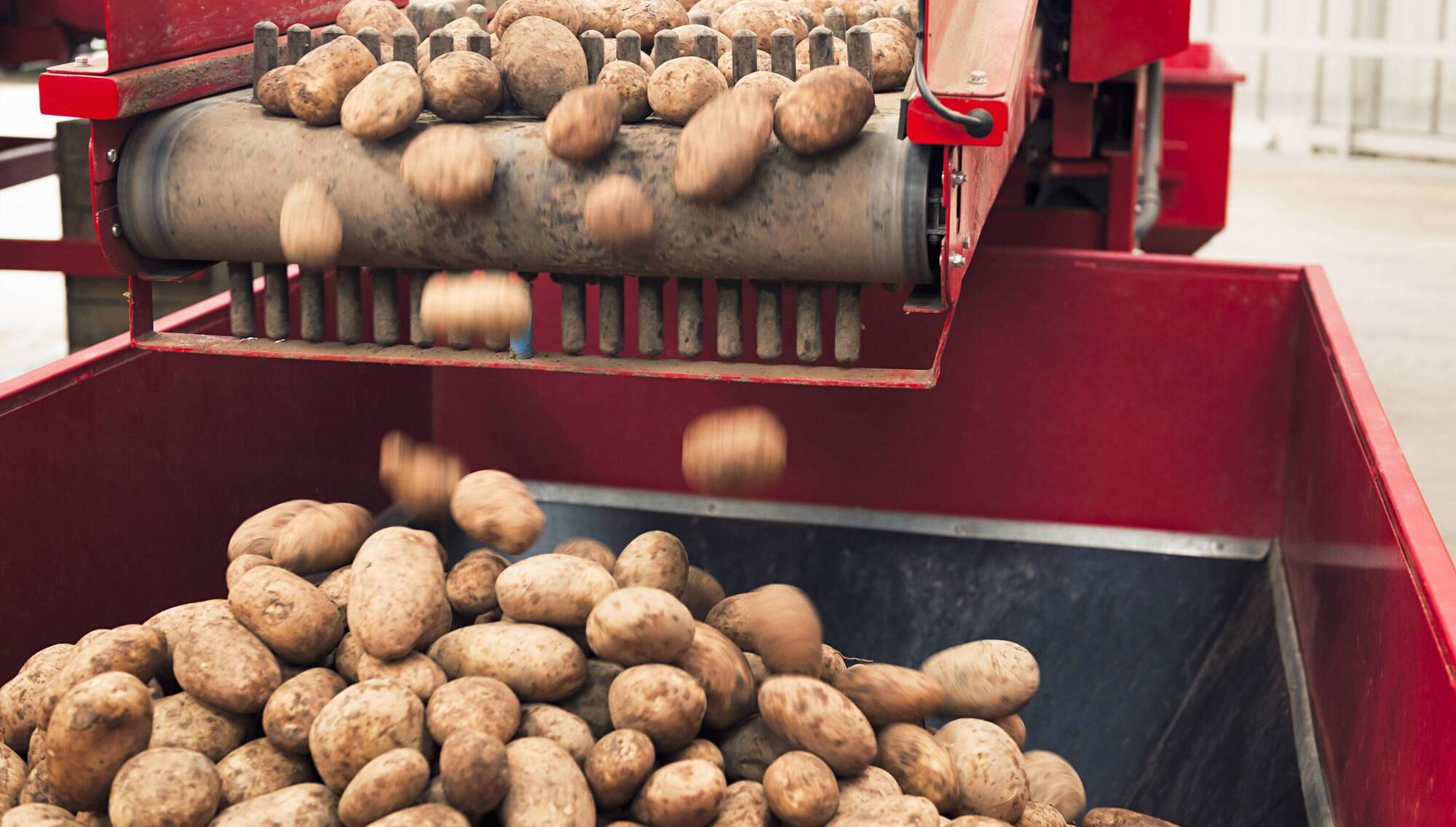
There is a need to switch to more resilient and robust varieties to cope with heat, drought, blight, needing less nitrogen.
The rising diesel price, just in time for harvesting, is only the latest problem to put a question mark over the future of potato growing in Ireland and Europe.
Potatoes are one of the most weather-prone crops, and north-west Europe has suffered four drought-hit growing seasons since 2018, interspersed with wet winters and springs that left fields too wet for harvesting and planting.
The North-Western European Potato Growers has said more research and new farming techniques are urgently needed to help its grower members adapt to climate change.
They emphasised the absolute need to switch to more resilient and robust varieties (to cope with heat, drought, blight, needing less nitrogen), and suggested water reservoirs, better irrigation techniques, agroforestry, increased soil organic matter, and mulching to make potato growing sustainable.
But it could be too late for some growers, because industry forecasts indicate that production lost to this year’s drought across Europe could cost growers more than €800 million, due to what is expected to be one of the EU’s smallest potato harvests on record.
Read More
It has been a disastrous potato year also in the UK, where losses are predicted at between €90m and €200m.
The bigger countries face the largest weather-related losses, led by Germany, followed by France (where yields are expected to be the lowest in more than 30 years), Belgium (where 50% of the main frying variety may not meet contract specifications), the Netherlands, and the UK (possibly heading for its smallest potato harvest ever).
However, a Copa-Cogeca survey of farmers indicated Slovenian growers might suffer the largest percentage potato yield loss, reaching 90%.
Meanwhile, the IFA reported that the cost of production is a significant concern here, and Irish growers are increasingly questioning the long-term viability of production under current economic pressures. The IFA crop report said some crops are reported to have bulked up well since the drought, but issues with secondary growth are also reported.
On the bright side, according to the Central Statistics Office, Irish potato prices at the farm gate are running at 38% higher than 12 months ago, and prices are likely to stay high, due to shortages in the countries from which Ireland usually imports.
High prices across Europe will encourage growers to plant again for next year.
But potatoes are one of the thirstiest crops. This year, drought resulted in record low production, just 12 months after a potato glut sent prices crashing in Europe. In Belgium, for example, growers had to dump unwanted potatoes, give them away, burn them, or feed them to cattle.
Because of that market setback, the biggest European growers planted at least 14% less this year. Then came the drought, and the overall result is that the harvest this autumn will be one of the lowest ever. That kind of boom-and-bust cycle, along with drought risks, will end potato growing on some farms, where more reliable crops can be found.

CLIMATE & SUSTAINABILITY HUB