What do the €50m EIP grants to improve water quality mean?
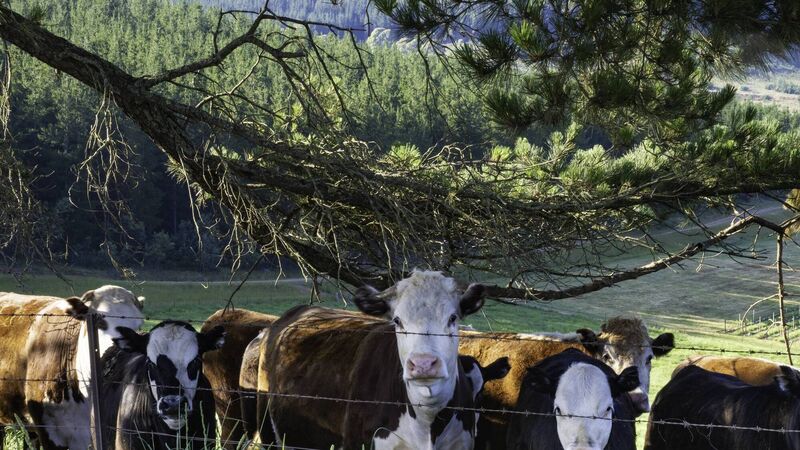
While farmers might be happy to fence off a watercourse, having an alternative drink supply is the key thing for improving water quality.

While farmers might be happy to fence off a watercourse, having an alternative drink supply is the key thing for improving water quality.

Farmers will get €50m in Water EIP grants for water improvement on their farms. But the biggest prize could be the preservation of Ireland's nitrates derogation, on which so many farmers depend heavily.

Over the next two years, Ireland must convince Brussels that we are entitled to a nitrates derogation. It will be a race against time, not least because of the delay between making changes on farms and seeing benefits in water quality.


Already, the Agricultural Sustainability Support and Advisory Programme (ASSAP) is the first step for many farmers. But evaluations of ASSAP have shown that farmers sometimes lack the funding for water quality measures.

That is where the EIP will come in, with grants for voluntary measures that go beyond regulatory requirements, measures such as water management, nitrogen efficiency improvement, riparian margins, and exclusion of livestock from watercourses.

The €50m from the EU and the Government is ring-fenced for grants. “Essentially, the EIP funds projects that let farmers, scientists and other experts work together to develop new practices that are environmentally friendly and economically sustainable. The ultimate aim is to road-test new ideas and practices that can then be used more widely with farmers”, said Mairéad Whitty from the Local Authorities Water Programme (LAWPRO), during a recent episode of Teagasc’s Environmental Edge podcast.

Also in the podcast, ASSAP manager Noel Meehan, of Teagasc, explained that EU regulations for water protection are a “one size fits all” approach. “What we have learned over a period of time is that other things need to be looked at in specific contexts, different soil types and different topographies, and so on. You need to go in and get down to the nitty-gritty and do very farm-specific things to protect the water”.

Supplementary measures, above and beyond what EU regulations require, are the focus of the Water EIP.

Noel said: “If we’re asking a farmer to put in something that is voluntary, we’re trying to allay the cost to the farmer. If the farmer is doing something above and beyond what is required, we’re tying to make sure the farmer isn’t out of pocket. We’ll work very closely with farmers. We want to help them. We want to work for water quality, and we want to do the best that we can for the farmer and for the project.”

Noel explained the ASSAP approach. “The first thing that we’re going to do when we visit a farm is look at the farm in a full context and look at it from a rainwater management point of view. When it rains, where does the water flow?” “The rainwater plan identifies on a farm how water moves through the farm, and that’s different for everybody’s farm”.

Only when the water movement has been identified can the right measures be put in place to improve water quality, which mostly comes under pressure in Ireland from losses off the land and into water of nitrogen (N), phosphorus (P) and sediment.

“One of the key things we’re asking farmers to do is to look at their nitrogen and how they use it, and how efficiently can they manage it”, Noel said. “And on the tillage side, it’s also looking at cover and catch crops and things like that. Other things like multi-species sward, that’s there as well, to help farmers to diversify the swards and to improve their efficiencies”.

He said Environmental Protection Agency water flow maps show where water run-off from farms enters the drainage network. “It’s that pathway, those critical source areas, that’s where we need to focus our attention. You’re looking to try to break that pathway. Multiple things you can do, riparian margins, you can put in low earthen mounds, you can put in hedgerows and earthen mounds, you can put in ponds and swales".

Engineered solutions

One solution could be light engineering in field drains such as chambers, bunded structures, or sediment traps.

“The whole point is that you’re trying to take out the P, take out the sediment, and once the water flows through that sort of filter system or whatever the farmer wants to put in, you have less contamination of the water, and a better water outcome," Noel said.

Exclusion of livestock from watercourses will also feature. “That’s quite an expensive one, and the biggest problem dealing with that is that while farmers might be happy to fence off a watercourse, having an alternative drink supply is the key thing”, Noel said.

ASSAP advisors have looked at pasture pumps, solar pumps and drinking troughs as alternate water sources, to allow farmers close off watercourses.

“The EIP specifically looks at reducing losses of phosphorus, nitrogen, sediment and where relevant, pesticides, by promoting new practices, looking at the application of natural water retention measures and other measures on the farms, specific to the actual landholding and the pressures that are on it”, said Mairéad Whitty.

Water EIP teams, including ASSAP advisors, will identify where interventions are needed and will contact the relevant farmers. In some instances, measures may already have been identified, but were not implemented, due to their high cost. Water EIP grants can allow them to proceed, subject to validation checks of other farm schemes, in order to avoid the possibility of double payments to farmers.

Noel said: “We’re at about 54% for good status for rivers, which is a long way short of where we need to be”.

ASSAP advisors provide very specific, targeted advice.

“Farmers are generally quite positive towards this, but at the same time, some of the measures being asked cost money, they may reduce their productivity, and quite rightly, the burden shouldn’t all fall on the farmer’s back”.

The Water EIP budget is €10 million per annum from 2023 to 2028. It will focus on the country's 190 priority river catchments, which need the most attention to protect water quality. An estimated 3,000 to 3,500 farmers in the priority areas are expected to be targeted per annum.

Teagasc, LAWPRO, and Dairy Industry Ireland will deliver the Water EIP project. There will be tiered access. The first tier of access is farmers who have an ASSAP assessment. Noel said, “The second area is where we’re looking to restore water quality in other areas outside our priority areas, and outside of where ASSAP is working". 

These could be source protection areas identified by river trusts or group water schemes. "Where we have a bit of science, a bit of information, and we know that P or sediment is a problem within this catchment, and if we get some riparian margins and some fencing of water courses in this particular area, we would have a positive water quality outcome,” Noel explained.

The third Water EIP tier involves protecting where water quality is already good.

“The final tier is any other farmers outside of that”, Noel said. “The likelihood of getting down to the fourth tier is probably slim. I would expect that we will have a big uptake from the ASSAP farmers and from the farmers who would fall under the water quality initiative with rivers’ trusts and so on”.

“You need to leave a little room for local farmer innovation and ideas. Farmers are very resourceful, and they will come up with things that we would never think of, that would suit their circumstances”, Noel said. “Where a farmer has a solution that falls outside our list, and the solution works and is costed and makes sense, we will absolutely look at that, on a case-by-case basis”.

Noel emphasised basic elements. “The regulations have been there since 2006. It’s the basics, slurry storage, soiled water storage, closed period, buffer margins, watching the weather forecast when you’re spreading slurry, growth rates. Get the basics right on your farm, and ASSAP or the EIP will work to get the rest of it done”.

More in this section

Farming

Newsletter

Stay ahead of the season. Sign up for insights, expert advice and stories shaping Irish agriculture.

Cookie Policy Privacy Policy Brand Safety FAQ Help Contact Us Terms and Conditions

© Examiner Echo Group Limited