Young inventor 'worms' way to top award

Former Agriculture Minister Ivan Yates announces young agri entrepreneur Nick Cotter as the overall winner at the Better Farming Awards.
You’ll often hear it said that you don’t need to reinvent the wheel, but two young Irish agri entrepreneurs have made their name reinventing one of the most fundamental livestock handling tools – the crush.
The Cotter Brothers, Nick and Jack from Abbeyfeale, Co Limerick, have already picked up an array of awards for their invention, the Cotter Crate, which significantly reduces the labour involved in drenching lambs.
But now aged just 23, and up against some of the most experienced innovators in Irish farming, Nick Cotter was named the overall winner at the inaugural Better Farming Awards on Thursday for his latest product, SmartWorm - software that allows stockkeepers to reduce wormer use on sheep by up to 60% without hampering productivity.
SmartWorm uses data on how the animals are growing, local weather conditions and pasture availability and quality to predict whether stock should be treated for worms with 95% accuracy.
Already, the software is being used by more than 100 farmers in Ireland and the UK, having been validated in trials with UCD, QUB, and Beef+LambNZ.
Speaking to the , Nick, who is also completing a Nuffield scholarship looking at the adoption of technology in the sheep sector, explained how support from his family has been crucial to starting the business.
“It definitely helps to have that bit of entrepreneurship running in the family – my father moved from dairy to sheep and commercial forestry planting when he realised the returns from forestry were better,” he said.
The boys’ own ventures began shortly after the family farm went organic in 2014 when, two years later, they developed their very primitive first version of the crate to make the arduous task of vaccinating lambs easier.
“It was a really, really difficult job,” Nick said. “It was taking a very long amount of time; we all had to be around to do it and you’re bent over at 90 degrees in a race with them all jumping on top of each other – so worst of all, even after going to all the effort, it’s never really done properly.
“We knew we wanted to find a way to make it a bit easier, and it was really Jack who led it. We knew we had to get the sheep up to our height because being bent over all day was terrible. And we knew we needed them to come through one by one.
“We got a bit of timber and a builder’s trestle and basically built a box out of it. All we were doing was lifting each lamb into the box and trying to do the job, but of course, these were sheep, so they aren’t the most co-operative.
“Then we got the idea to take their legs from under them, and that’s where we’d come up with the idea of the ‘v’ shape walls and drop floor to fully immobilise them.”
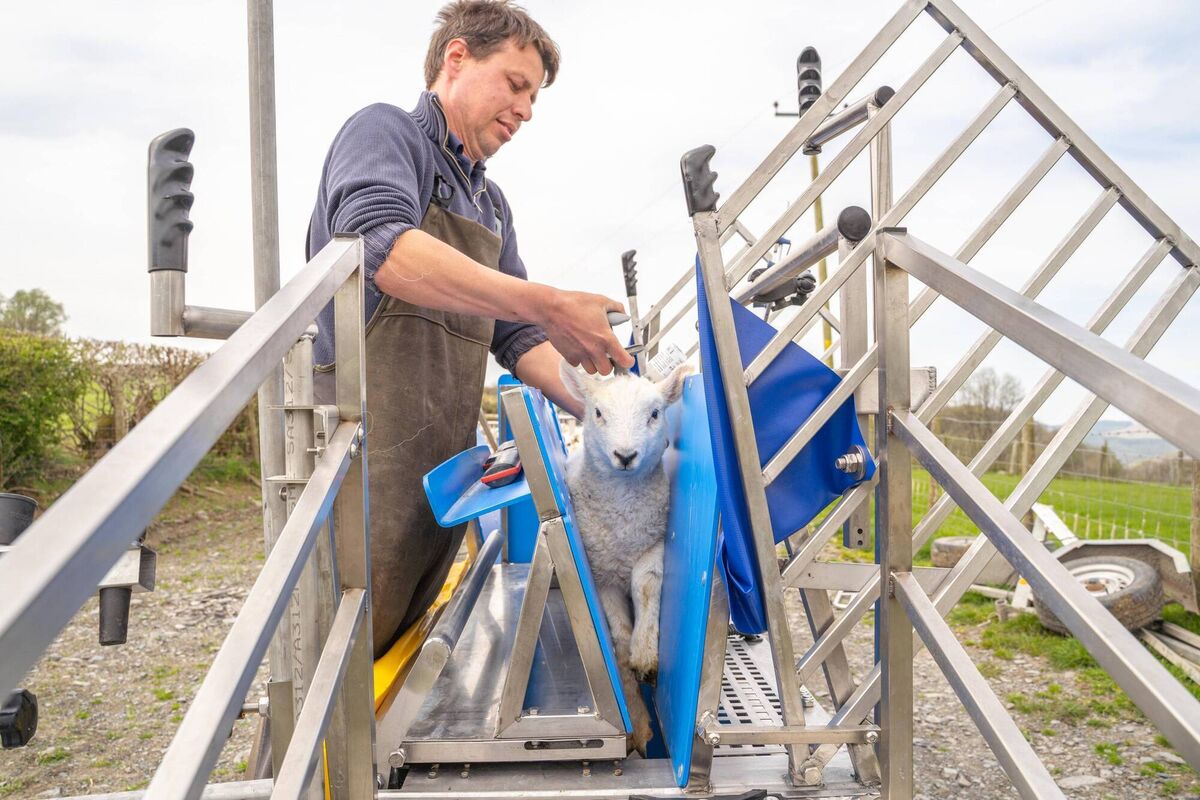
Ultimately, the crate became a project for Jack’s final year of college. Along the way, the brothers got a bit of help from Pawel Rosa, who was the on-farm mechanic to make the next version. While in use on their dad’s farm, caught the eye of another Irish agricultural entrepreneur, Paddy Halton from Grasshopper, who insisted the lads to enter it into the National Ploughing Championship’s Innovation Awards in 2019.
“We had no expectations whatsoever, but we won a category award, and we also won overall best start-up,” Nick said, adding that most important was the farmer feedback: “They were very encouraging and kept asking us where they could buy it.” But the biggest test came when the invention won Jack the title of Engineers Ireland Student Engineer of the Year.
“That one, in particular, made us really turn our heads,” Nick said. “These were judged objectively and up against some really incredible technology from every sector – guys that were developing tools to prevent hair loss during chemotheraphy and heat-seeking tech to help in the rescue of people out of bodies of water.” After this, the brothers decided it was time to start a company and secured local enterprise office funding.
“We carried out feasibility studies with farmers,” Nick said. “That demonstrated that we actually couldn’t sell what we had – we planned on just polishing what we had at the Ploughing, but that didn’t really work because that was just for small lambs.
“We were told we needed an All-in-One machine, so we took on that challenge and spent two years developing out the crate with all the different gizmos that it needed to do all the jobs that a farmer would want.” The pair worked with 20 sheep farmers spread across the UK and Ireland, visiting each of them monthly over a two-year period.
“Once they said to us, “Yeah, there’s not really anything more we want it to do,” that’s when we knew it was ready,” he said.
The final iteration of the crate included lead-up ramps complete with anti-slip rubber, anti-backing flaps at two points, a wheel kit, three-way drafting and even holders for EID readers, spray cans and a tablet or weigh head, among many other features.
However, the brothers’ journey with innovation didn’t stop there.
“When we were doing the weighing, we thought it would be great if we could offer a low-cost option for weighing instead of having to spend a grand or more on a standalone weigh head.
“We had this idea to build a mobile phone application that would talk to it over Bluetooth and would just lower the cost for guys to weigh sheep. As we were doing that research, we realised that what we could also do was target the drenching of animals based on weight gain.
“A single metric looked at on it’s own can be misleading . It’s very difficult to say, ‘They all should grow at 200g/day; anything less than that we’ll dose. Anything above that, we’ll leave as they all have different growth potential.’ So instead, we got into this idea of looking at the first principles of nutrition in animals to try to develop a set of algorithms to accurately predict which ones would need dosed and which ones wouldn’t.”
The brothers worked alongside the same 20 farmers who helped them develop the crate as well as Queens University Belfast and University College Dublin, and most recently Beef+LambNZ.
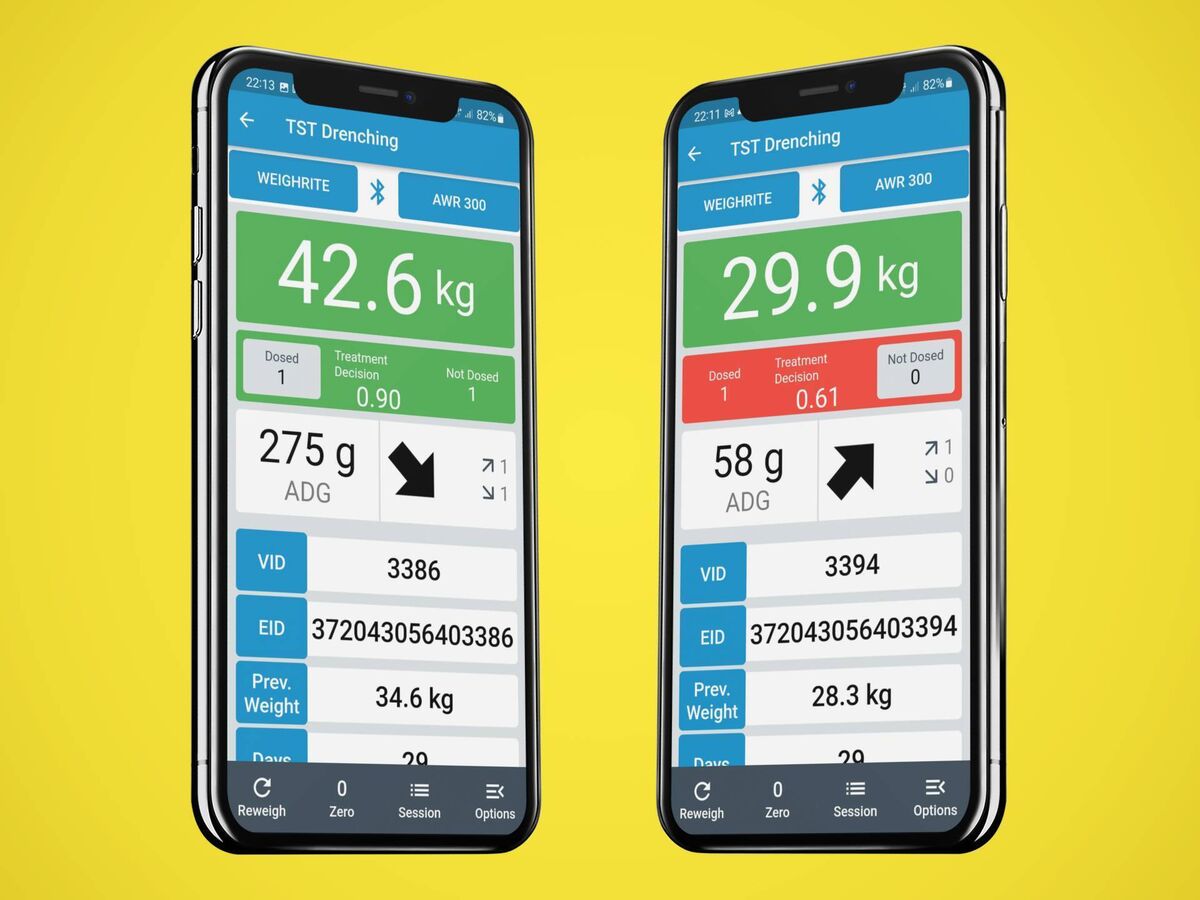
“It can reduce the use of wormers by 40-60% without any compromise on productivity or welfare compared to if you were to drench on a monthly basis, and the software only has to see the animals once a month,” Nick explained.
“It’s a big reduction in cost because you’re using half or less of the amount of wormer, and it’s a game-changer in terms of labour because you’re only having to drench half or less of your flock, too.
“But the main reason for this is to tackle the issue of drench resistance – it’s a huge problem. We’re on a very unsustainable path of treating all of the animals at regular intervals and resistance now exists on pretty much every grass-based sheep farm globally”.
“There are five drugs for dosing sheep, and in New Zealand, resistance is so bad that they have to mix them together – many sheep farmers in New Zealand only use combination drenches because the older generation single active drugs aren’t working. The only single actives which do still work – the new-generation drenches are four times the price. We are looking at it as a huge market for us because they are already suffering hugely economically.”