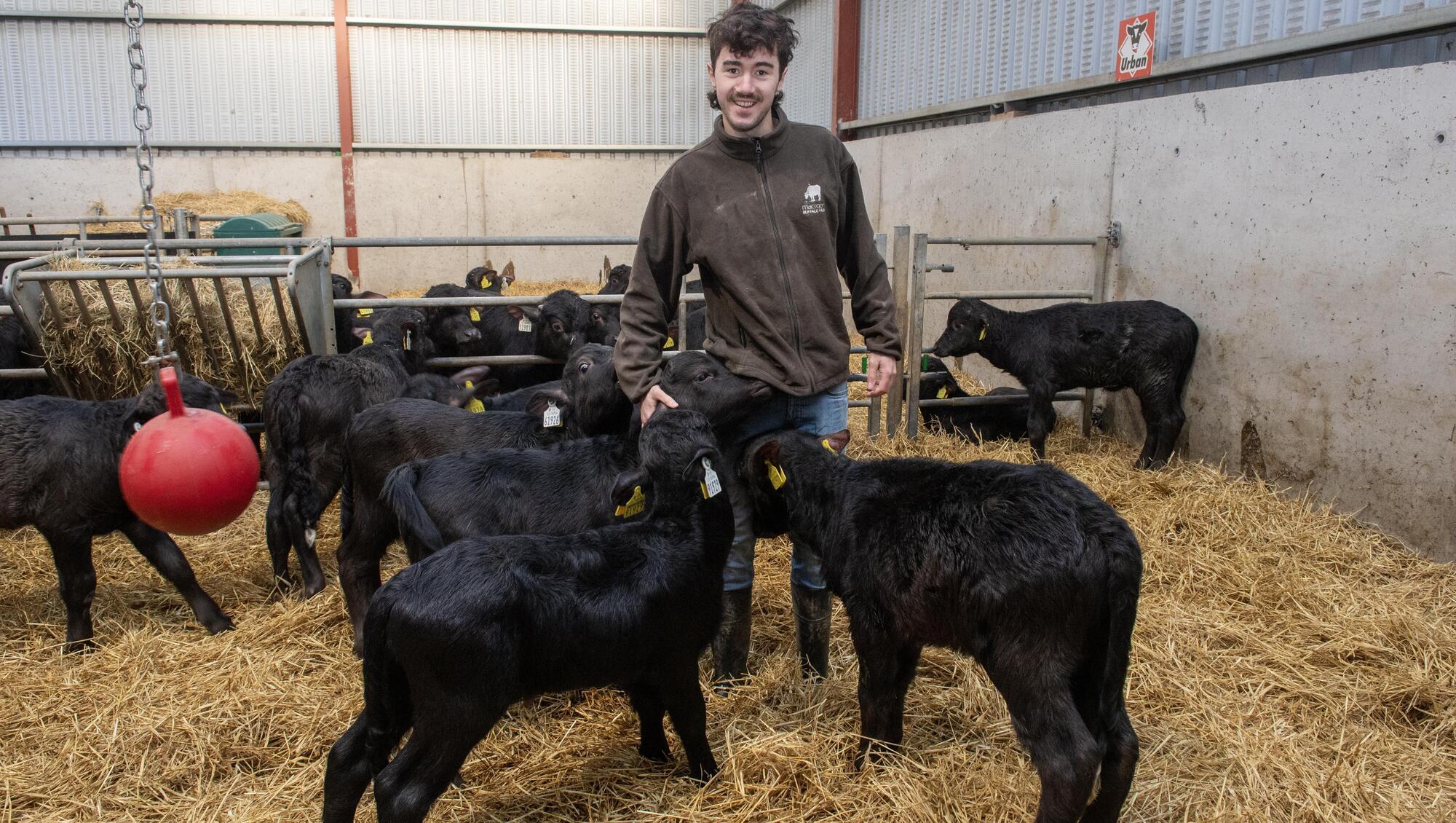
Farming can be a lonely and isolating activity for many.
For 23-year-old Kieran Lynch, however, he is “lucky” that he has people working with him on the Macroom Buffalo Cheese farm and in the production facilities on site, allowing him to get “a lot more interaction than regular farmers”.
Also keeping him plenty of company are some of the “friendly” 750 buffaloes belonging to the farm’s herd in Co Cork.
As the first buffalo farm in Ireland when Johnny Lynch, Kieran’s father, first imported 31 water buffaloes from Northern Italy to West Cork, it was certainly daunting — but he felt the farm was better positioned to adapt the enterprise to suit buffaloes rather than sheep.
Price of milk
There was a Friesian herd on the farm up until 2009.
“The price of milk at the time was terrible, it was somewhere around 20c/litre,” Kieran Lynch said.
Mozzarella at the time was only being imported from Italy, there were no Irish brands making it and the opportunity came up basically to bring in buffaloes and start making mozzarella here.
“There was great interest for it from the start, there has always been demand for the cheese.
“We haven’t had to do much marketing at all until we started doing some recently just because it was kind of unusual.”
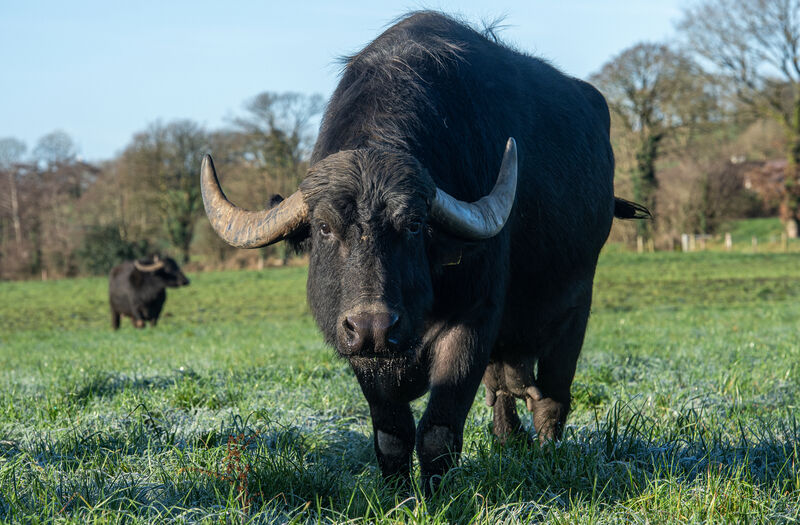
The buffalo herd has now grown to well over 700 buffaloes, across six different farms, Mr Lynch explained.
“We started off with just our own farm, which is about 140 acres. As we got deals with supermarkets, we had to increase year-on-year, so there’s about 700 acres now.”
Buffalo milk v cow's milk
Traditionally, mozzarella always comes from buffalo milk. It originates from Italy.
The farm’s other main products are ‘buffaloumi’ which is similar to halloumi, a Greek-style cheese, ricotta, and cheddar.
There have been 650,000 litres of buffalo milk processed through the plant in 2023.
The cheese is made on the home farm.
“It was a huge headache at the start because my father was a farmer but didn’t have much knowledge previously about making or selling cheese so there was a lot of stress in the first few years getting around all of that,” Mr Lynch said.
He explained that with buffalo milk, there is a lot more fat along with extra protein in it compared to cow’s milk.
“It’s a lot stronger milk than cow’s milk and you notice that in soft cheese like mozzarella.”
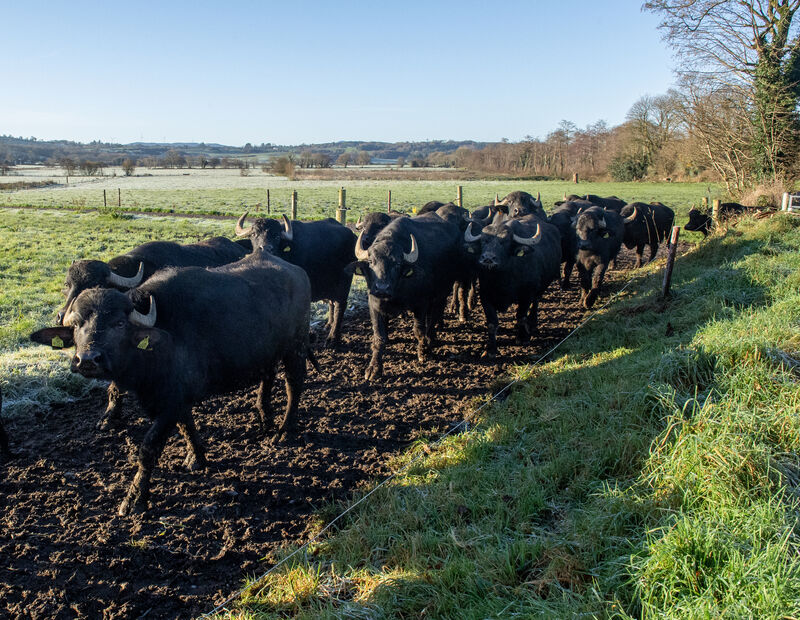
Buffalos are “similar build” to regular milking cows, noticeably a “bit stockier”, probably on average 700kg at mature weight, Mr Lynch said.
“We’ve the exact same parlour just with a couple of extra frames of supports inside there to keep the thing together, because they’re quite a strong animal,” he explained.
“They milk a good bit less than a regular cow, I think we’re averaging maybe 2,800 litres per lactation. Currently, our calving interval is over 13 months.”
Buffalos have “less milk”, according to Mr Lynch, but it takes “roughly the same amount of time to milk them”, due to narrower teat canals making it a bit slower of a process.
“There are positives to that too because they get much less mastitis because the canals are so much smaller,” he said.
Health-wise, you can have issues with young buffalo calves. For the first few weeks, you have to really keep an eye on them.
“The mature animals are very hardy, they rarely get any diseases.”
Hardy animals
With thicker skin and striking horns, these “hardy animals” are happy to be outside every month of the year — but just like with any farm, “you wouldn’t have them out in December normally, they’d destroy the ground and you won’t have any grass the following year”.
“This year they had to come in early and they’re out grazing now at the moment but that will probably only last another couple of weeks and they’ll be back in eating haylage then, similar to regular cattle,” Mr Lynch said.
We try to have them out 10 months, that depends on the weather every year.
“They’re being fed haylage while they’re inside, the flavour of silage comes through in the milk and that affects the taste of the cheese then and none of your customers are happy when there are changes to the product so haylage gives a more consistent product.”
The business still has the majority of the buffalos in Ireland.
By next year, it will be milking on three farms and there are also three support farms involved.
Venturing into yoghurt production
From January, the business will be launching yoghurt as well — natural, for a start, “generally we don’t like using additives for the products”, Mr Lynch said.
“We were very seriously considering doing ice-cream instead. We’ve done lots of trials with ice-cream and people loved it.
“It’s a very seasonal product, but yoghurt, people in Ireland consume it all year so it will be a much more constant product that we could be producing.”
Mr Lynch came back from a year in Australia this year and upon his return, “the whole place was hectic enough since I got back”, he said.
While he was gone, there were extra acres taken on, loads of new machines, and a new product on the horizon.
There has been three-quarters of a million capital investment in the plant, just completed and ready for development.
As the business is located in the Gaeltacht, Údarás na Gaeltachta has “been very good in supporting with that investment”.
O’Tuama Tours runs tours of the farm, which attracts many spectators.
Some visit the farm with an interest in setting up a similar business — “but when they hear the amount of work and investment that’s required they normally don’t go far with it”, according to Mr Lynch.
However, if more people were to start up, it could pose “an opportunity for us as well to source more milk from someone” in the future.
“We’re expanding our product range so it would be great to have extra volume to be able to work with when you’ve already got the machines in place to produce more products,” Mr Lynch added.