Signpost: Incorporating clover offers a 'win win' for economic and environmental sustainability
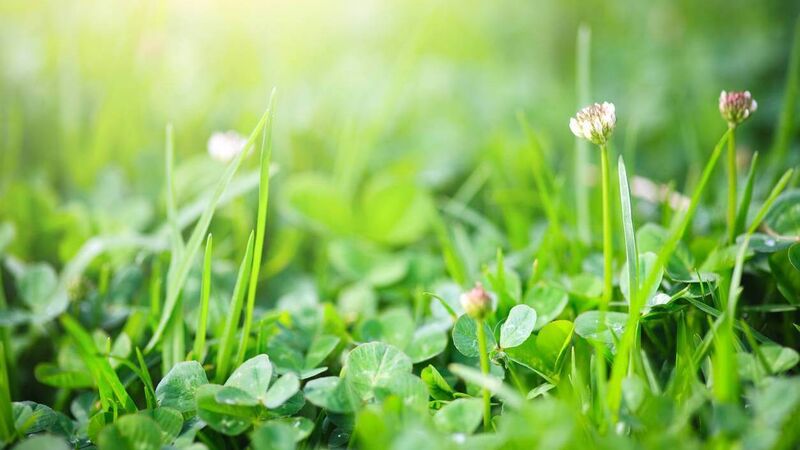
Clover will help to reduce the carbon footprint of the farm and more importantly reduce total emissions on the farm
Signpost: Incorporating clover offers a 'win win' for economic and environmental sustainability

Incorporating clover in grassland swards has the potential to reduce costs, improve profitability and reduce greenhouse gas emissions.

Incorporating clover in grassland swards has the potential to reduce costs, improve profitability and reduce greenhouse gas emissions.

Clover fixes nitrogen. Nitrogen fixation is the process whereby white clover can fix N from the atmosphere and make it available for plant growth. Thereby reducing the requirement for chemical N.


The benefits of white clover tend to occur from May onwards as sward white clover content increases. 

The main benefits of white clover inclusion in grass swards are:

  • Increased herbage quality compared to grass-only swards in the summer months;
  • Increased dry matter (DM) intake in summer and autumn;
  • Higher milk production and live weight gain;
  • Nitrogen fixation — white clover fixes nitrogen (N) from the atmosphere making it available for plant growth;
  • Lower requirement for N fertiliser application in summer.

Impact at farm level

On dairy farmers, research has shown that using clover can increase milk solids production by 20-48 kg/cow per year and increase net farm profit by €108-€305/hectare. On suckler farms, profitability increased by 14% for the grass/clover system when compared to a ‘conventional’ pasture system.

How it works to reduce emissions 

Nitrous oxide is one of the three main greenhouse gases and is given off primarily from slurry stored, slurry spread and chemical nitrogen fertiliser spreading. 

Incorporating clover into grassland reduces the demand for chemical nitrogen.

Therefore, if there is less chemical nitrogen fertiliser spread, there is less nitrous oxide being emitted into the air. Using clover achieves a reduction in nitrous oxide by lowering the chemical N fertiliser use up to 100kg N/ha.

Impact on the environment 

Using clover to reduce the use of chemical nitrogen can reduce nitrous oxide emissions by up to 40% on a dairy farm due to reduced chemical N fertiliser application. The reduction is less on drystock farms due to lower chemical nitrogen use. Clover will help to reduce the carbon footprint of the farm and more importantly reduce total emissions on the farm.

Actions farmers need to take 

Over a five-year period, aim to have white clover in 100% of your paddocks (at a minimum average annual sward clover content of 20%).

Paddocks for a full reseed should be identified as early as possible in the process to avoid over-sowing clover on these: 

  • Poor performing, age of sward, weed content etc;
  • Select paddocks for over sowing to give the best chance of establishment; 
  • Optimal soil fertility (index 3 or > for P & K, soil pH 6.5); 
  • High perennial ryegrass content;
  • Open/low-density swards — dense swards prevent light getting to new clover plant, hindering establishment; 
  • Low weed content —  Any paddocks that are not suitable for oversowing in the first year should have any issues corrected and oversow the following year, eg improve soil fertility, spray weeds.

Four-year plan 

The farm's four-year plan should target 100% of the farm with 20% clover swards using a combination of reseeding and over-sowing. Aim for 10% reseeding and 20% oversowing per year.

For example:

  • Year 1 — Reseed 10% & oversow 20%
  • Year 2 — Reseed 10% & oversow 20% 
  • Year 3 — Reseed 10% & oversow 20%
  • Year 4 — Remaining 10% and any ground that clover didn’t establish on.

Different varieties are best suited to various uses.

Use the following as a rough guide:

  • Large leaf varieties — silage; 
  • Medium leaf varieties – grazing cattle;
  • Small leaf varieties – grazing sheep.

Checklist before sowing

Soil pH: 6.2-6.5 

Soil P: Index 3+ 

Soil K: Index 3+

Infrastructure: Paddock system where each paddock is grazed within three days on an 18-21-day rotation.

Weeds: Whether oversowing or reseeding, have weeds removed before clover is established.

More in this section

Farming

Newsletter

Keep up-to-date with all the latest developments in Farming with our weekly newsletter.

Cookie Policy Privacy Policy Brand Safety FAQ Help Contact Us Terms and Conditions

© Examiner Echo Group Limited