What the CAP plan will mean for farmers
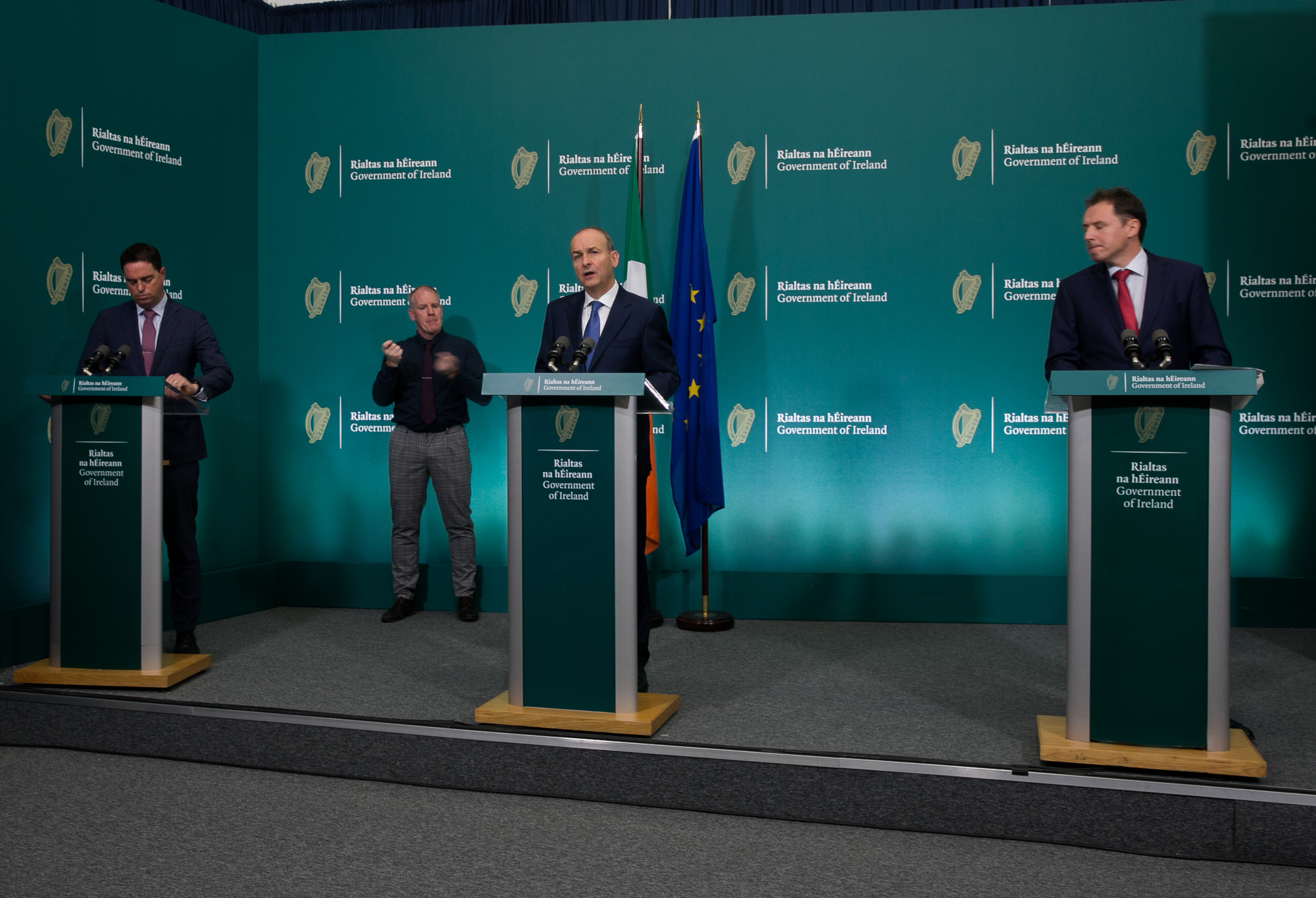
Included in the CAP Strategic Plan was carbon tax funding for an agri-environment and climate measure to encourage farmers to farm in a greener and more sustainable way, and organic farming increasing as much as five-fold. File photo: Gareth Chaney/Collins
The shape of Irish farming after 2022 became clearer when the Government last week announced its funding plans for the CAP Strategic Plan and for Rural Development.
Included was carbon tax funding for an agri-environment and climate measure to encourage farmers to farm in a greener and more sustainable way, and organic farming increasing as much as five-fold.
Preparation of the CAP Strategic Plan (CSP) for 2023 to 2027 has been underway for some time. Ireland’s CSP will have a strong emphasis on achieving a higher level of climate and environment ambition.
It will have to pass an evaluation by the EU Commission, strategic environmental assessment and appropriate assessment, but it already looks like the main change for farmers will be less reliance on the single farm payment income support (which most farmers still call it, though it has been the Basic Payment Scheme since 2013, and will become the Basic Income Support for Sustainability (BISS) in 2023).
All member states must ensure from 2023 that income support payments are directed more towards smaller holdings and towards young farmers.
And from 2023, 25% of the Basic Payment Scheme funding will be set aside for eco-schemes designed to achieve an environmental result. But, as proposed currently, they are not suitable for productive farmers, and will actually cost farmers money in compliance costs, said the IFA after last week’s CSP announcement. The IFA accused Agriculture Minister Charlie McConalogue and his officials of taking the easy 25% option, rather than seek a lower cut which IFA says is justified by Ireland’s high spending on agri-environment climate measures.
Eco-schemes will be open to all active (likely to mean engaged in at least a minimum level of agricultural activity) farmers, applying to all the land being managed, but they can opt-in or opt-out each year. But opting out means losing the flat rate per hectare eco-scheme payment (25% of income support).
Ireland’s eco-scheme is proposed to have five actions, and participating farmers will complete two actions in any given year. For example, one action proposed is planting a number of trees per hectare (significant tree and hedge planting measures are also proposed for the Agri-Environmental Climate Measure).
Other eco-schemes involve climate and environment-friendly farming practices and approaches such as organic farming, agro-ecology, carbon farming, or animal welfare improvements.
Along with 25% of income support funding being set aside for eco-schemes, Minister McConalogue said he plans for 10% to go into the Complementary Redistributive Income Support for Sustainability (CRISS), which benefits smaller farmers more than larger farmers, to the tune of about €118 million per annum, by front-loading support for the first 30 hectares of a farm.
The Minister proposes to continue internal convergence from 2023, so that all entitlements reach at least 85% of the average national entitlement value by 2026.
Currently, the average entitlement value, before greening, is about €185. Counties like Leitrim, with the lowest average entitlement (€152) in 2020 will gain from convergence. The counties likely to lose out most to convergence are Kilkenny and Wexford, topping the list in recent years with average entitlements of €210.
Also proposed is capping of direct payments at €66,000.
Young farmers are to be allocated 3% of the value of the income support budget (about €35m per annum).
There are three general CSP objectives in EU legislation, namely a smart, competitive, resilient and diversified agricultural sector ensuring long-term food security; environmental protection, including biodiversity, and climate action to meet Paris Agreement commitments; and stronger rural socio-economic fabric.
The CSP must improve biodiversity and water quality, and help member states to reach national and EU climate and environmental targets, including increased sequestration and carbon removal (35% to 40% of the CAP budget must be climate-relevant).
Farmers receiving direct income support payments will be subject to a stronger set of mandatory requirements (conditionally known as cross-compliance in the current CAP), such as a baseline level of climate ambition, and non-productive features must account for 4% of the farm area (land lying fallow, nitrogen-fixing crops, catch crops, eligible forestry, short rotation coppice, field copse, hedgerows, drains, buffer strips, etc).
Wetlands and peatlands will have to be protected. As in the current CAP, maintenance of permanent grassland is required, to preserve carbon stock. Going to 7% non-productive features on the farm will qualify for aid within the eco-scheme.
Minister McConalogue said the Government has agreed an exchequer contribution of €2.30bn for the 2023-2027 CSP, bringing its total funding to €9.8bn.
The multi-annual Agri-Environment Climate Measure (AECM) will offer the potential for farmers to earn up to €7,000 or €10,000 per year.
This is the successor to GLAS, the agri-environment options scheme, AEOS, and REPS, but IFA has predicted it will be insufficient to meet likely demand, supporting 50,000 farmers, and that €7,000 will be the maximum payment for 30,000 of the participants.
IFA also warned the design of the scheme is likely to lead to a significant increase in leakage of funds for administrative costs.
There is a €21.6m allocation for training in the scheme.
Among the sustainable farming actions in the AECM will be the option to plant trees and/or hedges, including riparian buffer strips or tree belts adjacent to farmyards, with a view to capturing ammonia.
To facilitate greater integration of small areas of woodland planting on farms, it may be necessary to amend the Forestry Act. Meanwhile, the existing forestry programme will continue to be funded nationally.
The Minister has said the new suckler carbon efficiency scheme starting in 2023 will pay €150 for the first 10 cows and €120 thereafter, increased from €90 and €80 available under the existing beef data and genomics programme (BDGP).
However, IFA said this proposed funding allocation will pay for only 385,000 cows in 20,000 herds, with 500,000 cows in over 30,000 suckler farms, therefore, left out.
The Minister has said capacity will remain open for extra support such as the BEEP scheme, which currently pays €40m/annum to suckler farmers. But ICSA says weighing will be moved to the suckler scheme.
In both the proposed suckler carbon efficiency scheme and sheep improvement scheme, there are no stocking density limits, but it is intended that payments will be made on stocking levels for a historical reference period, as in the existing sheep welfare scheme and BDGP. Included in the rationale is to ensure there is not an overall increase in emissions from participants’ farms.
The Sheep Improvement Scheme in the CSP has also come in for farmer criticism. IFA says the proposed €20m per year scheme of €12 per ewe will be available only for 1.7m ewes, less than the number in the current Sheep Welfare Scheme (which pays €10).
Farmer organisations have been taken aback by the proposed funding of €256m for the organic sector, representing a massive increase on current funding levels.
Irish Cattle and Sheep Farmers’ Association president Dermot Kelleher noted that suckler cows, kept by more than 60,000 farmers, will get a similar allocation as the organic scheme which currently covers only 1,800 farmers. Even if the target is achieved to find another 6,500 organic farmers, it would still be only a small fraction of the number of suckler or sheep farmers.
Both IFA and ICSA were disappointed at the absence of a beef finishers scheme.
Membership of the relevant quality scheme is a proposed eligibility criterion for some livestock schemes in the next CAP. In the suckler carbon efficiency scheme, the carbon footprint measurement from the SBLAS sustainability audit is an important mechanism for measuring the environmental performance of scheme participants.
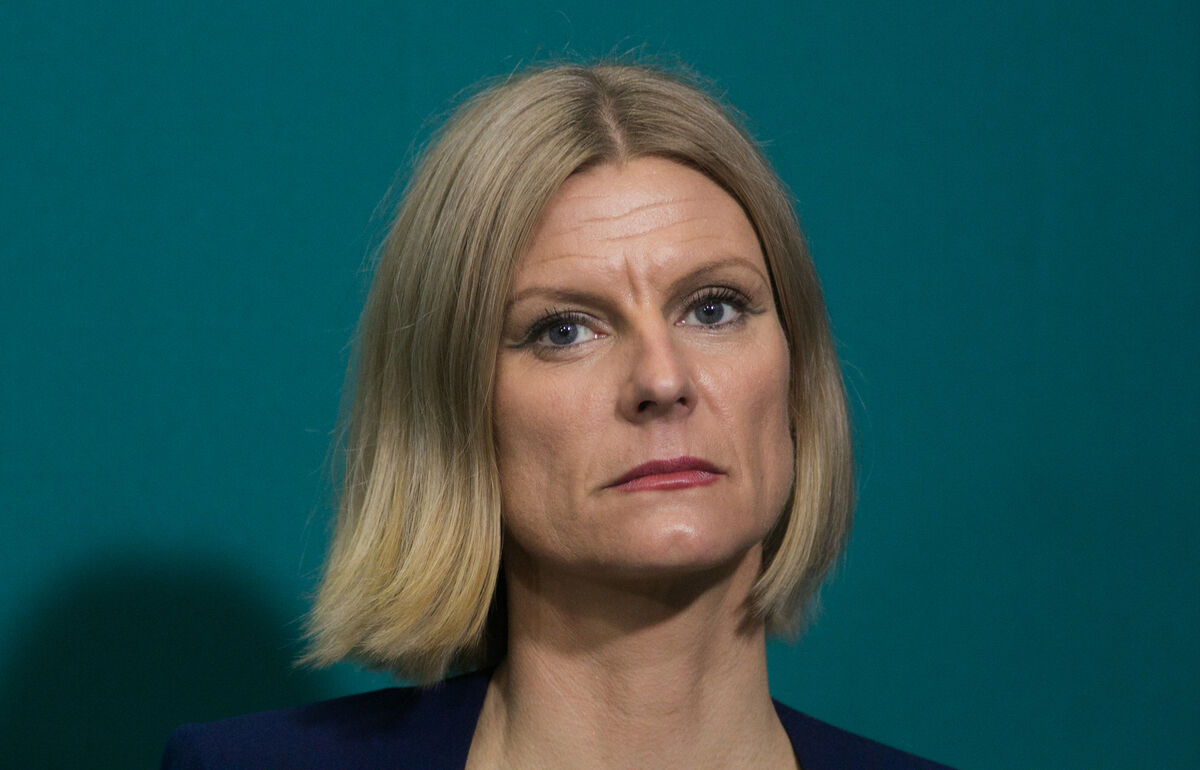
Minister of State at the Department of Agriculture, Food and the Marine Senator Pippa Hackett said 87,000 hectares are farmed organically or in conversion, and an increase of 50,000 ha with the proposed money in the budget for next year would represent a 57% increase to 130,000 ha.
The target date of organics on 7.5% of farmland is 2027. The average farm size in the current organic aid scheme is 40 ha.
Organic farmers can also avail of an existing capital investment scheme. There is funding also for organic demonstration farms and training and education projects. Minister Hackett said: “We are coming from an incredibly low base level because of low support for this sector in recent decades. I am getting us on the road to improve that. It is my hope, if we hit those targets by the end of this CAP, the door will be open to ramp them up in the next CAP.”
She said organic farmers are not excluded from agri-environmental schemes, but regulations limit double payments on the same land for essentially the same measures.
The CSP also includes €1,250m for Areas of Natural Constraint (ANC) and €100m for on-farm investments.
There is €50m to continue straw incorporation (at €10m per year, IFA says it is “totally insufficient to cover the losses tillage farmers will incur on the basic payment”).
There is €71.1m for Knowledge Transfer Groups, €39m for the fruit and vegetable sector, €36.1m for European Innovation Partnerships (EIPs), €35m of protein crops aid, and €25m for a Dairy Beef Welfare Scheme.
Included are €6.3m for Technical Assistance, €2m for collaborative farming, €1.9m for continuous professional development for advisors, €1.5m for beef and sheep producer organisations, and €0.6m for the beekeeping sector.
There’s €180m for a post-2023 LEADER programme in the proposed CSP, bringing to €250m the total funding for this rural development scheme over the next seven years, to support locally-led projects.
In order to allow EU countries to better adapt the policy to their farming sectors’ priorities, they will have the option to transfer up to 25% of their CAP allocations between income support and rural development.
A statutory consultation on a draft environmental report for the CSP will be held in November, with the final plan due for submission before January 1 next to the EU Commission approval process, which is likely to take six to eight months.
From 2024, each EU country will present an annual performance report and take part in an annual review meeting with the Commission.
In 2025, the Commission will undertake a first performance review of each CAP strategic plan and request specific follow-up actions if necessary.
In 2026, an interim evaluation will assess the new CAP, and in 2027, the Commission will undertake a second performance review of each CAP strategic plan.
CLIMATE & SUSTAINABILITY HUB