'You’ll enjoy a winter break better if SDCT goes well with the help of milk recording'
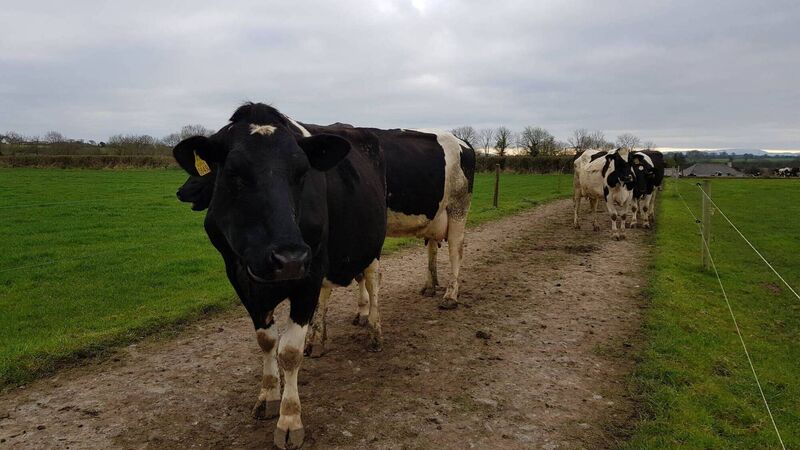
How many farmers are using milk recording this year as we face into the compulsory use of selective dry cow therapy in 2022? File Picture.
It was almost 20 years ago, in the old terminal of Cork Airport.
We had just checked in and all the luggage had gone through, so it was time to head upstairs and start the holiday.
There was a fairly large crowd assembled already, quite a rowdy bunch who looked like they had been there for a while.
As it turned out, they were a group of young farmers from Seandun Macra who were on their way out to Austria on a skiing holiday.
We all actually ended up in the same resort, Westendorf, and I can verify they all had a good time.
The thinking at the time was to educate young farmers into the idea of taking a holiday, unlike a lot of their forbears whose only holiday might have been a day off to go to Dublin for the All-Ireland.
That time of the year, early January, was considered the best time to go, as the cows were dry, and were taking their “holidays” too.
The cow too needs a break, giving her udder a chance to heal back to normal, while the farmer can re-charge his/her batteries.
I mentioned the cow’s dry period here a while back, when talking about selective dry cow therapy (SDCT) and some of its implications. Some took up the option of a CellCheck Consult and dabbled in selective dry cow therapy for the first time.
I was thinking about them today, as the first milk recordings of the year will be taking place, and wondered how they got on.
Did they find a massive increase in early lactation mastitis, as some might have feared, or did everything run smoothly with none of the selected cows suffering any setback from not having any dry cow tube used on them last November?
Eligibility to avail of the dry cow consult centred, among other criteria, on farmers carrying out at least four milk recordings during 2020.
As we face into the compulsory use of selective dry cow therapy in 2022, I wonder how many are using milk recording this year.
I hear some voices raised, citing the cost of joining up as a reason for not doing milk recording.
Others have told me it slows down the milking too much for their liking.
Whatever the reason used, I fear for those who do not milk record.
At the back end of the year, you cannot make correct decisions about selective dry cow treatment if you have not got the required information on which cows are suitable for it. Without milk recordings, it will be like squeezing and smelling the silage to see how good it is!
The cost of signing up for milk recording will be very small when compared to the losses that would accrue due to a faulty selection process giving an increase in mastitis cases and bulk tank SCC.
The basic sign up for four months is just that — a basic. The more milk recordings you do, the more and better the information will be.
If you also take the few seconds out to text the word MAST followed by the cow’s number (for example, MAST 1234) to ICBF, whenever you come across a case of mastitis, all this information will be stored for you throughout the year and assembled in your milk recording report to give an indication of new infection, cure rates etc,.
Cows not suitable for selection for teat sealer only are easier to identify, and the chance of making mistakes is drastically cut.
- Paul Redmond, MVB, MRCVS, Cert DHH, Duntahane Veterinary Clinic, Fermoy.