The last few weeks were extremely mild for this time of year. We had some cold nights, but days were warm.
The variation in temperatures has proved challenging, with many reports of respiratory issues in all ages of cattle.
It is so hard to get ventilation right in sheds. It is so dependent on the direction of the wind on any given day, along with shelter from surrounding buildings etc.
Too much shelter, and you end up with stale air causing issues. Too little shelter, and you have a draught, causing issues.
Getting good air flow
There have been many debates on social media regarding shed design and the type of sheeting etc, that gives the best ventilation.
The key is air flow, creating a natural movement of air, where the air comes in at an appropriate point in the shed and then has a route out of the shed.
Vented sheeting can often be detrimental to good ventilation, especially in calf accommodation.
It causes a trickle of air into the shed, and can create cold draughts for the cattle.
I have seen many really good calf/creep areas where the side sheeting has been offset outside the wall, and running down 16-18 inches below the top of the wall.
This results in air hitting the wall and taking an upward trajectory.
Once there is a canopy on the shed, this upward moving air will continue to rise and escape through the canopy.
This creates a chimney effect, pulling any stale air off the animals.
In existing sheds where airflow is poor, you may need to take temporary measures to improve ventilation. Doors may need to be opened. Where draughts are coming in, addition of a gale breaker may be helpful.
Clipping cattle
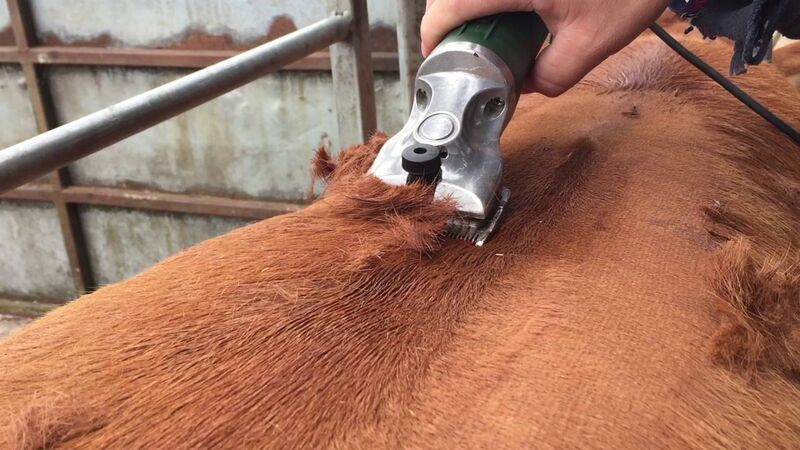
Clipping cattle is an excellent way of helping them to regulate their body temperature while indoors.
In the weather conditions we had lately, cattle have been sweating in sheds.
Animals that sweat are more stressed and are always much dirtier.
For beef cattle with a lot of hair, it really is well worth clipping three strips along their backs, right up to the head, and clipping the tails clean. The results will be plain to see within days, as you will see less sweat, and cattle will start to clean off all over.
I invested in an infrared camera lately, which I can attach to my iPhone.
With this IR camera, I have been able to show customers the difference in heat release along animals’ backs, depending on if they were clipped or not.
It shows the variation in temperature on the screen, with red being the hottest, orange the next warmest, and blue being the coldest.
In all cases, when scanning cattle that have been clipped, they have a bright red strip along their backs, and are visibly drier and cleaner. When scanning unclipped cattle, the backbone will be a green colour, indicating virtually no heat is being released, and these stock are visibly wet, and have dirty hair.
Releasing heat and making cattle much more comfortable in the shed will undoubtedly help animals to perform better, and to avoid respiratory issues due to overheating.
Clipping cattle before using a pour-on to treat for parasites also helps the product to penetrate the skin faster and more effectively.
Get the clippers oiled up and in action, to improve animal health, performance, and comfort.
If you don’t have a clippers, there are many great value options out there, with many now opting for battery-powered clippers which have excellent clipping time between charging.
Bedding young calves
I know that many perceive straw to be an expensive product, but there is still nothing better to keep young calves warm and cosy.
You can have all the ventilation and air flow discussed above, but it is also essential to have a clean and dry bed for calves to nest down in.
Regular fresh straw in the bed will keep them dry and clean, and will aid prevention of illness.
Water supply and quality
If cattle are warm in sheds, they will require a good source of water to help cool down. An added issue this year is the amount of very dry silages being fed, particularly second and third cuts.
When consuming these, cattle will require extra water. Meal feeding will also result in more water being drank.
Access to a big enough water trough with a sufficient supply of clean water is so important for animal performance.
Aim to inspect troughs daily and clean them regularly, in order to maintain feed intake and performance.
- Independent dairy and beef nutritionist Brian Reidy, Premier Farm Nutrition, can be contacted at brian@pfn.ie