Landmark knotweed case verdict in Wales
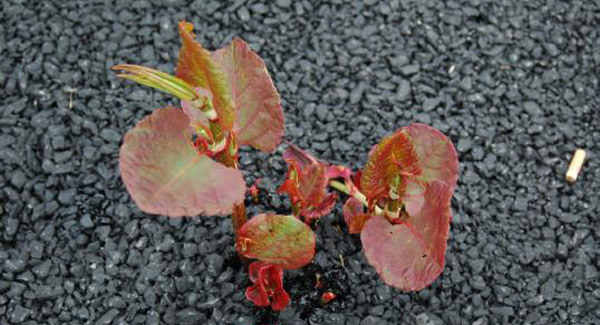
House owners in Wales have been awarded £15,000 (€17,750) in damages against a neighbouring landowner, to cover the cost of treatment of Japanese knotweed, and the diminution of the value of their properties.

Landmark knotweed case verdict in Wales

House owners in Wales have been awarded £15,000 (€17,750) in damages against a neighbouring landowner, to cover the cost of treatment of Japanese knotweed, and the diminution of the value of their properties.

The landmark case in Cardiff has serious ramifications for landowners in the UK.

According to the Ronan Daly Jermyn law firm, it is unknown whether Ireland will follow England and Wales in allowing a cause of action in nuisance, where a person fails to control Japanese knotweed present on their property, and where no damage to the neighbouring property structure can be proved.

In Wales, a court found Network Rail responsible for an actionable nuisance in failing to take steps to prevent Japanese knotweed from blighting properties lying close to its railway embankment.

The claimants owned neighbouring semi-detached bungalows whose rear walls abutted an access path owned by Network Rail.

The path led to an embankment, also owned by the defendant, on which a large growth of Japanese knotweed had been present for at least 50 years.

The defendant had been aware of the Japanese knotweed in the locality since 2008, as part of its track inspection regime, and had been controlling the weeds so far as required to maintain visibility on the line.

The court found in favour of the claim that the presence of the knotweed on the defendant’s land was an interference with their enjoyment or amenity value of their properties, as it affected their ability to sell their properties at market value.

Even though there was no physical damage and no effect on the utility of the land, the court found that the amenity value of a property is not simply the use and enjoyment of the land, but can include the ability to dispose of it at a proper value.

The judgment puts an onus on property owners in the UK to control and remediate any issue, particularly near houses, as soon as they come to light.

In Ireland, under Regulation 49(2) of the European Communities, “any person who plants, disperses, allows or causes to disperse, spreads or otherwise causes to grow,” Japanese knotweed shall be guilty of an offence.

This places an onus on a landowner to be responsible to ensure that they are not causing or allowing knotweed to be dispersed or spread.

Japanese knotweed is a bamboo-like plant brought to Europe from Japan in the mid-19th century. It has spread across Great Britain and Ireland, particularly on watercourses, transport routes and waste grounds.

It grows and spreads rapidly, displacing native flora and, more importantly from a liability point of view, causing significant structural damage.

The cost to the London Olympics to remove Japanese knotweed from the 10-acre Olympic site was more than £70m, and Japanese knotweed is estimated to be causing £166m in damage annually in Britain.

More in this section

Farming

Newsletter

Stay ahead of the season. Sign up for insights, expert advice and stories shaping Irish agriculture.

Cookie Policy Privacy Policy Brand Safety FAQ Help Contact Us Terms and Conditions

© Examiner Echo Group Limited