Helping out on the farm is just what the doctor ordered
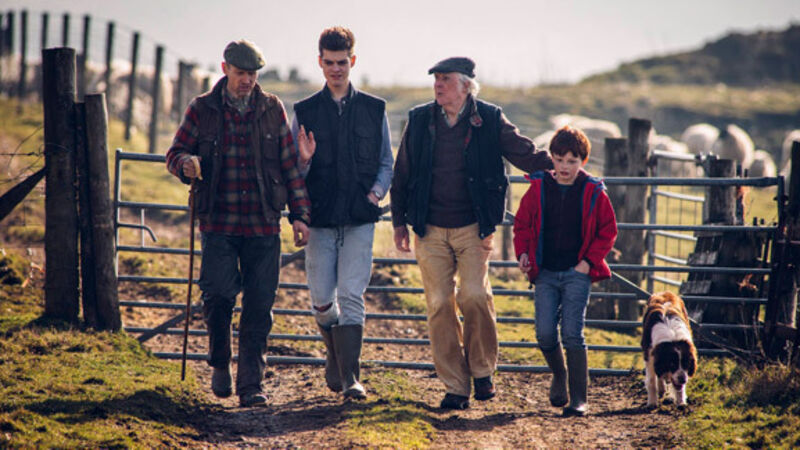
Initiative enables people with disabilities to spend time with a host farmer in a safe and friendly environment.
You have to wonder sometimes. Do we really see the beauty that surrounds us on the farm? The peace, the tranquility that can exist there in front of our eyes.
Most times, our business environment seems hell-bent on keeping us on our toes and in a constant state of flux.
But it’s very important, in so many ways for our general well-being to have the time to look around once and a while.
As well known Mitchelstown dairy farmer Maurice Walsh mentioned to me recently, “It’s very important to be able to take a step back, instead of rushing around all the time. Take a step back and appreciate what you have.”
Appreciation of what is there on our farms, what we have at our fingertips, is behind the concept of Social Farming in Ireland.
It began as the Social Farming Across Borders (SoFAB) project in 2011, but is now taking hold in southern counties also. Social Farming is the practice of offering activity on farms as a form of social support service.
It has been shown that experiencing farming first hand, combined with physical activity, can have a huge benefit to a broad range of vulnerable people, such as those suffering from mental health problems, people with physical or learning disabilities, the elderly, those recovering from drug or alcohol addiction or those in the probation services.
Involvement in normal day-to-day farm activities can provide them with opportunities for inclusion, create ways to increase self-esteem, and deliver activities to improve health and the well-being of individuals and groups of disadvantaged people.
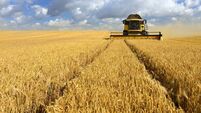
Farms involved in Social Farming are working businesses which invite people to participate in the day-to-day activities.
The farmer is paid for the time he accepts the clients on to his farm.
Such farms are not specialised treatment farms, they are typical working farms where people in need of support can benefit from participation in farm activities.
Financed by the EU’s Regional Development Fund, Social Farming Across Borders was set up in the six counties of Northern Ireland, and the six border counties of the Republic.
UCD led the project, with partners Queens University Belfast, the Department of Agriculture and Rural Development (NI), Leitrim Development Company, and the Department of the Environment, Community and Local Government.
One of the outcomes was the establishment of support offices operated by Leitrim Development Company (www.ldco.ie) and Rural Support in Northern Ireland (www.ruralsupport.org.uk).
These offices continue the work of the highly successful SoFAB project.
Leitrim Development Company was one of the beneficiaries, when Agriculture Minister Michael Creed recently announced CEDRA funding of over €1m for social farming projects.
Mr Creed said, “Social farming allows people availing of a range of health service supports the opportunity to participate in farming activities in their local area.
“I know that working on farming and horticulture projects has helped many participants to improve their well-being and grow their confidence. For participating farm families, social farming has proved a very worthwhile and satisfying activity which contributes to the local community.”
The funding of over €1m Mr Creed announced included €400,000 awarded to the Leitrim Development Company to design, develop and implement a Social Farming network across Ireland.
Funding of €142,325 was awarded to South Kerry Development Partnership for provision of a social farming model project with national benefits.
Down Syndrome Ireland (Cork Branch) was awarded €137,000 to develop a horticultural centre for adults with Down Syndrome.
Leitrim Development Company, in collaboration with UCD, also got €113,000 to establish a social farming best practice project for local and national audiences.
The Department of Agriculture also provided sponsorship of €12,500 to Barry Kavanagh (supported by Social Farming Across Borders Ltd) for his award-winning social farming garden at Bloom 2016, to raise awareness of and promote social farming.
In its work to develop and establish a countrywide Social Farming network, Leitrim Development Company builds on the existing base in the border and midlands, but also works closely with colleagues in three local development companies, the South East Waterford Leader Partnership, the West Limerick Resources, and the South West Mayo Development Company.
Four regional hubs will allow for a step-by-step rollout of Social Farming. Four regional development workers have been recruited.
They include Julette O’Flynn (joflynn@wlr.ie), from a farm in North Cork, who works with West Limerick Resources and will support social farming developments in the South West.
Also from a farming background, John Evoy (john.evoy@wlp.ie) works with Waterford Leader Partnership, and will support social farming developments in the South East. He was awarded an Irish People of the Year Award in 2015 for his work with Men’s Sheds.
Waterford and Limerick are the focus areas for the Leitrim Development Company at the moment, but they hope to extend their reach further in future years of the project.
LDC is also helping South Kerry Development Partnership and the Kerry Social Farming Committee with their Social Farming initiative, also based on the original SoFAB.
In Kerry, the aim is to increase the number of host social farmers to 15, with up to 50 service users.
The initiative will enable people with disabilities to spend time with a host farmer in a safe and friendly environment, enjoying working with animals, while learning farm skills and life skills, connecting with the rural community, and building relationships with family farm members.
The Kerry Social Farming initiative will increase opportunities for young adults with intellectual disabilities (one of the groups in our society who suffer the greatest levels of social exclusion).