Jury retires to consider verdict in 'Irish Examiner' defamation trial
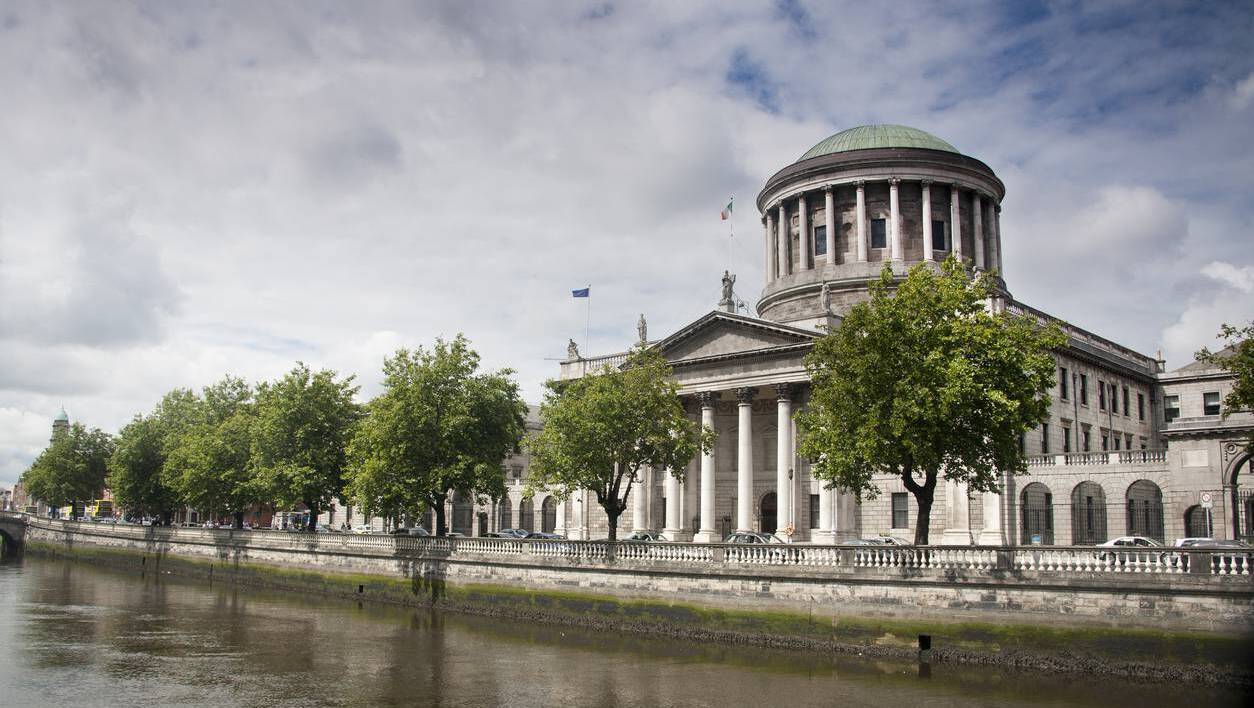
The defamation action against the 'Irish Examiner' has been taken by Ms Purcell, who claims that allegations made about her in the EY investigation report were presented as fact in two published articles on the matter. File image
A defamation case taken by a former senior executive at the Irish Planning Institute against the will hinge on the use of the words ‘wrongful’ and ‘guilty’ in two articles published in January 2023, a High Court jury has heard.
Addressing the jury in his closing speech for the defendant newspaper, senior counsel John Fitzgerald said that the use of those words were “of no import whatsoever”.
Senior journalist Mick Clifford had described the IPI executive Orla Purcell on one occasion as being “guilty” of certain allegations levelled from her subordinate at the institute — including the unauthorised spending of €1,500 on hospitality expenses, and an attempt to set up a false email trail alleging complaints from IPI members against the president of the institute — in one of the two articles.
In the second article, he had written in one paragraph that the allegations, substantiated by the consultancy firm EY, included the “wrongful” use of funds.
The defamation action against the has been taken by Ms Purcell, who claims that allegations made about her in the EY investigation report were presented as fact in two published articles on the matter — written by senior journalist Mick Clifford — and that they damaged her reputation.
Read More
The has denied the allegations and claims the articles were published in the public interest and comprised fair and reasonable publication.
In his closing speech ahead of the jury’s deliberations, Mr Fitzgerald said that to assign too much value to the use of those words would equate to “dancing on the head of a pin”.
He said the finding of unauthorised and unapproved expenditure by Ms Purcell “was in the EY report”, in reference to the 120-page final report delivered by EY to the IPI in January 2023.
“There is nothing wrong with doing that,” Mr Fitzgerald said.
He said that Mr Clifford had “no agenda other than bringing matters of public interest to public knowledge”.
He said that Mr Clifford that not gone “beyond what was in the EY report”.
“In all cases it was reasonable to publish what he did,” Mr Fitzgerald said.
Mr Fitzgerald said that it would not be in the public interest for a journalist, having acquired a report produced by a “reputable firm” like EY, to not rely on its findings, saying that to do so would lead to “endless delays”.
Mr Fitzgerald said that the ongoing housing crisis and scandals, such as the length of time and billions of euros in expense incurred trying to build a National Children’s Hospital, show why all aspects of the planning system are of importance to the public.
The EY report in question had not been furnished to the jury during the week-long trial, as presiding Justice Tony O’Connor said its contents were not in dispute, and those contents bore no relation to the decisions the jury had to make with regard to the meaning of the two articles.
Countering Mr Fitzgerald, senior counsel for the plaintiff Mark Harty told the jury that the article “doesn’t say EY said she might have done these things, it says she did these things”.
“And she has denied those things.”
Mr Harty said — with regard to the use of "wrongful" and "guilty" in the published pieces — had Mr Clifford not wanted readers “to think that Orla Purcell was guilty of wrongdoing then he shouldn’t have used the words”.
“He is a wordsmith, that’s what he does,” he said.
He argued, with regard to the perceived lack of due process afforded to Ms Purcell, that if it were a murder charge the plaintiff had faced “never would the have said she was guilty… until there had been a trial”.
“Mick Clifford was not curious, he was judgmental, he’d come down on the side of guilty,” he said.
“He was fed stories by anonymous sources. He didn’t inquire as to their agenda, their motivations, their connections,” he said, adding that Mr Clifford had “sold that narrative and frankly didn’t care if Orla Purcell was collateral damage”.
The jury has now retired to consider its verdict.


CONNECT WITH US TODAY



Be the first to know the latest news and updates