Stephen Cadogan: Brexit is bad news for Ireland whatever way it is dressed up
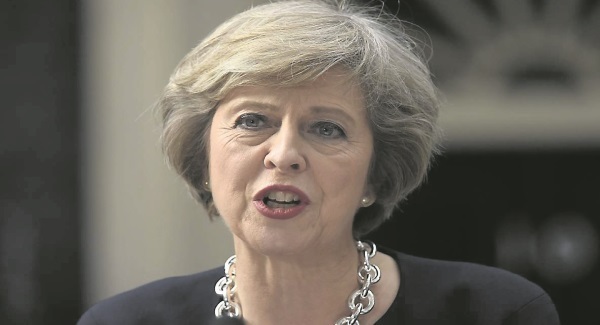
David Cameron promised a Brexit referendum to win the 2015 election, and trying to win the 2020 election is the reasoning which many see behind prime minister Theresa May’s shock promise last Sunday to trigger Britain’s exit from the EU before next April.
Stephen Cadogan: Brexit is bad news for Ireland whatever way it is dressed up

She said she would begin the two-year withdrawal negotiations by invoking article 50 of the Lisbon Treaty.

Britain will have no vote in these negotiations, the EU-27 will decide the terms of exit.

And with EU politicians under the spotlight in the Dutch general election next March, and in the run-up to the French presidential election in May, and the German federal election next September, they are likely to insist that Britain accepts free movement of labour from the rest of the EU, and continue paying into the EU budget, if it wants to continue EU single market trading.

However, Mrs May wants Britain to have full control over its immigration policy.

Therefore, she has greatly increased the likelihood that that Britain’s departure from the EU will be a ‘hard’ Brexit, leaving the EU’s single market — as favoured by Brexit supporters.

Mrs May’s decision took many in Brussels by surprise.

They thought she would not risk damaging relations with the EU, which is Britain’s biggest trading partner.

Conditions could be more favourable for a ‘soft’ Brexit if Article 50 was not invoked until later in 2017.

Instead, she took an unexpected turn at her first Conservative Party conference as party leader and prime minister — a turn which has greater consequences for Ireland than any other EU country, because trade with Britain is more important for Ireland than for any other member state.

Even before Mrs May’s surprise, Teagasc experts here warned that the challenge faced by the Irish agri-food sector is to prepare for the UK being no longer as important or lucrative a market for Irish agri-food exports.

They have quickly been proved right.

Therefore, Ireland’s quest for new exports markets must be stepped up.

Many more breakthroughs like the recent opening of the live cattle export market to Turkey are needed.

Major resources must now be channelled into Bord Bia to progress projects like opening the Chinese market for Irish beef.

Retail food sales in China were €750bn in 2015, even a tiny share of that market would insulate Ireland from shocks in the British market.

There has been promising progress in China, which has quickly become Ireland’s second biggest export destination.

However, that trade amounts to only €640m (in 2015), dwarfed by our €4.4bn of food and drink exports to Britain.

Ireland will have only two years after Article 50 is invoked to prepare for Britain leaving the EU. Then, it is quite likely that withdrawal negotiations will not yet have been satisfactorily completed, so the UK will have left the EU, but with no special trade relationship.

It is likely in that situation that tariffs will be re-imposed on trade between the UK and the EU for the first time in more than 40 years, which would seriously damage Irish food and drink exports.

The intervening period will also be rocky. Sterling dropped to a five-year-low against the euro this week, after Theresa May’s Brexit announcement.

Already, since the Brexit vote in June, sterling had lost 12% of its value against the euro.

That has hurt Irish food exporters, and none more so than the mushroom sector, because of its contracts with British retailers, agreed in sterling for up to a year.

Mushroom exporters now get only €1.16 for £1 compared to €1.36 a year ago. And an estimated 90% of all mushrooms grown in Ireland are exported to Britain.

As a result, the first 100 days of Brexit have seen three mushroom farms closing down, with the loss of 130 jobs and €7m in exports.

Even though Britain exports €3.8bn in agri-food services to Ireland, and a major share of British food imports come from Ireland (68% in the case of beef), it is clearly a trade that can no longer be taken for granted.

More in this section

Farming

Newsletter

Stay ahead of the season. Sign up for insights, expert advice and stories shaping Irish agriculture.

Cookie Policy Privacy Policy Brand Safety FAQ Help Contact Us Terms and Conditions

© Examiner Echo Group Limited