Stephen Cadogan: Another vote on June 23 may be momentous for farmers
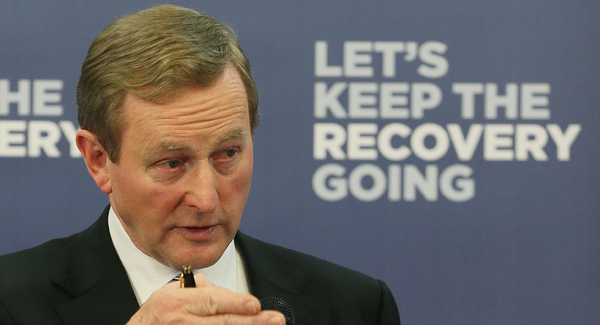
But those in agriculture worrying about a lack of strong government can perhaps put that worry in perspective by pondering on what British voters do in the June 23 referendum, to determine whether Britain stays in the European Union.
There were some surprises in the Irish election. By comparison, Britain departing from the EU wouldn’t be so much of a surprise.
In 2013, when David Cameron promised a referendum if he won the 2015 general election, the chances of ‘Brexit’ — Britain leaving the EU —seemed remote.
Three years later, after hard times for the euro, and an escalating migration crisis, Brexit seems much more feasible.
Some recent surveys showed a majority of Britons wanting to leave.
And there could be plenty of EU troubles over the next three months to boost the Brexit camp.
Our “hung” Dail will be a trivial problem compared to a UK withdrawal from the EU.
The flow of goods and services across the Irish Sea which our agriculture depends on would have to be completely re-negotiated.
In 2015, euro weakness against sterling helped Irish food and drink exporters grow the value of sales into the UK by 7%, bringing to 41%, or €4.4 billion, that market’s share of our total food and drink exports.
The UK takes 272,000 tonnes of Irish beef (54% of our beef exports); more than 60% of cheese exports and 30% of our total exports of dairy products and ingredients; 61% of Irish pigmeat exports, 44% of our prepared foods exports, 29% of our beverage exports, 84% of our poultry exports, and 28% of our sheepmeat trade.
Before contemplating what could happen to that volume of trade, we can take our minds off our own Irish political stalemate by putting ourselves in the boots of British farmers.
If their voters tick the “Leave the European Union” box, they say goodbye to €3 billion a year of direct CAP subsidy support, and about €800m in rural development funds.
The respected and knowledgeable Agra Europe agricultural consultancy has estimated that only 10% of the most efficient UK farmers would survive without the CAP subsidies which provide 50-60% of UK farm income.
British farmers do not know what their government would replace the CAP with, but could hardly be confident, in a country where, for decades, agriculture has not looked like a sector favoured by government.
Although Prime Minister Cameron was successful with many of his pre-referendum renegotiations in Brussels, his attempt to include reform of CAP in his new settlement was roundly rejected by the other EU leaders.
So Brexit is a leap in the dark for UK agriculture, not knowing in advance if access to sell food into the EU’s single market could be negotiated
Nearly two-thirds of UK agricultural exports goes to the EU.
Outside the EU, British exporters could face heavy EU border duties, making the EU single market much less lucrative for them.
At the same time, they would lose access to other global markets with which the EU has negotiated free trade agreements.
British farmers, such as those in horticulture, who have heavily relied on immigrant seasonal labour, could see Brexit robbing their workforce.
But the vast majority of British voters are unlikely to have farmers’ interests in their minds when they vote next June.
After all, the UK’s Minister for Farming, Food and Marine Environment George Eustice supports Brexit, in stark contrast to leaders of the agri-food industry.
If Ireland has a government in place by June, or if we have to vote in a second general election this year, what voters next door decide on Brexit may well be the main issue for our new Agriculture Minister, or for farmer voters.
At least, Ireland would be working with 26 EU member state colleagues to lesson the grevious impact of Brexit on our economy.
British farmers and the British food industry would be outside the door, and in a much poorer position to negotiate.