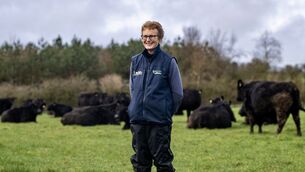
Kieran Coughlan: Tax measures could be used to help relieve dairy volatility

In the forthcoming programme for government, the real decisions which will affect farmers over the coming term will be decided.
Kieran Coughlan: Tax measures could be used to help relieve dairy volatility

The election results are in with Fianna Fail and Fine Gael being the main parties of choice.

At this point the only option for a two-party coalition government is for these two parties to come together.


The alternative is an alliance formed by one of these main parties and a plethora of independents and left of centre parties being Sinn Fein, Labour and AAA-PBP.

Although an alliance between these two separate stalwarts has yet to happen, it is interesting to explore how the tax landscape for farmers would evolve over the coming governmental period.

The Fine Gael manifesto confirms the party is “committed to using the tax system strategically to modernise and support agriculture through land leasing, partnership and mobility measures”.

It is worthwhile recapping on what exactly the Fine Gael led government did change in the tax landscape with respect to farmers. The Agri Taxation Review carried out in 2013 brought a new focus to how Ireland’s tax system supported Ireland’s farmers.

Stemming from the review, one of the major recommendations was the need for farmers and land owners to move away from conacre arrangements. For landowners who engaged in long-term leasing, they saw a significant increase of 50% in the income-tax free thresholds for land leases.

Meanwhile certain land owners who had previously farmed their lands but who had let their land under conacre arrangements have been given a reprieve allowing them to convert to leasing by 31 December, 2016.

The most significant reform of Agricultural Relief since its inception was carried out in Budget 2014 seeing the relief targeted at full-time farmers, trained farmers or in the alternative a beneficiary could engage in leasing to such farmers.

In the context of farming measures focused at partnerships, the introduction of 50% stock relief for registered farm partnerships was one of the first tax reliefs introduced by the previous government aimed at farmers.

The enhanced stock relief measures were extended in 2013 to broaden the scope of partnerships qualifying for the reliefs which had hitherto been focused only at milk production partnerships. The regulatory changes required to effect this change however only came into effect from January 2015.

Budget 2016 introduced a new “mobility” partnership tax measure aimed at encouraging the transition of farms to a younger generation. This new relief has yet to come into effect pending approval under EU State Aid rules.

The incentive offers farmers a tax credit worth up to €5,000 per annum for the first five years where a farmer and their successor enter a structured partnership with the aim of transitioning at least 80% of the assets of the partnership to the successor within a maximum time frame of ten years from the creation of the partnership.

The relief is targeted at under 40s. The enhanced 50% stock relief measures run hand in hand with this relief.

Meanwhile the relief granting half-rate stamp duty to transfers and sales between blood relatives was refocused to encourage transfers before the age of 67.

The Fine Gael manifesto is light on detail as regards the future changes that could be brought about to the specific benefit of farmers.

However on general tax policy the document suggests the capital acquisitions Group A threshold will be increased to €500,000 (from current levels of €280,000), an abolition of the USC by 2021, with a 1% reduction in the 5.5% rate from 1 January 2017.

Farmers and other self-employed persons should benefit from increased to the Earned Income Tax Credit from €550 applicable in 2016 to €1,650 (to match the PAYE credit), by 2018, albeit the credit will not apply to persons earning over €100,000 and tapering out from €70,000. The home carer’s credit would be increased from €1,000 to €1,650.

On the Fianna Fáil side, they too have committed to increasing the earned income credit applicable to self-employed to €1,650, while exploring options to allow self-employed people to make full Class A equivalent PRSI contributions in order to qualify for Jobseekers Benefit and Invalidity Benefits.

For low income farmers, Fianna Fáil suggests they would restore Farm Assist means testing rules to 2011 levels. On farm partnerships, similar to Fine Gael, farm family partnerships will be incentivised to allow older farmers to get the next generation involved, however emphasis on measures to support young farmers appears to rest on a mid-term review of CAP.

Similarly any hopes for supports to our dairy sector seems reliant on a review of price intervention tools at EU level.

It’s disappointing that the momentum created by the Agri-Taxation review, in changing our tax policy to support farmers seems to have dried up; for instance, neither party’s manifesto makes reference to introducing tax measures to support income volatility, collaborative farming or reforms to support land ownership by farmers (land ownership by farmers continues to fall over the past two decades).

In the shakeup between the parties who will form the next government let’s hope the programme for government picks up on this.

x

More in this section

Farming

Newsletter

Stay ahead of the season. Sign up for insights, expert advice and stories shaping Irish agriculture.

Cookie Policy Privacy Policy Brand Safety FAQ Help Contact Us Terms and Conditions

© Examiner Echo Group Limited