Beef prices unchanged despite unusually high supply
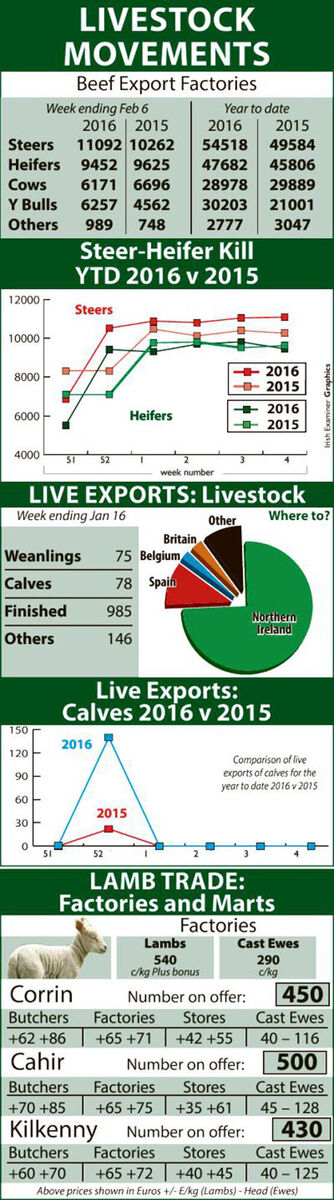
It is necessary to go back into the strong supply months of 2014 to get intakes on a par with the supply of almost 34,000 for last week’s kill.
Within that, there were around 11,000 steers, and more than 6,200 young bulls, with a strong supply of heifers making up the mix.
At that level, the intake is akin to a typical autumn kill for the factories.
It is ahead of any week from last year, and it’s a long time since a comparable weekly supply passed through the gates of the factories in early February, traditionally a month of tight supply.
Such a level of intake last autumn would almost certainly have been a licence for the processors to exert downward pressure on the prices.
However, that is not likely to happen presently, because the factory bosses know that the current beef trading environment is too sensitive at farmer level to contemplate such a move — when the cost of last autumn’s store cattle is factored in.
Quoted prices for steers remain at 390 cents/kg, and most of the stock are moving at that price, with the scale of supply leaving very little scope to negotiate deals with processors for stronger returns.
Heifers are holding at a base of 400 cents/kg, a premium of 10 cents/kg over steer prices.
It is possible to get a few cents/kg more for better quality heifers by hard dealing with the factory agents, and there are reports of up to 5 cents/kg extra being negotiated.
Similar to the prime beef, there is no movement in the cow prices.
The base for O/P-grade cows is 290-320 cents/kg in general, and the better quality R-grade cows are making up to 345 cent/kg, with a few cents more than that for and some lots.
In Britain, the beef trade has experienced a week of steady prices, following slight easing the previous week.
R4L-grade steers averaged equivalent to 526 cent/kg (including VAT).
Little change in the demand for beef at consumer level has been reported, with uptake by customers remaining slow since Christmas.
In France, the trade continues slow, with poor demand, while large volumes of competitively priced product compete for market share.
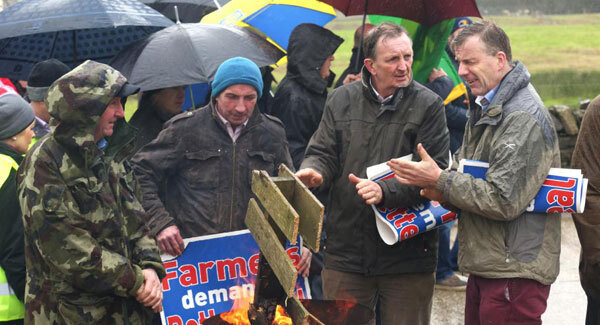
Farmer protests have resulted in a renewed focus on domestically produced product. Retail promotions have focused mainly on domestically produced stewing cuts.
In Italy, there has been little change in the beef trade.