Stephen Cadogan: Broadband connectivity key to sustainable rural society
For many, Dublin is becoming an unaffordable location, partly, due to the over-concentration of economic recovery there.
Meanwhile, unemployment figures remain as bad as ever in some rural locations.
The Government should take a cue from its former minister and now EU Agriculture Commissioner, Phil Hogan, on how to design blueprints for sustaining rural areas.
He says rural areas are increasingly being viewed as holding many of the solutions to the big global problems, in terms of food security, renewable energy, environmental sustainability and water provision.
And the key he sees to enable these rural areas and the communities that live in them to be full partners in developing these solutions is connectivity.
In other words, he believes rapid connection to the internet will transform rural areas. Maybe his message will convince our Government to put this higher on its priorities, and to speed up the snail’s pace of internet advance.
According to Hogan, a plethora of small and medium-sized business opportunities will be available to any given area when full connectivity is realised.
This will incentivise rural dwellers to stay in their local areas, as well as attracting new residents.
The agri-food sector, for which he is responsible, can develop and use technological innovations for precision farming. Easy access to technology leads to innovation which leads to jobs, said Mr Hogan, in Scotland during the summer.
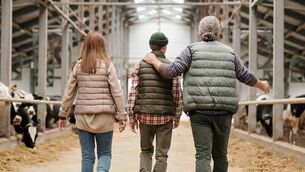
In his speech, he painted the picture of a farmer with a decent fibre connection instantly downloading his Single Farm Payment form in one corner of the screen, having a simultaneous skype call with his agricultural advisor.
Meanwhile his son’s band are performing live via video link-up while his mother is being remotely treated by her specialist tele-medicine carers from the clinic in the nearest big town.
The key technology is Fibre to the Home,and this is being rolled out in Ireland by eircom. But Hogan says that if telecoms companies can’t make the necessary changes, solutions may be found in rural areas themselves.
He pointed to the example of people in rural Lancashire, behind the Broadband for the Rural North project which has connected 5,000 properties in 35 outlying parishes.
Local residents managed every stage of the process, developing a share-based funding model; laying the cables and providing a voluntary help service when customers have computer problems.
The EU backs such groups in its Digital Single Market package.
About €6.4 billion is put into financing the roll-out of high speed broadband.
According to Commissioner Hogan, “It is no exaggeration to say that the future of farming, of rural entrepreneurship, and indeed of our rural communities generally, relies to a large extent on the rural right to fast internet connectivity.
“Let’s make local the new global; and make our rural communities the drivers of innovation in the 21st century, he urged — because there is no reason in the world why tomorrow’s information society jobs cannot be carried out in the countryside rather than in crowded cities.”