Beware of long delay to register online for GLAS
The closing date for GLAS is May 23, and the closing date for the Basic Payment Scheme (which replaces the Single Payment Scheme) is May 30 — not June 15, as some people seem to think.
I fear there may be a surge of applications close to the closing dates, because farmers are making the most of the current fine weather, to get work done, and the phones are noticeably quieter, as a result.
As most farmers are aware, GLAS applications cannot be submitted manually.
They must be submitted online, using the Department’s online system.
Up to now, planners could complete plans on this system, but could not submit them.
But the Department of Agriculture has received its ‘letter of comfort’ from the European Commission, which, in effect, is the green light for plans to be submitted.
It is taking the best part of three weeks to register farmers on this online system.
An authorisation form needs to be signed by the farmer, and posted to the Department offices.
The main reason for delay is the sheer volume of these authorisation forms which have to be processed (about 15,000 for GLAS alone, and rising by the day).
However, farmers can be registered on the online system immediately if they already receive text messages from the Dept. They simply have to reply with the letter ‘Y’, for yes, from a request by their planner for authorisation. This request goes dormant after 24 hours, if they do not reply. So my advice is, do not leave it to the last few days to contact your planner, if you thinking of applying for GLAS.
Of the GLAS applications I have completed so far, the most popular option is Low-Input Permanent Pasture.
This ground has to be in grass for at least eight years. Farmers are permitted to apply 32 units of nitrogen per acre, just over a bag of CAN to the acre. Traditional grazing practices are encouraged. This essentially means a lower stocking rate per hectare, and rules out the intensive paddock grazing system.
In the more disadvantaged areas, this is an extremely attractive option for farmers, as they are already meeting these regulations.
All farmers should have got their aerial photos from the Department, back in March. The farm should be divided into different land parcel numbers.
One of the main stumbling blocks with GLAS is the completion of more than one action on one parcel number. Most farmers can get around this, but it is more difficult for farmers when all their land is in one parcel number.
For example, you cannot plant a hedge and create a low input permanent pasture on the one parcel number. This is not affecting the majority of farmers, but there are a few who are being restricted in what options they can choose.
Overall, GLAS is still a good scheme for farmer to join.
Nearly all applicants will be getting a yearly payment of between €3,000 and €5,000, and some in GLAS plus (hen harrier, corncrake etc) will be getting up to €7,000. A farmer would have to sell a lot of cattle to make this kind of money, so it is definitely worth considering.
REPS 4 farmers and AEOS farmers can now also apply for the GLAS scheme. They will get a start date of January 1, 2016, so they will receive their full AEOS or REPS 4 payments. This has dramatically increased the demand for the GLAS scheme — and not every farmer that applies for this scheme is guaranteed to be accepted.
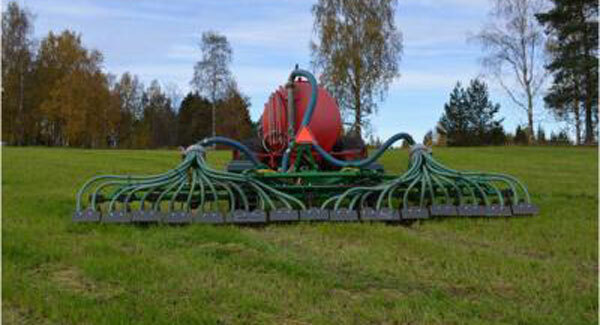
Some of the biodiversity options that you can choose have a higher weighting than others, and to ensure acceptance, some farmers in the lower GLAS tiers are applying to use an injection method for applying slurry, or planting wild bird cover.If you choose the injection method for slurry spreading, you have to do this each year for the duration of the contract.
Planting the wild bird cover is also proving to be quite a popular option, as the payment for this is €900 per hectare. This is a spring-sown crop that is left unharvested over winter to provide food for farmland birds.
Farmers must successfully establish a wild bird cover crop by sowing a suitable seed, including oats and kale.
Parcel(s) must be fenced off and stock proof from the time the crop is sown, until March 15 of the following year.
These options would move you up the ranking and give you an excellent chance of being accepted into GLAS.