Oliver Moore: CSA consumers share volatility risk
For some growers, short local supply chains are a stepping stone towards a bigger enterprise in the future. For others, the aim is to supply the region around the farm.
One method which is popular in some parts of the world is the CSA model. CSA — community supported agriculture — involves paying up front for produce, sometimes for the entire year ahead, and, crucially, sharing risk and reward.
Risk sharing means that in a bad year, or if some production disaster happens, the consumer gets less, while still paying the same. In a bumper year, the consumer pays no more, but gets more. In all cases, the members agree to take the season’s produce.
This has been described as a ‘mutual insurance system’ where the farmer sells everything produced, and the buyer has a guaranteed supply.
This gives the producer an assurance of being paid for work done. The prepayment dimension gives producers capital to work with.
In Ireland until recently, there has only been three CSAs: one in each of Cork, north Tipperary and Dublin. That’s now changed, with two more emerging. Both produce in Kildare (near Celbridge), with one supplying around Celbridge called Derrybeg and the other Dublin city centre.
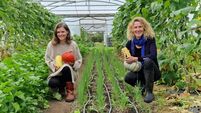
Seamus Bradley is the grower supplying a group called Dublin CSA.
Seamus, originally from Tyrone, is growing close to Celbridge in a place called Kilwogan. “In August 2013, we started to advertise beyond our own network of friends and contacts and also began deliveries to Dublin city centre,” he tells me.
“From August to end of December we delivered to Dublin, then took a break” he pointed out, “starting again in June”. In 2014, the initiative ran through the Winter months, involving another pair of growers with a larger farm and more polytunnels.
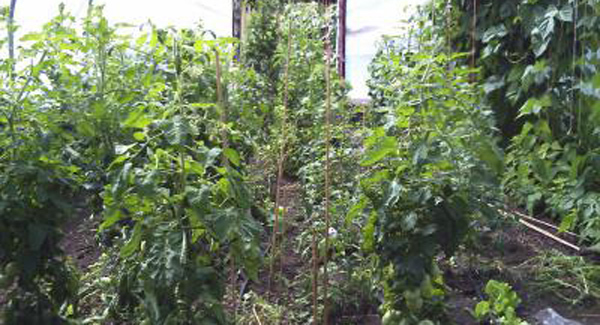
These producers supplied the members through the early months of the year with root vegetables and tunnel crops.
I asked one of the members, Sean Shanagher, about how they grew from a friends and family network up to a larger group.
“We’d a boost this time last year after an info day in Smithfield in Dublin,” he recalled. “This was held in a place called The Third Space. We had guest speakers, got to tell people about what a CSA is, how it operates, benefits of it and so on.”
The group now comprises 30 members, with 20 or so as core weekly purchasers. Delivery is once per week and also to Smithfield.
“A few passers saw us, asked what we were doing and have actually joined and stayed on as members,” according to Sean.
In the first year, people paid up front and also paid a deposit of €40. The deposit was to help growers get started. It was also to compensate the grower if the member didn’t show up on delivery day.
If there was a no-show without prior explanation, €10 was deducted from the €40 each time. Boxes came in €10 and €15 sizes.
Visits and open days, BBQs and working days have been held on the land where the food is grown.
Challenges are city-specific as traffic affects delivery and logistics with members spread across the city.
Nevertheless, the city is where the consumers, and potential new members, are.
Ireland may, finally, be seeing growth in CSAs of the kind that are being experienced elsewhere.
Next week ,we will find out more about Derrybeg CSA.
CSA and other community food initiatives will be discussed at the annual Feeding Ourselves conference in Cloughjordan on April 11.