Dairy goat farming: first, find a market
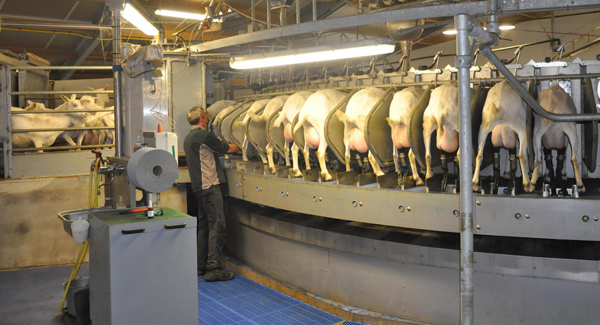
There is only one major liquid goat milk processor in Ireland, but there is a number of large-scale cheese producers.
Making contact with some of these processors will quickly give you an indication if there is an existing market for your milk.
In recent years, a number of new goat farms have been successfully established through working with a local processor or cheese maker that is expanding their product range or level of production.
Therefore, contacting other dairy product manufacturers, even if not currently producing a goat-related product, may be beneficial.
(Details of some farms and processors are available at www.teagascgoatblog.blogspot.ie/p/the-irish-goat-hub.html ) .
Out of courtesy, this should always be done by appointment. You should visit as many as possible, this is time consuming, but invaluable. Each farm will have different facilities and management practices, and you should make notes on which would be most relevant and useful on your farm.
Find out what each farmer would do differently, and whether they have any suggestions. Be mindful that farmers are giving you time out of their busy day, so limit the time of your visit, and listen to what they have to say.
Drawings of sheds, parlours and other facilities should be available from your farm advisor, as will guidance with regard to planning permission .
Ensure any works you undertake comply with Department specifications on goat buildings and facilities (available at www./agriculture.gov.ie/farmerschemespayments/farmbuildings/farmbuildingandstructuresspecificationspdfformat/ ).
Other farmers (goat or otherwise) will be able to give you feedback with regard to contractors and facilities providers. Always obtain a number of quotes, to ensure you are getting the best deal available.
In addition, your farm advisor will be able to provide details of any grant aid that might be available.
Establishing any new farm enterprise is costly, particularly where you must purchase stock and new facilities. Few people have this money readily available to invest, therefore applying to a lending institution for finance is often a necessary part of setting up your enterprise.
Many, if not most, banks now look for a business plan to be completed, as part of the finance application, and in any case, it should be an integral part of your plans. It is a stark reminder of the financial outlay involved, and sets targets that must be attained for your farm to be viable.
In order to keep goats in Ireland, you must be registered with the Department of Agriculture, Food and the Marine.
If you do not currently have a herd number, you must contact your local District Veterinary Office for a registration form, ER1 (or download one) and once it is completed, an official will inspect your holding to ensure it is suitable for keeping goats.
Once you are issued with your herd number, you can order tags for your goats. (Identification and tagging requirements can be downloaded at www.agriculture.gov.ie/animalhealthwelfare/animalidentificationmovement/nationalgoatidentificationsystem/ ).
Teagasc run an Introduction to Goat Farming course, subject to demand. This course covers all aspects of goat production, and includes visits to a number of existing goat farm.
The course is not a prerequisite to getting a herd number or goats, but is a very useful introduction for anyone who has not farmed with goats before.
Information on advice and training is available from the Teagasc Goat webpage ( www.teagasc.ie/ruraldev/goats/ ).
If you intend to begin goat farming, then any experience you can get working with the animals is of huge benefit. They are labour intensive, but are clean, friendly, inquisitive and endearing animals.
Goats are gregarious, and thrive best in the company of other goats.
As a result, they are fond of companionship, and very responsive.
It is said that you drive sheep, but must lead goats.
One of the greatest challenges to setting up a goat enterprise is finding a ready supply of good information. This is particularly the case in Ireland, where the industry is small and widespread.
If at all possible, try to develop a relationship with an experienced goat farmer. This person may be able to answer a lot of questions you will undoubtedly have, and may have other contacts that will be invaluable to you.
A goat enterprise can fail due to poor health, quality and performance in the foundation stock.
Therefore, be extremely cautious when sourcing animals for your herd. Always try to purchase the best quality animals possible, but it is vital that animals only come from healthy herds. Every goat herd has a strict hierarchy; therefore, mature goats sourced from different herds do not mix well.
When unfamiliar goats are mixed together, the resulting stress can considerably reduce their productivity.
Buying younger animals allows time for this hierarchy to become established, and reduces overall stress levels.
However, always try to minimise the number of herds you are purchasing from, in order to lower health risks and stress.
In Ireland, most goats are deep-bedded in straw, and substantial quantities are required, as animals are typically housed year-round. Try to obtain a reliable source for high quality, reasonably priced straw.
*