Beware of step-fixed costs

At its simplest, calculating profit is a relatively straightforward equation.

Profit equals income minus expenses. Making more profit is a function of either increased income or reduced expenses.

Unfortunately, us farmers are generally price takers, and the opportunity to increase income through achieving a higher price is somewhat restricted.

For dairy farmers, the opportunity to increase income through extra sales volume is of course restricted by quotas, if only for the remainder of the current quota year.

For tillage farmers, the opportunity to increase the volume of grain sales as a method of increasing income is restricted by the physical constraints of land, seed and spray technology.

The accompanying graph illustrates how total agricultural output in the US has grown over the last 70 years. As can be seen from the graph, agricultural output (or sales, a more commonly known term) increased steadily over the years 1948 to 2003. However, since 2003, growth in agricultural output has effectively stagnated.

On the ground, despite advances, it seems unreachable to break the six tons per acre barrier for wheat; achieving a herd average output of over 10,000 litres per cow represents the production barrier for dairy farmers. Sticking to the tillage side, some of the productivity gains (which increased yields over recent decades) are at risk of erosion, due to a variety of factors such as fungal resistance to strobilurin-based products, the withdrawal of a variety of chemical products, and the emergence of herbicide-resistant competitive plants such as black grass.

Of course, new developments are always in the pipeline, such as genetically modified Roundup-ready wheat, although the European appetite for GMO is limited.

Back to the profit equation, in order to increase it, where the capacity to increase income is restricted, then the next best approach is to reduce costs.

The first step towards reducing costs is to understand and categorise costs. From an accounting point of view, costs can be categorised into variable and fixed costs.

For instance, vehicle insurance is generally a fixed cost, because the same insurance costs arise regardless of how much the vehicle is used.

Variable costs are, of course, variable, and are linked to output. For example, the higher the usage of fertiliser, the higher the expected output per acre.

Cutting costs can be as simple as picking up the phone and ringing a variety of suppliers looking for the best quote.

Over the last decade or so, the emergence of purchaser groups has added more clout to this strategy, with greater purchasing power, better organisation leading to bulk purchasing, and a sharing of the workload by divvying up the phone duties.

Another strategy to reduce costs is to consider alternative cheaper products. At farm level, we often see cheaper veterinary medicines and sprays come on stream, when drugs and chemicals come off patent.

However, understanding business costs goes a level deeper. Economists use complex terms such as optimal consumption and marginal utility to explain how, in real terms, it’s actually counter-productive to take cost cutting too far. As farmers, we almost intuitively understand this concept. For instance, we know spreading too much fertiliser gives only a minor extra response for the cost involved, or can indeed give a negative outcome, as with lodged crops. But spreading too little fertiliser can be penny wise, pound foolish, due to significant loss in output.

Cost control can actually be more about maximising the bang for your buck than reducing inputs. Using the same example of fertiliser, by focusing on correct timing and optimal application, the response rate can increase substantially. A higher level of crop output can be achieved from the same level of input. Newer technologies, especially in optimising seed and fertiliser placements, strip tilling and computer mapping and linking of soil tests, fertiliser application and yield, together with GPS and ISOBUS technologies, will hopefully deliver greater returns for less input.

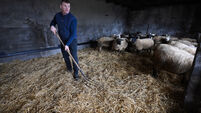
Somewhere in between fixed and variable costs are costs known as “step-fixed costs”. For example, a dairy farmer employs a full-time staff member. This represents a fixed cost for the business, the level of salary paid does not vary week to week, even though the income earned by the business over the course of the year varies.

If a dairy farmer wishes to expand his herd by 70 cows and, as a consequence, needs to hire an extra farm worker, the additional wages represent an increase in the fixed costs of the business.

Looking ahead to the expected growth in milk production, this is most definitely one cost concept that farmers should become aware of. Expanding a dairy farm by a few extra cows can usually be done on the cheap, however, major increases in scale usually require major changes in infrastructure, such as upgraded higher capacity water, roadway and housing infrastructure, not to mention extra labour inputs. These new step fixed costs become embedded within the business and by their nature are difficult to reduce. Within our own farm gates, it is worth looking at what costs are incurred, and what strategies can be used to cut costs.

More in this section

Farming

Newsletter

Stay ahead of the season. Sign up for insights, expert advice and stories shaping Irish agriculture.

Cookie Policy Privacy Policy Brand Safety FAQ Help Contact Us Terms and Conditions

© Examiner Echo Group Limited