Impossible challenge of finding work life balance on the farm
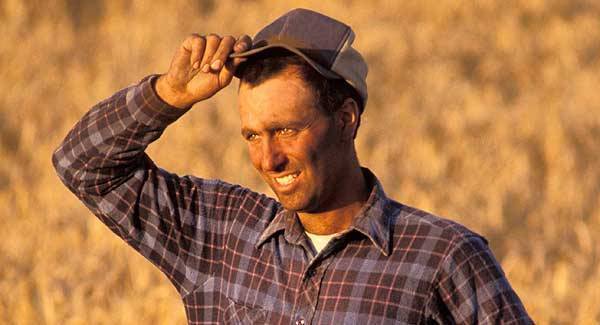
FARMERS will tell you they enjoy the lifestyle, they live right where they work, and they are at one with nature. Most farmers never want to retire, they are (or were) a central part of the community, and they get great satisfaction from high quality production.
As part and parcel of this way of life the farmer was always used to hard work and long hours.
It’s no surprise then, when the statistics from a recent Teagasc survey (compiled from 2012 and 2013 data from 12 dairy discussion groups) showed that, on average, a dairy farmer works about 64 hours per week.
So what exactly motivates the dairy farmer to work such long hours each week?
Is it something to do with “intrinsic motivation”?
That occurs where a person gets an inner pleasure from completing a task.
In the case of dairy farmers, it would be the sense of pleasure, satisfaction or pride a farmer would get from producing a quality product.
Or is it more to do with farmers being self-employed, whether as sole trader, their own limited company, or part of a partnership?
Self-employed persons have a strong degree of control over decision making and the future path of their business.
From my farming industry experiences and my business management experience, I feel it’s a combination of intrinsic motivation and the incentives of self-employment that creates the environment where farmers are happy to work an average of 64 hours of work per week.
Imagine what our little economy might be like if we could incentivise or encourage every employee in the public and private sectors of this country to work 64 hours per week, on average?
I’m not talking about the extrinsic motivation of large salaries and bonuses that we became accustomed to in the Celtic Tiger, even if these rewards provide satisfaction and pleasure that the task itself may not (we’ve all seen first-hand that large salaries and bonuses proved unsustainable for our economy).
Could the Government and employers learn lessons from the intrinsic motivation and incentives of self-employment, instead of trying to motivate staff extrinsically by salaries, bonuses and others perks for work done?
However, there is a question for farmers too. Can they reverse a trend of falling returns for many farming sectors, a trend which seems linked to mass production?
You only have to look at the vegetable industry, the beef industry, and the poultry or pig industry. All are being squeezed into very tight profit margins, ultimately by the large retail multiples. This leaves many farmers earning less, and relying more and more on EU subsidies for a wage.
One of the aims of the EU’s Common Agricultural Policy is to ensure that EU farmers can make a reasonable living; but many Irish farmers are left with a very poor profit margin, especially when you consider their long working hours.
Our committed, motivated and hard-working farming workforce is a valuable asset, but are our Government, and the farm organisations, doing enough to nurture and protect the livelihoods of Irish farmers?
The Government is working to tackle inefficiency through initiatives like discussion groups which can point farmers towards improved technical efficiency, and improved profitability in turn.
Tax incentives offered to farmers joining a partnership can also improve efficiency.
Agri-businesses like co-ops are actively helping farmers to become more efficient, with programmes like Lakeland Dairies’ Rumismart Sustain nutrition system, designed to improve the overall efficiency of food production.
All these initiatives help farming profitability by improving efficiency and lowering costs; but they don’t improve the price the dairy, vegetable, pig, sheep, chicken or beef farmer is paid for his or her produce.
Therein lies the farmer’s biggest obstacle to viability. For example, the beef farmer is getting about €3.50 per kg for beef priced in the supermarket at €15-25 per kg. The beef processor, distributor and retailer take a share of €11-21 per kg. The farmer who invests the most time and money in the product gets by far the smallest portion of the money.
The breakdown is similar for all products, with farmers getting the smallest portion of the eventual price, for the biggest investment of time and money.
The current and only option available to a farmer, if brave enough, is to ramp up his or her production, aiming to benefit from economy of scale. This is difficult, and doesn’t seem to have worked well for vegetable and chicken producers.
It makes sense for farmers to become more efficient, but a more equitable share-out of the money the consumer pays is needed. Even the consumer understands that, and has empathy with the farmer’s plight. Maybe farmers need stronger, more passionate leaders (Liam Doran, general secretary of the Irish Nurses and Midwives Organisation springs to mind).
The Government and farmers’ leaders took part in a recent beef industry summit in Dublin Castle, but so far it seems to have been nothing more than talks, with little action to lift the spirits or bank balances of unhappy beef farmers.
However, there are some positive signs in farm organisations, like new IFA president, Eddie Downey, chairing an EU body on retail balance. He has been elected chairperson of this COPA-COGECA working party, which will push for reform of the EU food chain to deliver a fair return to farmers.
At home, IFA are pushing for an independent ombudsman as part of new grocery regulation.
The Irish Creamery Milk Suppliers Association are pushing for an independent price monitoring system similar to that used in England, to provide clarity on how much Irish farmers receive from the final consumer price. Farmers have two options. One is to pull together and seriously lobby the government and farm organisations on working to address the current inequitable price breakdown, and hope for positive results.
Option two is to consider bypassing the system and selling direct to the customer, through the likes of the Ring of Kerry Quality Lamb Group, or the Allen brothers of Castlemine Farm.
Whichever way committed and hard working farmers go, they have right on their side. They deserve better than the ever dwindling returns from the current system.
* Donal McLoughlin is a Co Longford suckler farmer with third-level management and teaching qualifications.