Students highlight vital role of bees
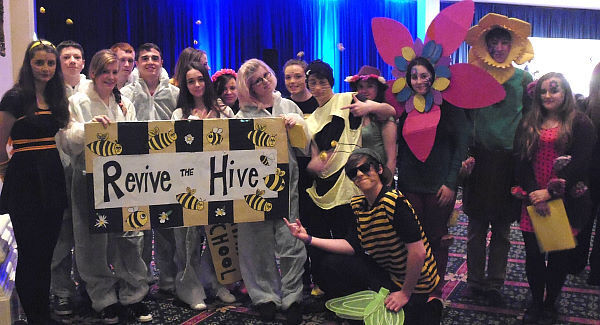
Apples, tomatoes, plums and onions all depend on bees
From earliest times, Ireland was noted for the abundance and quality of its honey. The management of bees was universally understood and every householder kept hives in their garden.
And plentiful woodland ensured that wild bees swarmed everywhere.
Before cane sugar came into general use in the 16th century, the keeping of bees was considered so important that a special section of the Brehon laws are devoted to it. And so prestigious and important a treasure was this bounty that it was often given as part of a tribute to a king.
At meals each person often had a small silver dish filled with honey and meat, fish or bread was dipped into it.
Honey was also used to baste meat while roasting, as well as to baste salmon while broiling.
And, of course, honey was the chief ingredient in mead and records suggest that it was used in greater quantity in this way than in any other Bees are the most important pollinator of crops and native plant species in Ireland.
They are a key component of our wildlife and one of the busiest and least appreciated workforces that we have.
Crops that we take for granted, such as apples, raspberries tomatoes, plums cherries carrots and onions, are dependent on the attention of bees.
And many native plant species would soon become extinct without them, as they would be unable to produce seeds.
A recent survey suggests that 30%of the 101 species of Irish bees are threatened with extinction.
Several causes are cited. Pesticides, the disappearance of certain herbs, plants and trees have all contributed to this decline, as has the veroa mite and more recently, warnings of the possible invasion from France of a large and particularly ferocious type of hornet.
The life of a regular beehive is highly complex, well ordered and conducted with a mathematical — and sometimes ruthless — precision and is a source of wonder that has occupied poets, naturalists and observers for generations.
Stephanie Rosenbaum wrote: “Veiled in this fragile filigree of wax is the essence of sunshine, golden and limpid, tasting of grassy meadows, mountain wildflowers, lavishly blooming orange trees or scrubby desert weeds. The nectar collected by the bee is the spirit and sap of the plant, its sweetest juice. Honey is the flower transmuted.”
It would be hard to imagine a summer without the sight or sound of industrious bees, searching our gardens for pollen.
Some years ago while browsing in a second hand bookshop, I came across a lovely little book written by Maurice Maeterlink in 1902.
The cover is a deep green, and as was customary then, the spine and the title are wrought in beautiful gold leaf.
It is called The Life of the Bee, and Maeterlink — who kept bees for more than 20 years — frequently waxes lyrical about the bee and in addition to the wealth of practical information the book contains, it cites the effect which bees have had on philosophers and artists throughout history.
In one passage, he says: “For thousands of years bees have constructed their marvellous combs, to which we can add nothing, from which we can take nothing: combs that unite in equal perfection the science of the chemist, the geometrician, the architect and the engineer.”
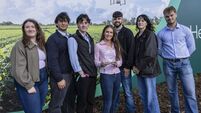
Revive the Hive is the catchy name given to a Young Social Innovators project currently taking place at Schull Community College.
Transition Year Teacher Carol Hurley told me how this environmentally aware project got off the ground.
* How did the group decide that they would make bees the subject of their project Carol?
“Well, we had lots of meetings and brain-storming sessions and the students came up with some impressive ideas. They drive the whole thing in all aspects. And we went through lots of ideas, including taking a look at the effects that the recession has had on teenagers and gay rights. But eventually they decided almost unanimously, that they were going to focus on bees. Several members of the group who had been keen on the idea from the start had done lots of research and they told the rest of us all about the importance of bees for pollination and how the worldwide bee population was declining. They put up a compelling argument and so Revive the Hive was born.”
* What form has the project taken so far?
“The group have held information evenings locally, awareness days at local schools and created a lesson plan for other schools to use that will raise awareness of the issues. I have been amazed and impressed from the beginning by their enthusiasm and ingenuity. We had a Bee Day here at Schull. It was a no uniform day and the students wore black and yellow. They contributed two euro. With the money raised one of our group made a school hive and bought some of the equipment we will need. The hive will be minded by one of the teachers since health and safety doesn’t allow us to keep it at the school. And right now we are waiting to get a swarm. We are all really looking forward to that. We had a visit from West Cork beekeeper Tim Rowe, and that was fantastic, really inspirational. We all learned a lot.”
* What is the main objective of the Young Social Innovators project?
“It’s a national programme designed to encourage young people to make a positive impact on their community. And the Revive the Hive project has certainly done that. The group have become ambassadors for bees locally, and I honestly think that this is one of the best projects we’ve had. Everybody is enjoying it so much that they want to continue it next year. And eventually, we can look forward to our own honey.”
* How have the group developed since they began working on Revive the Hive?
“It’s been really fantastic. Their confidence has come on by leaps and bounds. They have learned to work together, completed research, compiled information, organised information evenings and even had their first experience of public speaking. It’s been a huge success.”
Some uncut lawne in summer will allow clover and bird’s foot trefoil to flower. A wildflower meadow will help bees.
The most important thing is to plant a range of native species to provide flowers for bees throughout the season, from early March to mid-September.
The best plants for bees are often those with blue or yellow flowers because bees can easily see these colours.
Spring is the hardest time for bees because they are busy trying to build their nests but there are few plants in flower to provide them with the energy they need.
Pussy willow and bluebell are excellent early food sources and Mahonia and Hebe are good non-native sources.
In early summer honeysuckle, thyme and borage are ideal and in late summer heathers, knapweed, scabious and non-native species like sunflower sweet pea and lavender give plenty for bees to forage on.
If you can, leave an area of lawn uncut in summer to allow Clover and Bird’s foot trefoil to flower. A wildflower meadow will greatly benefit bees.
Wherever you live in Ireland, you should be able to attract at least five different bumblebee species to keep you company in your garden this summer.
* www.biodiversityireland.ie