CAP reform threatens future for this promising recruit
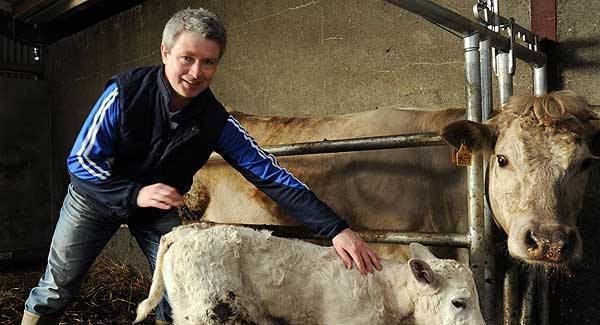
Stephen Cadogan talks to Longford farmer Donal McLoughlin who may opt for non-farming career.
CAP reform threatens future for this promising recruit

AGED 37, and a university graduate, Donal McLoughlin is one of the promising recruits to take Irish farming forward into the next generation.

Instead, the CAP reform, and what he sees as inequitable beef prices paid to the farmer, leave him seriously questioning his commitment to full-time farming.

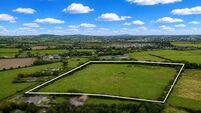
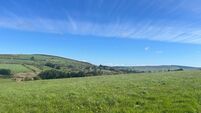
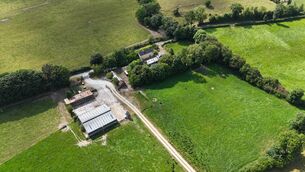
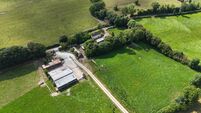
Donal started farming in his own name in 2011, and his suckler beef herd at Ballinamuck in north Longford is a typical Irish farm, average sized with average quality land. He does a small amount of lecturing work in Cavan Institute, but his main activity is suckler cows, calving in February, to have good quality weanlings for sale the following November. His father Joe Pat helps with the work.

Donal came to farming with a Green Cert level six qualification from Longford Teagasc and Ballyhaise Agricultural College. He also holds a degree in management and design from the University of Ulster in Derry, along with a PRINCE2 management qualification and a post grad in learning and teaching from Athlone Institute of Technology.

The cows are a mixture of Charolais-Limousin and Charolais-Simmental crosses. Replacements are selected every year from within the weanling heifers — in line with bio-security best practice to keep the herd healthy.

Breeding is 100% AI. The main bulls used in the herd are Charolais (TUT and CF85), Limousin (CWI and HCA); and Simmental (KFY).

Donal is a member of the Irish Cattle Breeding Federation’s (ICBF) Herdplus service which helps farmers increase profitability through better breeding decisions, based on data recording.

He also participates in the Beef Technology Adoption Programme, run by the Department of Agriculture, and designed to point farmers towards improving their technical efficiency.

Donal also participates in and sees added value in the Beef Data Programme. This is the follow-up to the successful Suckler Cow Welfare Scheme, and requires farmers to record data which will assist ICBF in compiling a comprehensive beef breeding database, ultimately helping farmers to make better cattle breeding decisions.

Donal anticipates that the new Beef Genomics Scheme will help him improve his farming efficiency — if he stays in farming. He is seriously looking at utilising his qualifications in more rewarding career options outside of farming.

With an average weanling sale price of €780, and estimated cow costs of €800, profitability on this farm — like all suckler farms — is borderline. In general, suckler farms and most of the country’s 100,000 cattle farmers depend for income on EU direct payments, principally the single farm payment.

So Donal McLoughlin is not alone when he says he is finding it difficult to plan a secure future in farming, based on the Government’s new CAP proposals.

He will benefit from the special payment scheme for farmers under 40 in the new CAP, which is financed by every farmer in Ireland contributing up to 2% of his EU single farm payment. But 37-year-old Donal calculates he will get only about €1,400 from it — less than one tenth of the €15,000 start-up installation aid package in place for young farmers up to 2008.

He believes that few farmers under 40 will manage to get through the l qualifying conditions for getting significant cash from the top-up.

He says Agriculture Minister Simon Coveney needs to consider how to secure the future of Ireland’s beef herd. But it’s the still evolving CAP reform which will kick in next year that really baffles the Co Longford farmer.

“I am trying to work out the CAP proposals,” he says. Right now, it’s not looking good.” His single farm payment of €212 per hectare in 2013 is projected to slump to €173 (including greening) in 2015, and to recover over four years to €187 in 2015.

“Where does the money go to, if someone on about €200 per hectare doesn’t get it?” asks Donal.

He says the variable greening in CAP reform is an “added insult”.

“A farmer with a €100,000 single farm payment will get €30,000, while a farmer at the €10,000 Irish average will get €3,000, for care for the environment. It’s discriminating.”

“I will get a greening payment of approximately €42 per hectare, whereas a farmer on a payment of €500 per hectare will get a 30% greening payment of €150 per hectare to carry out the very same work. There is a big difference.”

More in this section

Farming

Newsletter

Stay ahead of the season. Sign up for insights, expert advice and stories shaping Irish agriculture.

Cookie Policy Privacy Policy Brand Safety FAQ Help Contact Us Terms and Conditions

© Examiner Echo Group Limited