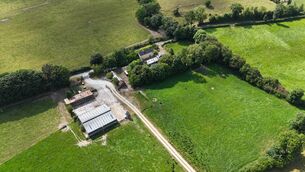
Big problems for dairy producers
They are carrying huge levels of debt, amounting on average to over €6,000 per cow (average about €2m per farm), due mainly to rapid expansion. Some reports put the borrowing a lot higher.
The banks estimate the average cost of milk production in New Zealand to be 21c/litre, which is similar to average Irish costs.
Environmental controls in New Zealand are decades behind Ireland. The cost of bringing these matters up to standard will put huge extra pressure on dairy farmers, and will slow down their production increases.
Expansion in New Zealand, which produces only 2.5% of world milk but 28% of world trade, is likely to be limited to about 2.5% per annum due to land, water, finance, and environmental restrictions.
However, there was a spike of 10% increase last year due to favourable weather.
Many dairy farmers in New Zealand, especially in the North Island, are erecting overwintering/soiled water facilities, and installing concentrate feeding systems.
The New Zealand practice of standing large herds of cows on roadways for fairly long periods of torrential rain (which I often witnessed), and the resulting slurry running off to the nearest stream, is likely to be prohibited in the near future.
Recently, the country’s environment ministry released a survey showing that half of the country’s freshwater recreational sites were unsafe to swim in. It said faecal contamination of waterways, largely by dairy farming, was widespread. The survey also showed that swimming in waterways causes 18,000 to 34,000 cases of water-borne diseases annually.
Until last year, the New Zealand banks took a soft line with farmers, but they are now getting tough, and a lot of farmers are in serious trouble — with a good number of high-profile farmers gone into receivership.
A lot of dairy farmers are being forced to sell, but apart from foreign investors (who are somewhat restricted), there are very few buyers.
We must do everything possible to avoid the same happening in Ireland. There is a danger here that some vulnerable people could get carried away with all the optimism about dairying, and an obsession with very large herds, and with New Zealand methods.
Ireland can’t afford another bubble burst.
At the start of quotas, Ireland and Denmark had a similar number of dairy farmers. With the encouragement of the government, Denmark has less than 3,600 dairy farmers now, while we still have around 17,000. Due to the rapid expansion, Danish dairy farmers are reported to owe €19,000 per cow on average, or €2.5m per farm. Again, we must avoid this type of development in Ireland, even though the idea is popular among some influential people.
I believe there is a fairly good future for careful development of our dairying.
Three of the top world milk producers, the US, China, and India, are already overpumping their ground water reserves and, as dairying is a heavy user of water, this will limit their potential for expansion.
International studies indicate that less than half the increasing demand for dairy products in China can be domestically produced, thus indicating huge demand for dairy imports as their 1.3bn people become more prosperous.
A similar situation is likely to arise in India and other parts of Asia.
I have visited a number of Asian countries, including China, in recent years and their dairy enterprises are generally so primitive that they are unlikely to make any impact on world supply for a very long time.
However, economic slowdown in those countries would have a bad effect on milk prices.