Grasp organic farming opportunity, says McEntee
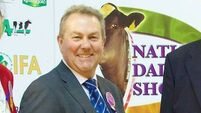
Organic Focus has been launched by Shane McEntee, Minister of State at the Department of Agriculture, Food and the Marine.
This national group is the new driving force for development of the organic sector in Ireland.
The group is made up of representatives of the Department, Teagasc, Bord Bia and a wide range of stakeholders from agri-food sectors, including organic meat (John Purcell, Páuric Connolly), dairy (Peter Young), poultry, eggs and pork (John Paul Crowe), horticulture and education (Cáit Curran), cereals (John Flahavan), fruit (Richard Galvin), and aquaculture (Birgitta Hedin-Curtin).
>>I hope that this new group will provide a framework for meaningful discussion, with a view to promoting the growth of the sector, and formulating a solution-based approach to resolving difficulties, where possible.
I am delighted that Mel O’Rourke, managing director of Sylvan Ireland and Sylvan Europe, who has such a wealth of agri-business experience and an invaluable knowledge of promoting Irish food, has agreed to chair the new group.
I believe that it will have the expertise, experience and knowledge necessary to act as a driving force for the development of the organic sector.
Why should organic beef, sheep and dairy farmers consider joining?
>>The scheme is an attractive scheme, and opportunities clearly exist in the sector for organic beef, sheep and dairy farmers.
With regard to beef farmers, I would encourage them to read a study carried out by Dan Clavin, organic farming specialist, and Brian Moran on the financial performance of organic cattle farming, which is available on the Teagasc website, and was presented at last year’s National Organic Conference.
This study highlights the strong economic performance of organic beef enterprises.
Ireland is self-sufficient in the production of organic red meat for the home market. But we know that there is scope for a big increase in exports.
In the conventional sector, we export 90% of the beef we produce.
In the organic sector, clearly, there is much the same scope for exporting a multiple of what we consume at home.
The challenge is to increase the scale and regularity of supply from producers here at home.
There is a scarcity of organic milk as well, even to supply the home market.
The Irish dairying sector is renowned for its efficiency and forward thinking. I believe that it can only be a matter of time before our dairy farmers see the opportunity that the organic sector offers, and seize it.
It is also important to be aware of the greening element of the new CAP proposals and the potential opportunities it may present to organic farmers.
>>Notwithstanding the current economic difficulties, the Government has provided more than €10m specifically for support and development of the sector in 2012. The Organic Farming Scheme is an attractive one, and the organic capital grant schemes, which provide much needed assistance to organic farmers, are both run by my department.
This level of investment reflects my commitment and that of the Government to the sector.
Teagasc is committed to developing the sector in Ireland. Teagasc, in conjunction with the Department of Agriculture, Food and Marine, continue to run the network of organic demonstration farms which help promote best organic husbandry practice across a range of enterprises.
All new applicants to the scheme receive mandatory training prior to joining the scheme, and Teagasc remains the main provider of these courses.
A national technical organic conference is organised annually by Teagasc to keep farmers and stakeholders up to date with latest farming innovations and industry developments.
This year, a Beef Technology Adoption Programme organic discussion group was established by Teagasc to improve technological transfer on organic cattle farms.
Earlier this year, 12 local part-time organic support advisers were recruited to support the two specialist advisers in their work.
>>While the UK market is challenging, the price for organic beef is still good and markets are being developed in mainland Europe, especially for beef. It is clear that there are opportunities out there for Irish companies to make inroads into developing markets.
In February, I attended Biofach in Nuremburg in Germany. It is recognised as the most important trade event for organic food in the international calendar.
Fifteen Irish companies who have obviously reached the high standard required participated in the event. That event clearly shows that Irish companies, with high quality organic products, can compete on the world stage.
I know from personal experience that the feedback from people who attended this year was very positive and hopefully will help to develop new markets for the organic sector as it has done in the past.
>>The Organic Farming Scheme, the Organic Capital Grant Scheme and the demand for organic produce are clear incentives, and I therefore urge not only existing organic producers and processors, but also those who may be considering the organic option for the first time, to grasp the opportunities that exist, and to recognise the real potential of organic farming.