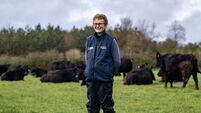
Hard decisions have to be made where the grass runs out
It has been a very difficult few weeks on livestock farms throughout the country.
Many had completed the second rotation, and the third time round is almost over for some.
At this time of year, farmers would always be assuming that growth is approaching a level where it is outstripping demand.
That is far from the reality at present, unfortunately.
So, as we run out of grass, hard decisions have to be made.
I know it only too well. I resisted the notion of re-housing stock at home until last Monday evening.
I walked the farm on Monday morning, as it continued to rain down, and concluded that I had only five days of grass ahead of the suckler cows and calves.
That evening, I was due to bring the herd in to do a bit of sorting out.
I made the decision that once they were in, they would remain in, until growth improved and the land has dried up.
More rain Monday night and Tuesday made me feel happier about my decision to re-house.
Any more damage to land at this time of year would dramatically reduce the amount of grass the paddocks would grow for the rest of the year.
For those of you that have not re-housed yet, you must make sure to do the grass availability sums, and assess land conditions.
Are your cows getting enough energy from grass during this critical breeding season for spring calvers?
Are the cows producing enough milk of the desired quality to support their calf? Are paddocks getting cut up badly?
How will they perform in the next and subsequent rotations?
Don’t wait to move cattle until the damage has been done.
How to feed and manage re-housed stock?
Firstly, all circumstances are different, so there is no recommendation which will suit all farms.
Get advice based on stock requirements, factoring in feed quality and quantity available.
* Cows in the middle of the breeding season need more than just grass silage.
Don’t forget minerals, and perhaps some other concentrated energy source.
* Calves should also have access to some concentrates, where possible.
* Bulling heifers should also get some concentrates, including minerals.
* Weanlings will benefit from concentrate supplementation, because their intakes are still increasing rapidly, as they grow.
* Stores coming in off grass will manage on silage alone, in most cases
Especially in the first 24 hours after housing, keep a constant supply of feed in front of stock.
This will avoid bullying, and reduce stress.
Buying feed?
Most will without thinking go out and buy grass silage, most likely in bales.
Are the bales available to you of good quality?
How much per tonne of dry matter are you paying?
In terms of energy, concentrate feeds may represent better value for short-term supplementation while stock are re-housed.
Many alternatives are also available, such as maize, beet, potatoes, brewers and distillers, etc.
With all feeds available, it is best to get advice on the correct thing to feed individual groups, and what represents value for money.
Housing
It is very important to house animals, where possible, when they are dry, or at least not just after being soaked wet.
Ventilation in the sheds is critical, but avoid draughts too! Don’t pack stock into pens. Give them space, to avoid respiratory issues such as pneumonia.
Check that water troughs are working properly, and that they are clean.
Returning to grass
Hopefully, sooner rather than later, re-housed stock will head to grass again.
Even though stock are back in your shed, don’t forget to keep an eye on your grass.
Once growth, land conditions and weather conditions have improved, a good rule of thumb is to return stock to grass when you have 10 days of grazing ahead of you again.
This will obviously differ from farm to farm, depending on land type, soil fertility and recent re-seeding policy.
Don’t forget tetany defence when sucklers return to grass.
* Next week: reports from the recent Agricultural Science Association beef technical seminar and tour in Co Laois.