From Indian summer to damp squib
The cattle quickened their approach, in anticipation of a move to newer pastures.
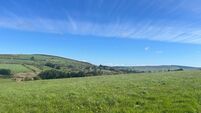
This was the fourth day of what in other parts had been reported as an “Indian Summer” — not so in the southern counties, however. For many of us, each day last week was typified by a driving mist that covered the countryside like a grey wet blanket.
Walking down the field towards the gap that was the entrance to the next paddock, I realised that I could not even make out that paddock’s far end with any clarity. The mist was becoming a fog.
The animals, full but restless, followed, a few racing in front, driving divots of grass into the air as they stopped and spun around to check my approach before surging on again. This wasn’t the wild exuberance of cattle with tails up and racing, this was the measured excitement of animals wanting new pastures, and a dry lie.
I threw the gap open and the vanguard swept in, stopping after 30 yards to look at me back with expressions that said “It’s wet!”, before moving off to graze. The remainder made their way in slowly.
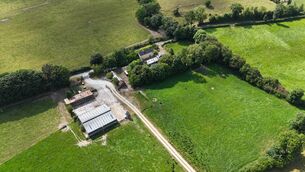
As they settled down, I headed back to the roadway, and a few hundred yards further on, through one of the barley fields on my way to some of the more distant grazing paddocks.
Prior to cutting a few weeks ago, this journey was longer, when I followed the headland tram lines. Now, as I stepped across the sodden rows of straw, I remembered Robert Burns and his poem about the family of mice he had once disturbed, and the line, “The best-laid schemes o’ mice an’ men/Gang aft agley.”
While the grain had been very successfully harvested, the straw had been just a little too green in some of the fields to bale straight off. Last Sunday week, my caution at not baling had seemed very prudent, clever even, as the forecast predicted fine drying conditions for the coming week. I had got it spot on, or so I thought. So sure was I of the forecast that Sunday afternoon that I attached the hay bob I had borrowed from a neighbour to my tractor. With the gates set in the “row” position, I had carefully split each original row, so that every two rows when I finished was turned into three.
The previous two days had been largely dry after a week of on-and-off rain, and as I finished the nine acres that evening, the field looked radiant, the top dull layer having been mixed with the fine gold of the underside. Tomorrow, Monday was promised warm with a light breeze, the beginning of an Indian summer. Wasn’t I the clever boy!
Now four days later, that same field looked dull, the straw wilted under the weight of the constant mist, a situation which would further deteriorate with the heavy rains of Friday and Saturday.
Reflections weren’t going to change the facts, so I pressed on, leaving Robbie Burns behind me.
Over the next few hours, I carefully moved the remainder of the stock from paddocks to fields, making sure that all were well, and that if the forecast rain did arrive, there were further options for improved shelter.
Grass is not a problem, after the very mild weather has brought May-like growth in September. Still, this is the last spurt for 2011, I suspect, so regardless of plenty, I will be husbanding it carefully.