Farmers protest cattle prices

Agriculture Correspondent

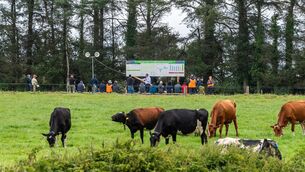
The protests, which began outside plants owned by Anglo Irish Beef Processors (AIBP) in Nenagh, Cahir, Bandon, Waterford, Rathkeale and Clones at teatime last evening, are expected to continue today.

AIBP, the Goodman group, totally rejected IFA suggestions that it does not pay a fair price for cattle, and the Irish Meat Association (IMA), which represents processing companies, described the protests as misguided.

But IFA president John Dillon said the protests were sparked by persistent cutting of cattle prices since early July. In the last 10 weeks, meat factories had cut cattle prices five times, amounting to 95 per head.

Farmers were now losing more than 220 of their premium payments. Mr Dillon said the final blow which brought about last evening's action was a cut in prices again last week despite strong export markets and the lifting of a six-county ban to the important Russian market.

He also described the British market as rock-solid and pointed out that European cattle prices were rising in response to increased demand.

Mr Dillon said farmers were determined to take whatever action was necessary to stop the factories in their drive to cut prices, which was destroying the livelihoods of beef farmers, who can not afford to sell cattle at the unviable price of 2.27/kg (81p/lb). IFA Livestock Committee chairman Derek Deane said there was a groundswell of support for the cattle price protest.

There was a real sense of injustice among farmers and a determination that the factories must be tackled on the issue.

AIBP, the country's largest meat processor, said it paid some of the highest prices in the industry. In many cases it paid the highest price across the various grades of steers, heifers and cows. It always paid and will continue to pay a fair market price to its farmer suppliers.

IMA chief executive John Smith said the IFA was misleading farmers into believing that artificially high cattle prices can be sustained.

Over 90% of cattle slaughtered in Ireland have to be sold to export markets. The prices that meat factories pay for cattle are determined by the returns from the market outlets that are available.

Despite difficulties in finding commercial market outlets for an increased volume of beef, the average price paid for cattle in Ireland this year was about two percent higher than the same period last year.

Mr Smith said while the decision by Russia is a vote of confidence in Irish beef, it does not mean that Russia will buy more Irish beef, nor does it mean higher prices are or will be available.

Traditional markets for Irish beef such as South Africa, the Gulf States, Indonesia and the Philippines remain closed, while Egypt, which has been reopened, has not resumed trade.

The majority of Irish beef exported to Britain is destined for the wholesale, manufacturing and food service segments of the market, where stiff competition from lower priced South American beef dampens the returns available.

The IMA also said the factory price paid for cattle cannot be looked at in isolation. Returns to farmers comprise both the factory price paid for cattle and premia which are paid directly to them by the EU.

In the case of steers, these direct EU premia payments amount to 520 euros per animal (160c/kg or 57.5p/lb).

In 2002 direct premia payments on steers increased by 24c/kg, 8.7p/lb. (on top of the 2% increase in factory prices).

x

More in this section

Farming

Newsletter

Stay ahead of the season. Sign up for insights, expert advice and stories shaping Irish agriculture.

Cookie Policy Privacy Policy Brand Safety FAQ Help Contact Us Terms and Conditions

© Examiner Echo Group Limited