Cheap calls, big ambitions: Can Revolut and Lidl shake up Ireland’s mobile market?
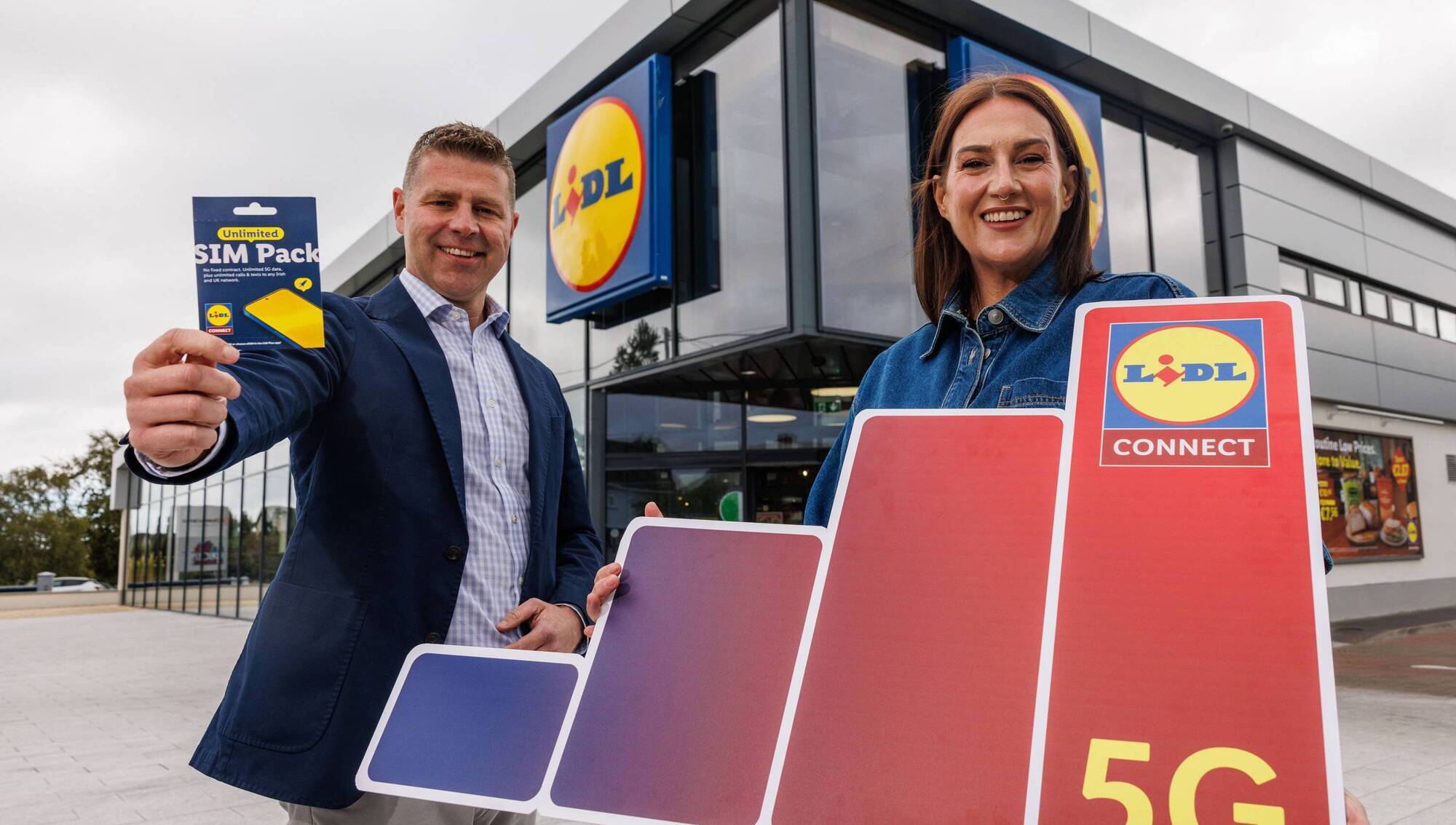
Robert Ryan, chief executive of Lidl Ireland with cookbook author and food content creator Gina Daly at the launch of Lidl Connect in October.
The last month has seen two surprising new entrants into the mobile network space, both of which offer potential customers attractive enough plans for a very low monthly cost, particularly when compared to the established players in the market.
However, the two companies, Revolut and Lidl, are entering a crowded market where there is very little room to compete on price alone.
Ever since Three acquired O2 back in 2014, the Irish mobile network sector has been dominated by just three players — Eir, Three, and Vodafone. These companies own the infrastructure that provides the network coverage across the entire country.
However, despite the sector being concentrated around three companies, consumers actually have a wide range of choices when it comes to their mobile network provider, with numerous companies — and not necessarily telecommunications companies — offering their own services.
Under their licences, the three big players can enter into contracts with other companies to allow them to use capacity on their networks to provide their own services, which are called mobile virtual network operators (MVNO).
This is how Revolut and Lidl Connect were able to so easily enter the Irish market as there were no infrastructure costs to establish the service.
Read More
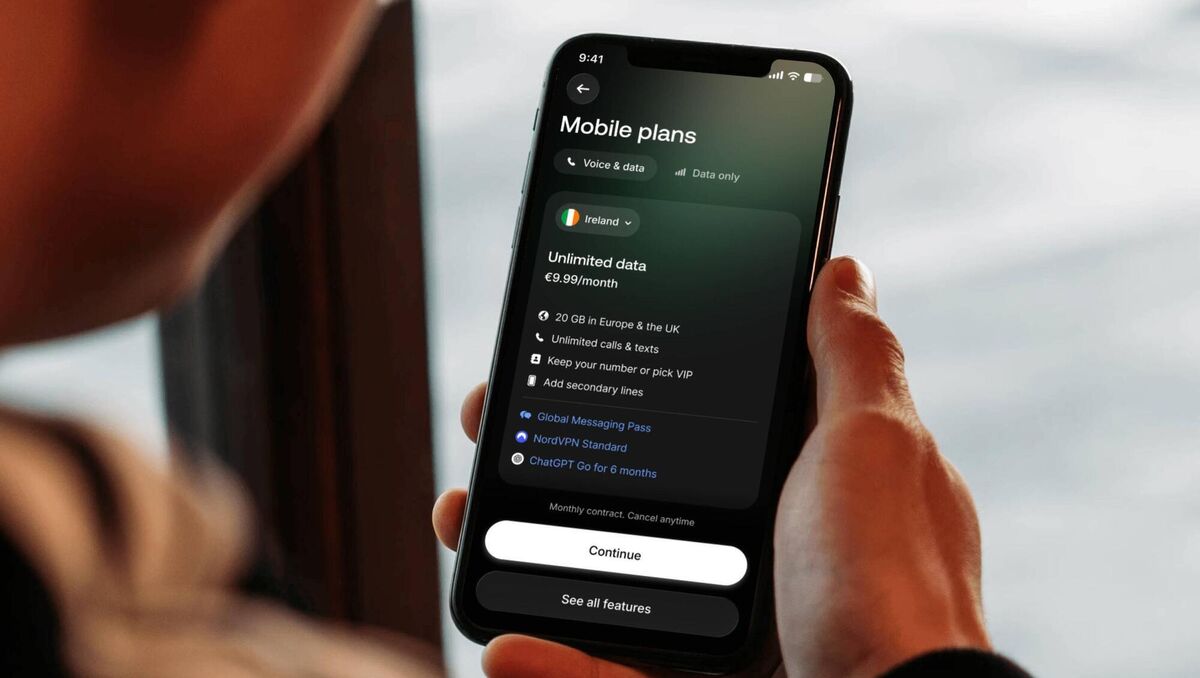
Earlier this week, digital bank Revolut announced it was entering the Irish mobile phone market with a new service starting at €9.99 a month, for the first 25,000 customers that sign up, and €12.99 a month for all other customers.
The mobile plan includes unlimited 5G-ready data, calls, and texts, as well as 20GB of data roaming across the UK and European Economic Area.
This follows the launch of Lidl Connect last month. The supermarket firm offered an introductory lifetime price of €8.99 a month for the first 100,000 customers who signed up, increasing to €12.99 a month for all other customers.
This deal offered unlimited domestic 5G data, unlimited calls and texts to Irish and UK networks, 50GB of EU and UK roaming data and 100 international minutes per month to eligible destinations.
MVNOs are not new to the Irish market. There are a number of other providers offering similar levels of service for low prices, such as An Post Mobile and Sky Mobile, which both use Vodafone’s network, as well as Tesco Mobile and Virgin Mobile, which use Three’s network.
Under the terms of Three’s acquisition of 02 back in 2014, the company was obligated to set aside capacity for two MVNOs on its network as a result of competition concerns.
Revolut is able to offer its service through a company called Gigs that partners with mobile network operators to provide the service. Lidl Connect uses the Eir network.
Not to lose out on this lower cost share of the market, some of the main network providers have their own competing low-cost service providers. Three has 48 Mobile, Vodafone has Clear Mobile and Eir has GoMo.
All these services offer varying levels of sim-only services for similar prices which are lower than those from the main network providers.

Vodafone offers an unlimited sim-only deal for €20 a month for the first six months and €35 after on a 12 month contract.
Three’s lowest sim-only contract offer starts at €14 a month — for a two year contract — that increases to €28 after six months. It also offers a €20 a month year long contract. The cost of both of these plans also increases by €2.50 every April.
Eir’s lowest offer mobile deal starts at €14.99, but the price of this plan also increases by €2.50 every April.
Given the lower prices on offer from the MVNOs, the network providers could be concerned they undercut their businesses and eat into their revenues. However, the networks still have an incentive to offer MVNOs access.
The MVNO in question could be expected to acquire a large customer base, which could drive future revenue to the provider, and/or the MVNO could enter into an agreement with another provider, which means losing out on that revenue.
So, despite providing the service to their competition, the big three players do have an incentive to enter into these agreements.
According to the latest data from the Commission for Communications Regulations (ComReg), as of the end of June this year, Vodafone has the largest mobile market share in the country, when mobile broadband and machine-to-machine subscriptions are excluded.
Vodafone has 31.8% share of the market, with Three in second place at 27.7%. Eir is in third place at 24.9%. Tesco Mobile has 8.1% share, Lyca Mobile has 2.5%, Virgin Mobile also has 2.5%, Sky Mobile has 1.7%, and An Post Mobile has 0.9%.
As of the end of June, there were just over 6.1 million mobile voice subscriptions active across the country.
The data also shows Vodafone is the only major network provider to see a fall in its market share over the last year. In the first quarter of 2025, its market share stood at 33.1%, while Three’s was at 28%, with Eir at 24%.
So far, the data is showing these MVNOs are not eating significantly into the market share of the main providers.
Looking at the financial statements for some of these MVNO companies shows they can still be rather profitable ventures if successful.
Tesco Mobile, the largest MVNO in the State, generated a turnover over just over €100m during its 2025 financial year — an increase of 8.5% year-on-year. Its cost of sales stood at just under €54m and administrative expenses were €30m.
As a result, its after-tax profit for the financial year was €15.2m — up from €11.16m the year before. Tesco Mobile has the added income stream of also selling phones alongside its plans, which not every MVNO in the country does.
The financial results of Virgin Media’s MVNO service is reported with the rest of the company’s telecommunications operations, which includes the provision of broadband to homes and businesses.
The latest results for 2025 shows the mobile operations generated revenue of just under €36.5m — down from just under €40.5m. Increasing revenue in the company’s residential division offset this drop.
Because the likes of Clear Mobile, 48 Mobile, and GoMo are owned by the major network providers, they do not break out the revenue and profits made by each.
Revolut and Lidl Connect are entering an already crowded and competitive market with limited potential for the companies to differentiate themselves on pricing alone.
All of the MVNOs currently operating in Ireland offer plans that vary slightly on the margins, but often have a low introductory offer that increases to about €12.99 after a certain contract length.
After the initial splashy launches — with Lidl Connect, for example, landing 100,000 customers very quickly on the promise of a lifetime low monthly fee of €8.99 — Revolut and Lidl Connect will be hoping their brands will help them stand out from the field.
For Revolut, Ireland is already one of its standout markets, with 3.4 million customers using its services. For those who already pay for Revolut premium plans, there will be the added benefit of being able to use their RevPoints — these are points generated from paying with Revolut’s services which can be redeemed for discounts on certain purchases — to pay their monthly bill.
For the company, this offer could potentially move more people towards its premium plans, which would guarantee customers pay at least €8.99 a month to the company. The cost of Revolut’s premium plans goes all the way up to €60 a month.
Lidl, on the other hand, has a built-in marketing advantage in that everyone already considers the supermarket chain to be cheaper than its competitors like Dunnes Stores and Tesco, and this image of the company could extend to its mobile service offering even if it isn’t really cheaper.
The difficulty for both of these new entrants will be to try and maintain the early momentum to bring in new customers and potentially pry some away from the already established players. However, that might be a difficult task.
The three main players in the sector hold sizable chunks of the market share, which don’t seem to budge no matter how many competitors join the market. Tesco Mobile entered the Irish market in 2007 and today it only holds just over 8% market share.
So it remains to be seen how many customers Revolut and Lidl can attract. It benefits them that the sector has a low cost of switching, but on the other hand they might find it difficult to pry customers away from the already established players.

CONNECT WITH US TODAY



Be the first to know the latest news and updates