Apple enters the foldable market with the iPhone Duo
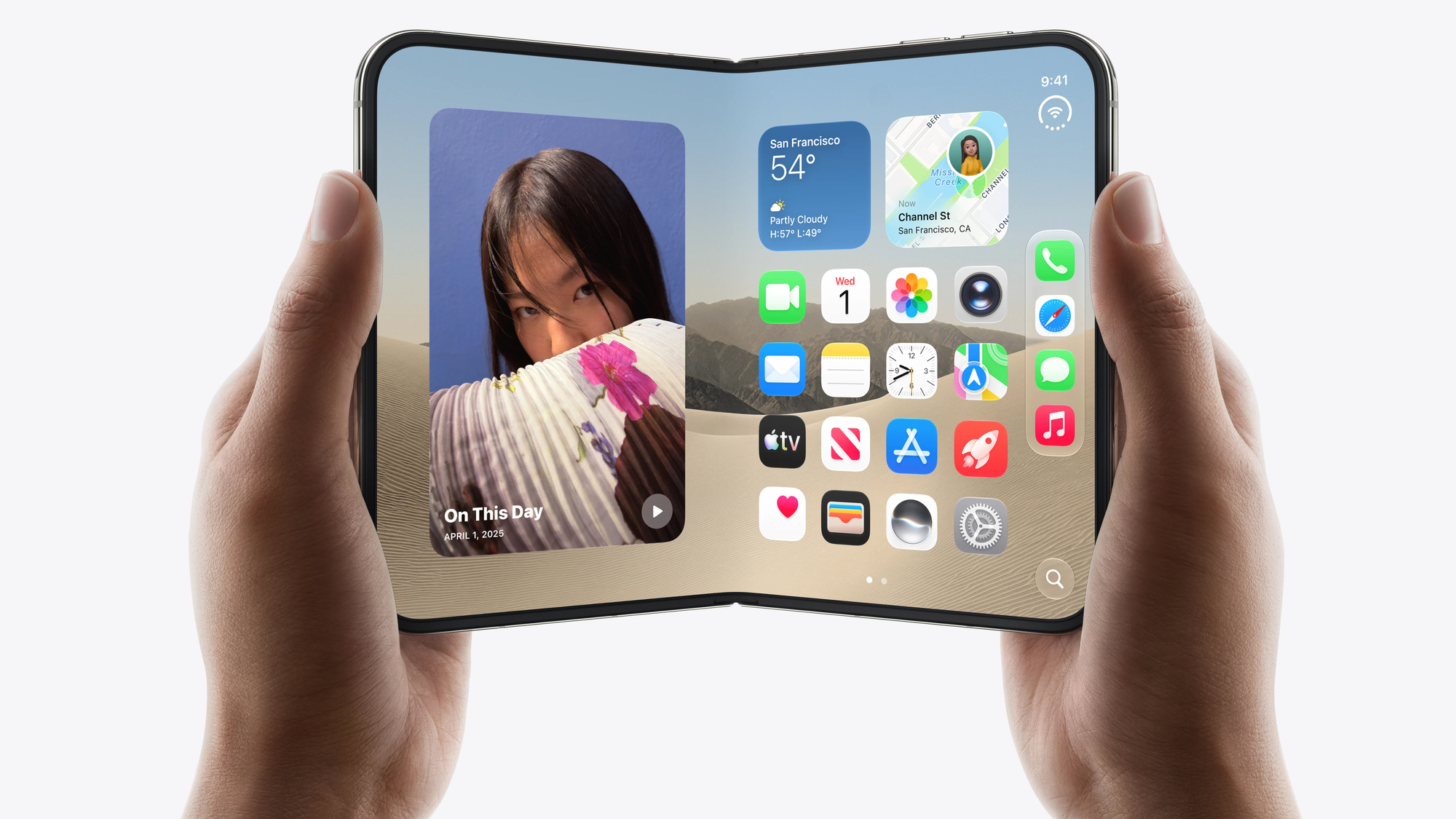
After years of watching from the sidelines, the world’s most valuable tech company has finally released its first folding device.
Apple's new foldable, the iPhone Duo, is available for pre-order on October 16 in two colour variants, with shipping starting October 23.

Apple's new foldable, the iPhone Duo, is available for pre-order on October 16 in two colour variants, with shipping starting October 23.

The world's biggest tech firm finally entered the folding phone market with its launch at Apple Park in Cupertino, California. Tim Cook opened the evening with a brief cameo, passing the torch to John Ternus, who is now stepping into the role of Apple CEO. Ternus did not spend his time talking about specs. Instead, he focused on the idea of the iPhone as an "intelligent personal hub."

He spoke about a future where your device understands your context, your routines, and your needs. "The product at the centre of your experiences becomes even more essential," Ternus said during his keynote. He pushed the idea that Apple intelligence is not just an add-on, but a core part of how we live.


The iPhone Duo: A new shape for a new era

After years of watching Samsung, Google, and so many other brands release folding phones, Apple has finally launched their own. The iPhone Duo was designed from the ground up, with a cover display that matches the inner display’s aspect ratio for a seamless transition. The Duo has a distinctive, passport-like shape, similar to the Samsung Galaxy Z Fold 8, but it also reminds me of the Google Pixel Fold 11, with a cover display that has rounded corners on the right side and square corners on the left.

Unlike the Z Fold 8, the Duo features a more durable IP68 rating for dust and water resistance.

The cover display is 5.4 inches, and the inner display is 7.6 inches, with Apple using a custom liquid glass finish that almost entirely hides the crease.

iOS 27 has been rebuilt to handle the new form factor with a new vertical dock, and the side-oriented controls look quite intuitive for one-handed use.

One of my favourite technical details is the under-display selfie camera. I love the idea of a completely uninterrupted screen, which I think is worth the slight trade-off in absolute image quality. I have always preferred a clean display over the interruption of a notch or a cutout.

However, no device is perfect. If you are a photography enthusiast, you might find the Duo a bit disappointing. Like most foldables, it cannot match the hardware found in standard flagships like the new iPhone 18 Pro. The main camera looks capable, though not as advanced as the 18 Pro, and it lacks a telephoto lens. The ultrawide is the same as the one on the 18 Pro, but the lack of a real telephoto camera will put serious camera enthusiasts off.

There’s also the question of value. At a starting price of €2369, the Duo is significantly more expensive than an iPad mini. You have to ask yourself if you really need a device that does both. But if you want to move away from a tablet and need something pocketable, this might be the device that pushes the foldable market into the mainstream, especially in regions outside Asia where adoption has been slow.

iPhone 18 Pro and 18 Pro Max

While the Duo was the headline, the iPhone 18 Pro and 18 Pro Max remain the heavy hitters for most users. These models are built around the new A20 Pro chip, which uses a 2nm architecture. Apple didn’t launch a non-Pro this time out, so expect that later in the year.

The standout hardware update is the main camera's variable aperture. While Samsung and Honor have done this before, Apple’s implementation is unique; from what I saw at launch, the aperture looks variable rather than switching between two fixed apertures. This should give you much more control over light and depth of field, making it behave more like a real DSLR.

There are also new colour options, specifically Glacier and deep, sophisticated Burgundy. The battery life remains a high point, with the Pro Max offering significantly more usage time than its predecessors.

Apple Watch Series 12 and Apple Watch Ultra 4

The new Apple Watch lineup focuses heavily on what Apple calls "audio intelligence." The Series 12 and the Ultra 4 both feature the S11 chip, which enables features like Live Rewind. This allows you to essentially "go back in time" by 15 seconds to transcribe something you might have missed in a conversation.

The health-sensing system has also seen a major upgrade. The heart rate readings are more frequent, sampling data much more often than the previous generation. There’s finally a new readiness and recovery score, similar to what we’ve seen from other wearables. The Watch Ultra 4, meanwhile, remains the choice for adventurers, now offering up to 84 hours in low power mode.

AirPods 5

AirPods have taken a turn toward accessibility with the new AirPods 5. They feature an open-ear design with improved active noise cancellation, a huge step for this style of earbud.

There’s also a new version with on-stem volume control along with live translation..

Prices and availability

The iPhone Duo will be available for pre-order on October 16, with a release date of October 23. It starts at €2,369.

The iPhone 18 Pro starts at €1,489, while the Pro Max starts at €1,639. These will be available on September 18.

Apple Watch Series 12 starts at €449, and the Apple Watch Ultra 4 starts at €899.

AirPods 5 are priced at €149 for the standard model and €169 for the version with the wireless charging case and volume controls. All these products are expected to hit shelves in September.

More in this section

The Business Hub

Newsletter

News and analysis on business, money and jobs from Munster and beyond by our expert team of business writers.

Cookie Policy Privacy Policy Brand Safety FAQ Help Contact Us Terms and Conditions

© Examiner Echo Group Limited