The silicon siege: Why Apple’s M5 Mac Studio proves they’ve already won the local AI war
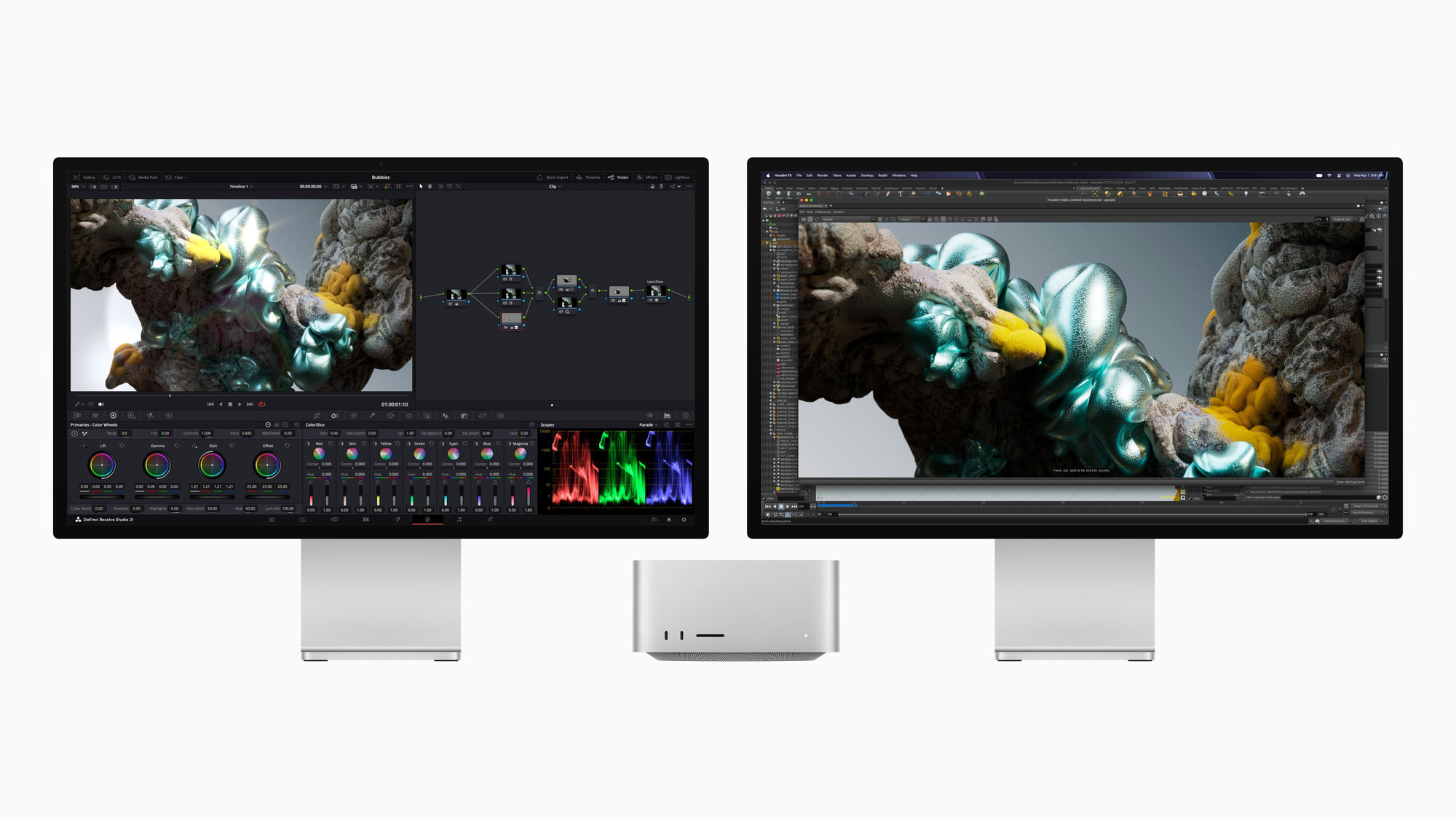
M5 Max power: 3x faster Magic Mask (DaVinci Resolve) and 1.4x faster rendering (Maxon Redshift) compared to M4 Max. Picture: Apple
Apple just dropped a bombshell. While the tech world has been hyper-focused on massive, energy-hungry data centres and the endless subscription fees of cloud-based LLMs (Large Language Models), Apple has been quietly building a different kind of future.
This week’s announcement of the new Mac Studio, powered by the M5 Max and the monstrous new M5 Ultra, isn't just a spec bump. It is a declaration of war against the cloud.
The M5 Ultra brings a 36-core CPU and an 80-core GPU to the table, but the headline isn't the core count; it's the memory. With up to 512GB of unified memory and 1.2TB/s of bandwidth, the Mac Studio has officially entered a class of its own.
Apple is also introducing Neural Accelerators directly into every GPU core, resulting in up to 4.3x faster AI performance. Whether you are running an 8K video render or training a custom machine learning model, the hardware is designed to ensure that processing never feels like waiting.
But why does this matter to anyone who isn't a data scientist?
For the past few years, we have been told that AI must live in the cloud. We’ve been told that to have a smart assistant, you have to trade your privacy, your data, and your latency to a third-party server.
There is a growing, quiet movement in the developer and pro-creative communities toward Local AI. The desire to run models entirely on-device, where your data stays private, your costs are zero, and your response time is instant, is skyrocketing.
And this is where Apple has played its masterstroke.
In my view, Apple has already cornered the local AI market, and this release is the double down that seals the deal.
While PC manufacturers are still struggling to bridge the gap between system RAM and GPU VRAM, Apple’s unified architecture allows the M5 Ultra to treat that massive 512GB pool as a single, lightning-fast playground for AI. You can’t buy a consumer Windows desktop that can load a massive, frontier-class LLM with 512GB of VRAM. You have to buy a server rack. Apple has taken that server-level capability and shrunk it into a compact, quiet box that fits under a monitor.
But for the AI researcher, the filmmaker, or the developer who wants to run the world’s most powerful models without asking a cloud provider for permission, there is no longer much competition. Apple isn't just participating in the AI revolution; they are building the hardware that will allow us to own it.
The price tags are, as expected, premium. They start at €3,049 for the M5 Max and scale up significantly to €6,699 for the Ultra. I configured the M5 Ultra to the maximum spec, and it hit an eye-watering €20,779. Both machines should be available September 22.


CONNECT WITH US TODAY



Be the first to know the latest news and updates