Irish exports to Arab region rise nearly 8%
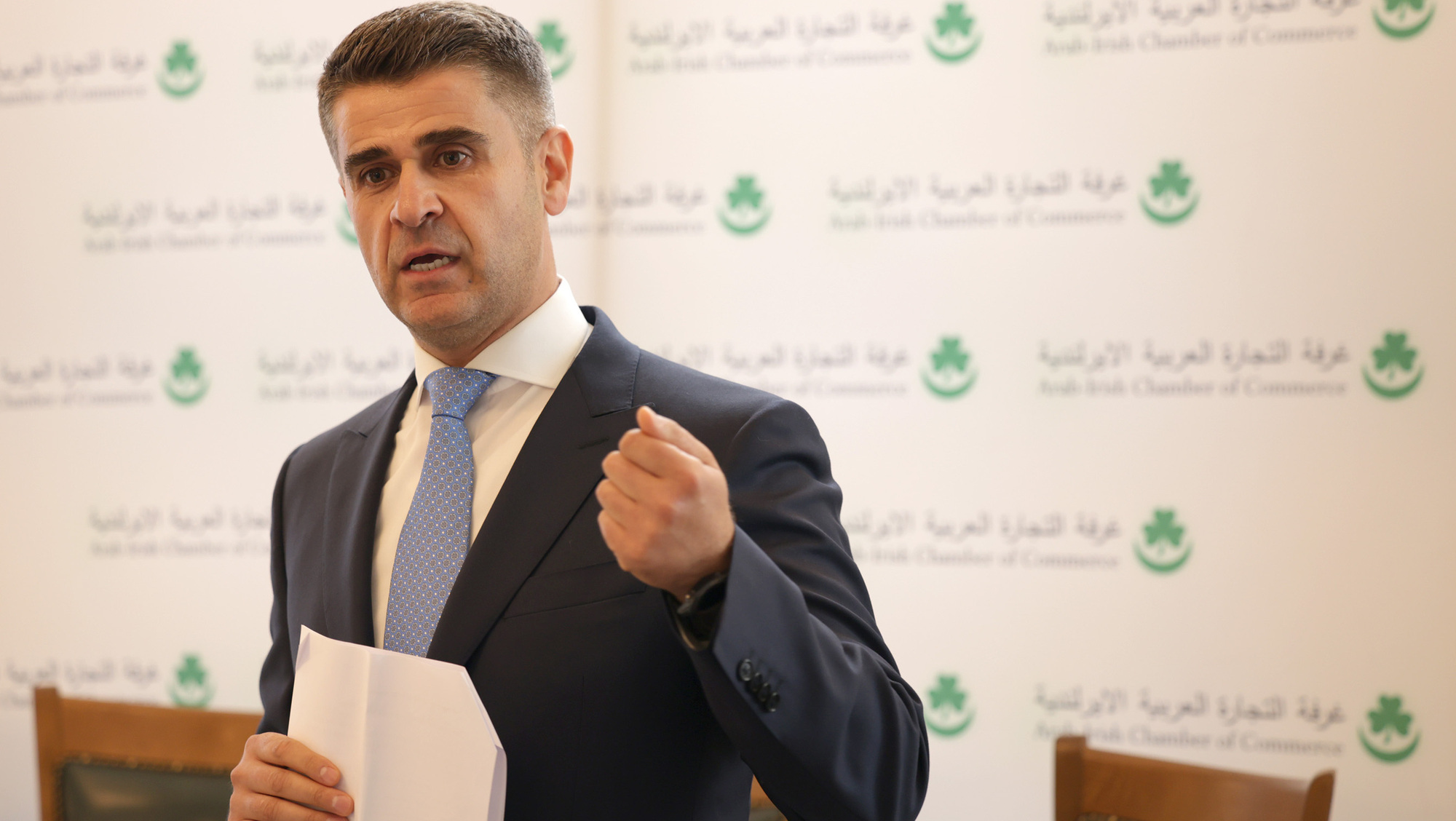
Ahmand Younis, CEO of the Arab Irish Chamber of Commerce said the figures 'demonstrate there is still demand but it’s important to recognise the ongoing challenges doing business in the Arab world during the ongoing conflict, particularly for Ireland’s SMEs'. Picture: Jason Clarke
Irish exports to the Arab region grew by almost 8% during the first six months of the year with pharmaceuticals being the largest export category to countries such as Saudi Arabia and the United Arab Emirates (UAE).
According to the data, exports between January and June to Saudi Arabia, UAE, Kuwait, Egypt, Jordan, Libya, Lebanon, Morocco, and Qatar were up €118m year-on-year to €1.62bn despite the continued uncertainty and disruption affecting trade and logistics across the Middle East region.
The growth in exports to the region was driven by a 22.2% increase in Saudi Arabia reaching €607.9m. That country alone accounted for more than a third of all Irish goods exports to the Arab region during the period.
Irish exports to Egypt increased by 25.9% to €149.3m. Jordan also recorded significant growth, with exports rising 41.7% to €58.6m. Irish exports to Kuwait also rose 8.4% to €57.5m.
Exports to the UAE experienced a decline of 18.5% to €305.7m. However, it was still the second largest market in the region for Irish goods. Qatar also recorded a decline, with exports falling 14.7% to €38.7m, while exports to Libya fell by 33.2% to €14.3m.
Lebanon remained broadly stable, with exports down 3.7% to €41.1m, while exports to Morocco were virtually unchanged at €77.2m.
Chief executive of the Arab Irish Chamber of Commerce (AICC) Ahmad Younis said the figures “demonstrate there is still demand but it’s important to recognise the ongoing challenges doing business in the Arab world during the ongoing conflict, particularly for Ireland’s SMEs”.
“We can see the market isn’t moving uniformly, however; some countries are seeing significant growth while others — including the UAE — have experienced declines, which shows there are very different economic and logistical conditions facing businesses across the region.”
Pharmaceuticals was the largest single category of Irish exports to Saudi Arabia and the UAE between January and June. Pharmaceutical exports to Saudi Arabia were valued at €238m during this period, accounting for roughly 39% of total Irish goods exports to the market.
There were also around €188m in essential oils, perfumes, toiletries and cleansing products, as well as exports of machinery, electrical equipment and food products.
Of all exports to the UAE, pharmaceuticals were valued at around €75m, or roughly 24% of total exports. Other significant categories included perfumes/toiletries, manufactured goods, office equipment, and food.
During the first six months of this year, the value of Ireland’s total exports stood at just over €85.4bn, with the EU accounting for just under €39.5bn and the US accounting for €26.2bn. Pharmaceutical and medicinal exports alone made up €38.8bn of Ireland’s exports during the first half of the year.
The AICC said for exporters the trading environment “remains challenging, with geopolitical uncertainty, changing transport conditions and higher costs continuing to create additional pressure for companies operating across the region”.
“The impact of this disruption is particularly significant for businesses dealing in time-sensitive, temperature-controlled or otherwise logistically sensitive goods.”
“The first half of 2026 has shown that Irish exports can continue to grow,” Mr Younis said. “That does not mean the difficulties should be underestimated and companies need to be prepared for ever-changing conditions given the geopolitical situation. The message for Irish exporters is that the Arab world is still open for business.”

CONNECT WITH US TODAY



Be the first to know the latest news and updates