Commercial vacancy rate declines marginally during second quarter
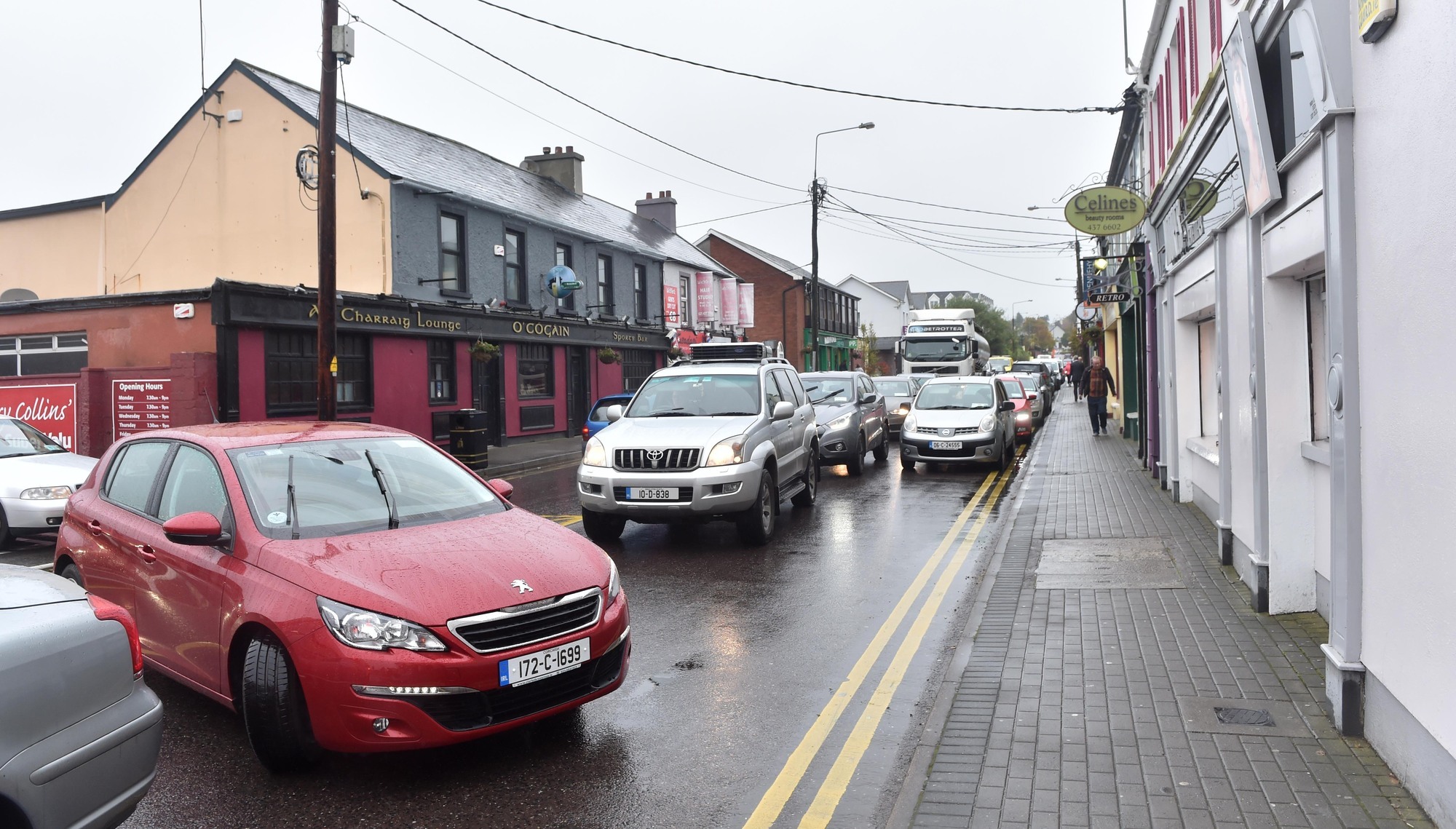
Carrigaline in Cork , pictured, at 5.1%, and Greystones in Wicklow, at 7.3%, recorded the lowest commercial vacancy rates among the sampled towns. Picture: Dan Linehan
The national commercial vacancy rate fell marginally over the last year to 14.5%, marking the first year-on-year decline since this data was first reported in 2013, new figures show.
Figures from GeoDirectory show there were 30,611 commercial units vacant across the country as of the end of June. This means the national vacancy rate fell by 0.1 percentage points year-on-year.
Commercial vacancy rates increased in 13 out of 26 counties in the State, but fell in 12, and remained unchanged in Cavan. There were 13 counties that had a vacancy rate below the national vacancy rate of 14.5%.
The analysis of the data was prepared by EY for GeoDirectory.
Partner at EY Ireland Simon MacAllister said while the decline in the national commercial vacancy rates was “modest”, it was “significant as it marks a break from a long period of steadily rising commercial vacancies since 2013”.
“The data highlights a growing divide between areas benefiting from population growth, employment and investment, particularly in the East, and those that continue to face challenges sustaining commercial activity, especially in the West and North-West,” he said.
“This underlines the need for sustained investment and policy measures to support town centre vitality and long-term economic growth.”
Read More
Donegal recorded the highest vacancy rate at 20.7%, followed by Sligo at 20.2% and Galway at 18.6%. Meath maintained its position as the county with the lowest vacancy rate at 9.9%, followed by Wexford at 11.2%, and Westmeath at 12%.
In Dublin, the commercial vacancy rate stood at 13.3% during the second quarter, a 0.6 percentage point reduction compared to the same period last year. Cork’s vacancy rate stood at 13%.
Of the 80 towns and urban areas analysed countrywide, Shannon in Clare registered the highest commercial vacancy rate at 34.9%. Ballybofey in Donegal recorded the second-highest rate at 34.5%, followed by Boyle in Roscommon at 30.1%.
Carrigaline in Cork, at 5.1%, and Greystones in Wicklow, at 7.3%, recorded the lowest commercial vacancy rates among the sampled towns.
The report indicated there were 179,998 occupied commercial units nationally, with 151,993 assigned an NACE economic classification code as of the end of June.
With the exception of health and education, all sectors witnessed a decline in the number of commercial units.
The services sector continues to hold the dominant share of occupied commercial space countrywide, at 49.5%, or 75,305 units, down 457 units year-on-year. Within the services sector, accommodation and food services had the highest number of commercial units at 22,042, down 439 units.
Retail and wholesale represent the second-largest grouping at 21.7%, 33,013 units, down 434 units year-on-year, while health accounts for 9.6%, or 14,652 units.
Industry accounted for 5.1% of the total commercial units, a decrease of 97, while construction, financial, education, insurance, and public administration each accounted for less than 5%.
Chief executive of GeoDirectory Dara Keogh said with more than 30,611 commercial units lying vacant across the country and 13 counties still seeing vacancy increases, “commercial property owners and local high streets need to continue to adapt to shifting consumer habits”.

CONNECT WITH US TODAY



Be the first to know the latest news and updates