Carol Lynch: What happened to Irish exports in the decade after Brexit?
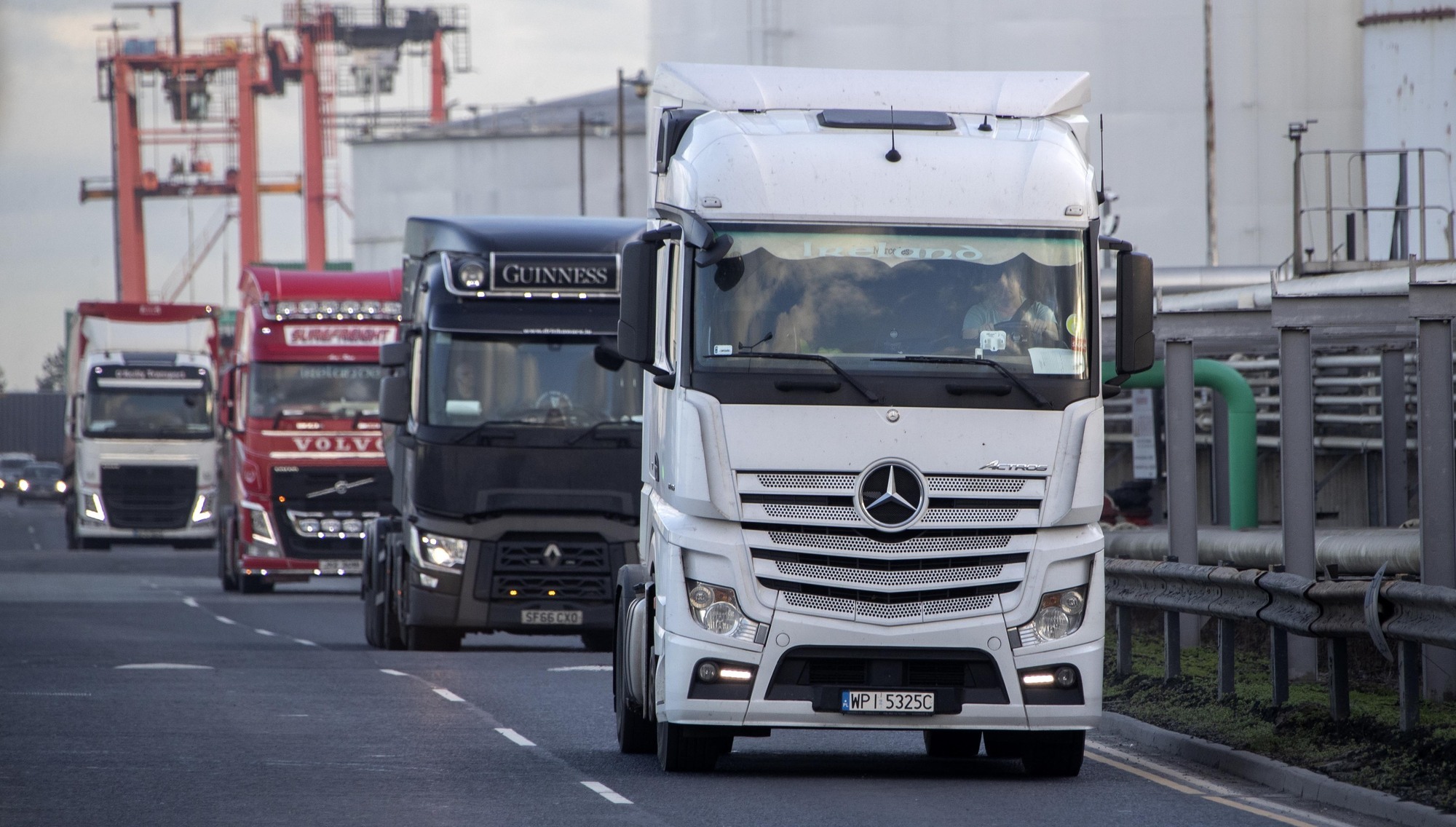
The UK remains an indispensable first step for Irish exporters, and the macro data over the last decade tells a fascinating story. Picture: Colin Keegan
Ten years on from the high political drama of the Brexit vote, Ireland and the UK's economic relationship remains as important as ever — but trading between the two countries is no longer the straightforward affair it once was.
Brexit did not sever the deep commercial ties between our two islands. For the indigenous and mid-market sectors in particular, the UK market remains a cornerstone of growth. What Brexit did do, however, was fundamentally change how that trade happens — and how it now needs to be managed.
That distinction matters. While the initial disruption was significant, Irish firms adapted to the new trading environment. In doing so, many businesses have emerged more resilient, more comfortable with international trade complexity, and better equipped to scale beyond familiar shores.
Although the Brexit vote took place on June 23, 2016, the practical reality of Brexit did not come into focus until the opening months of 2021. In the end, the new trading regime came into force with very little adjustment time for business. The result was predictable: disruption, delays and a sharp increase in complexity as companies grappled with new customs and VAT requirements alongside supply chain pressure.
Read More
That initial disruption has long since subsided. The underlying shift, however, remains. Irish exporters deserve credit for adapting quickly to a new trading reality. In effect, businesses that had long treated the UK as an extension of the domestic market had to adjust to dealing with it as a third country for customs purposes. That meant becoming more familiar with the disciplines of international trade and moving beyond the relative simplicity of operating within the single market.
Changes such as these matter. They affect pricing, supply chain design and, ultimately, decisions about where and how businesses grow. It can also build confidence in trading further afield, whether into the wider EU, Canada, Mercosur or other markets opening through EU trade agreements.
Despite diversification, the UK remains an indispensable first step for Irish exporters, and the macro data over the last decade tells a fascinating story.
On paper, Irish exports to the UK increased from €15.48bn in 2015 to €20.59bn in 2025. When adjusted for inflation, however, that growth is broadly flat — suggesting not a collapse in trade, but a relationship that has held up rather than materially expanded over the period.

That pattern is also visible at sector level. Between 2015 and 2025, Irish exports of food and live animals to Great Britain increased from €3.90bn to €4.65bn, while machinery and transport equipment exports rose from €2.51bn to €3.40bn. Chemical and related product exports, by contrast, fell from €3.89bn to €3.20bn over the same period.
At the same time, the UK’s share of Irish exports has fallen from 14% in 2015 to 8% in 2025. This underlines an overall broader shift in Ireland’s export base which has become more diversified, even as the UK remains indispensable for many indigenous and mid-market businesses.
While the immediate post-Brexit period was defined by separation, what is now emerging is something more pragmatic: a gradual recalibration towards cooperation, driven by economic reality.
Ireland is uniquely positioned within that reset. As the EU member state with the closest economic ties to the UK, Ireland has both an interest in — and an ability to influence — how this relationship evolves.
In the context of the EU presidency, that role becomes more than symbolic. It is an opportunity to support a more functional, business-focused approach to EU-UK trade — one that recognises even incremental reductions in friction can deliver real economic value.
The same is true of closer cooperation in areas such as energy, climate and selected sectors where regulatory alignment makes practical sense from a trade perspective.
The upcoming second EU-UK summit on July 22 is another signal of this reset in the relationship. Ireland should be uniquely positioned to help shape a more pragmatic, business-focused agenda that prioritises the reduction of friction in key areas of trade and, particularly, those of interest to the country.
While the summit is unlikely to deliver sweeping change, even incremental progress on customs cooperation, targeted regulatory alignment and trade facilitation would be meaningful for Irish businesses.
Ultimately, the Brexit conversation now has three dimensions for Irish exporters.
- Maintaining focus on growth opportunities in our closest neighbouring market. The UK remains one of the world’s largest economies and, for many Irish businesses, the most accessible first step in export growth;
- Expanding within the EU single market while managing supply chain access either through or around the UK;
- Using the lessons learned from Brexit to become more confident with internationalisation and growth on a broader global scale.
For the mid-market companies in particular, this is where the real challenge now lies.
While the UK remains the most logical stepping stone for an expanding Irish business, relying on it entirely is no longer a viable standalone strategy.
At the same time, the traditional alternative of expansion into the United States has also become more complex. Tariffs, regulatory requirements and a more uncertain geopolitical environment have all raised the barriers to entry.
In other words, Irish companies are facing a more difficult international landscape at precisely the moment when global diversification is most necessary.
This is the true legacy of Brexit.
Irish businesses can no longer rely on proximity or precedent. Growth — whether in Manchester, Munich or beyond — now requires strategic planning, a clear understanding of trade rules and a willingness to invest in capability.
The UK will always be central to Ireland’s economic story, and for many firms, it will always be the starting point. But it can no longer be the endpoint. In this more complex global trading environment, success belongs to those who view trade compliance not as an operational afterthought, but as a core growth discipline.
- Carol Lynch is tax partner and head of Customs and International Trade Services at BDO Ireland