Middle East conflict forces contraction in Irish construction sector
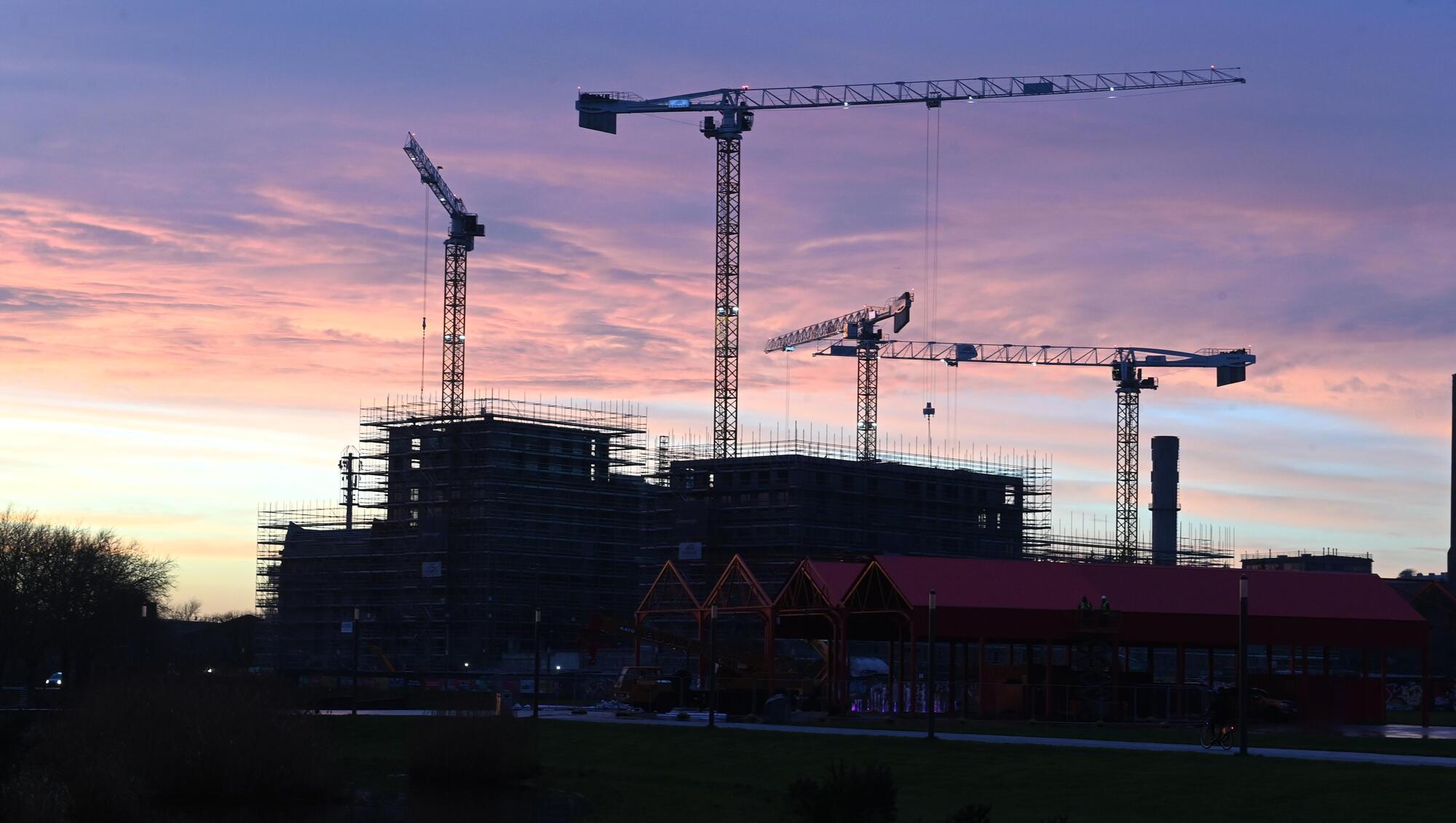
Where activity fell, companies linked it to projects being put on hold due to uncertainty caused by the war in the Middle East, in addition to sharply rising prices. Picture: Larry Cummins
Growing uncertainty arising from the ongoing conflict in the Middle East has led to a renewed contraction across Ireland's construction sector, with new orders decreasing for the first time in five months.
Data from AIB's latest construction PMI showed waning business confidence amid a fall in overall construction activity, with fuel protests in April contributing to a substantial lengthening of supplier delivery times and growing input cost inflation.
The headline seasonally adjusted Construction Total Activity Index dipped back below the 50 no-change mark in April, falling to 47.1 from 53.2 in March. AIB said the reading signalled the first fall in total activity for three months. Moreover, the lender noted that the reduction was solid and the fastest since last November.
Where activity fell, companies linked it to projects being put on hold due to uncertainty caused by the war in the Middle East, in addition to sharply rising prices.
Read More
Meanwhile, housing activity decreased for the first time in three months, joining the civil engineering category in contraction mode. Commercial was the only construction type to record an increase in activity during April, however, the rate of expansion was only marginal and the slowest in the current three-month growth sequence, AIB said.
Uncertainty caused by the war also led some clients to hold off on committing to new projects in April, thereby resulting in a first reduction in new orders in five months. The rate of decline was solid and the fastest since August 2023, the lender found. Confidence in the outlook for construction activity also waned in April, dropping to the lowest in almost three-and-a-half years.
Intensifying inflationary pressures were behind weaker optimism, but some firms remained hopeful that new orders would recover and support the growth of activity over the next 12 months. Overall, input costs increased substantially in April, with inflation often linked to higher fuel costs. The latest rise was the fastest since June 2022, with almost 68% of respondents signalling an increase over the month.
Fuel protests, meanwhile, were a key factor resulting in longer suppliers' delivery times. Lead times lengthened to the largest extent since May 2022, with shipping delays due to the war in the Middle East also impacting vendor performance.
“The AIB Irish Construction PMI survey for April indicated that the sector lost momentum at the start of the second quarter as the uncertainty arising from the conflict in the Middle East weighed on activity," said John Fahey, senior economist at AIB.
"Some of the other details in the survey also illustrate the subdued operating environment for the construction sector last month. The new orders index, which is regarded as a leading indicator, experienced a decline for the first time since November."
"The report noted that many respondents linked the fall to projects being put on hold due to the uncertainty caused by the Middle East conflict. The impact of the conflict was also reflected in higher fuel costs, contributing to input cost inflation increasing at its highest level since June 2022.
Mr Fahey concluded: "One bright spot in the April report was firms continuing to expand their staffing levels."


CONNECT WITH US TODAY



Be the first to know the latest news and updates