Interest rates falling for borrowers and depositors
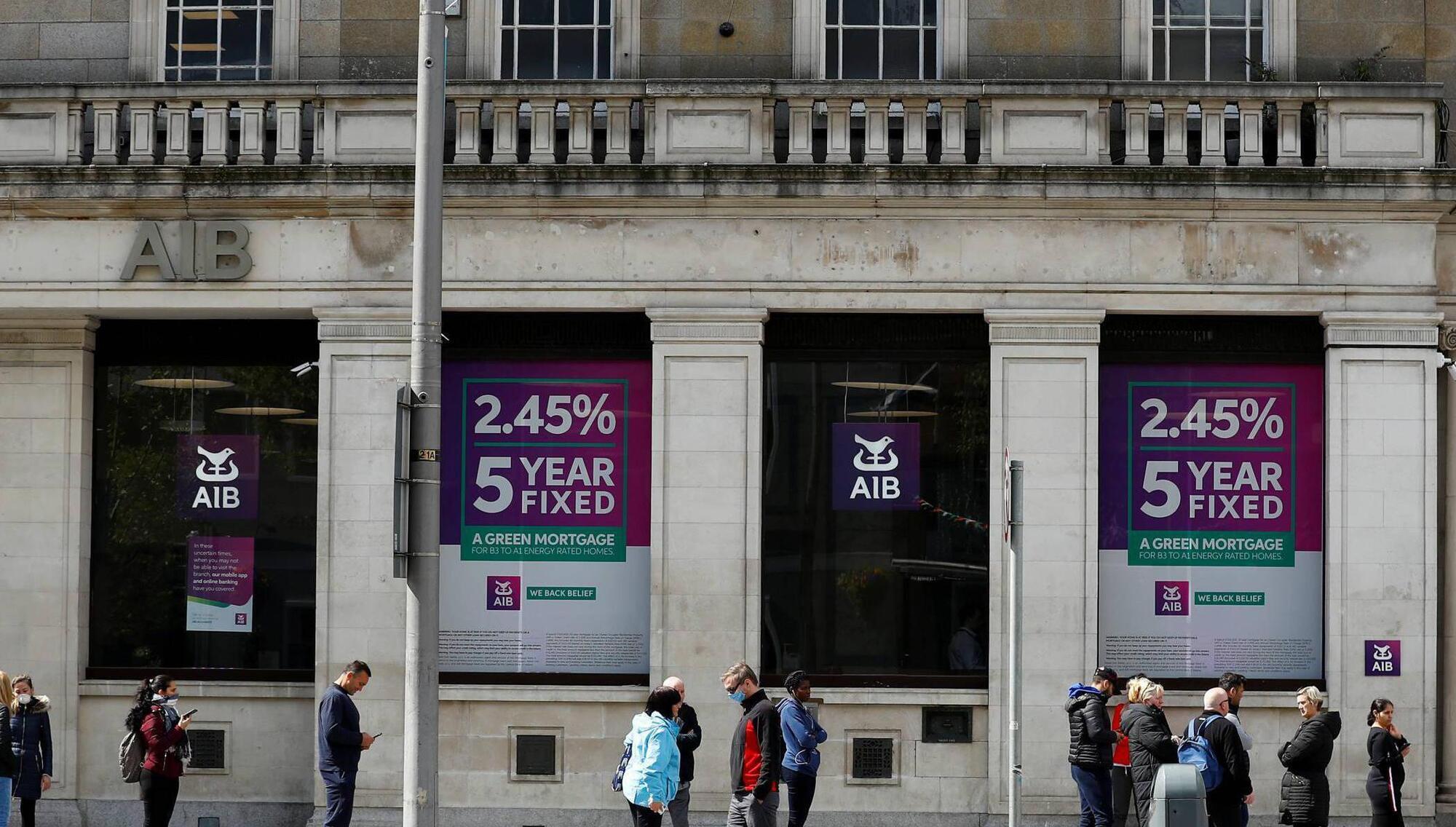
The average interest rate on new mortgages is to drop in the coming months. Picture: David Clarke
The Central Bank has just published its Retail Interest Rate report for November. This shows that the average interest rate on new mortgages is now at its lowest rate since May 2023.
Trevor Grant, chairperson of Irish Mortgage Advisors, says this is unlikely to be the end of the downward trend.
“The fall in the average interest rate on new mortgages is a trend that should continue this year, given the recent European Central Bank [ECB] rate cut in December, and signals from the ECB that it has left the door open for future cuts," he says.
He says that markets are forecasting no fewer than four ECB cuts this year, most of them in the first six months of 2025. This could see the average interest rate on new mortgages drop substantially in the coming months.
It is unlikely, however, that Irish home-loan mortgage rates will fall to the same extent as ECB rate cuts.
Why? Because home loan rates didn’t increase by the same proportion as ECB rates between July 2022 and September 2023, and because banks are under pressure to increase returns for their savers.
In time, however, falling ECB rates should feed through to variable and fixed-rate mortgage customers.
“The recent fixed-rate mortgage cuts announced by a number of banks is evidence that this is already happening,” says Mr Grant.
“Indeed, we could see multiple fixed and variable mortgage rate cuts this year. Homeowners and house hunters should get ready to make the most of these falling rates.”

He also expects that tens of thousands of borrowers will see their fixed mortgage rates expire this year, and that many of these will be faced with a significant increase in their monthly mortgage repayments as their pre-2022 ultra-low fixed-rate mortgage deal expires.
“Our advice is to reassess the alternative deals from both the existing lenders and all of the others in the market. Many of these deals are only available through a mortgage adviser so it pays to seek out impartial switching advice from a mortgage adviser," he says.
Falling interest rates may offer some good news to house hunters, but of course the other side of the coin is that house prices are pushing higher and higher, driving home ownership out of the reach of many of us.
“Typically,” says Trevor Grant, “the higher the price of the home, the higher the mortgage".
"So the size of the mortgages which many people need to take on today means mortgage interest can really add up, even if rates are falling. Mortgage holders should therefore make it their priority to look for a better deal on their mortgage as substantial savings could be up for grabs.”
He points out that there has been a significant uptick in competition among the various lenders. In December, Bank of Ireland, the country’s biggest mortgage lender, cut all of its fixed rates by half a percent. Earlier in the year, the same bank announced that it was completely redesigning how it prices its fixed mortgage rates.
Previously, like most lenders, BOI set its rates based largely on a buyer's loan-to-value (LTV) ratio, meaning those with bigger deposits or more equity in their homes were charged lower rates.
Now BOI bases its fixed rates on the Building Energy Rating (BER) of the property. There's a base rate offered to all customers and then the bank applies a sliding scale discount based on the energy rating. The discount ranges from 0.05 percentage points on a property with a BER of G to a 0.35 percentage-point discount on properties with an A rating.
While Bank of Ireland has been busy renovating its mortgage marketing, several of the other banks cut their mortgage rates and launched enhanced switching incentives. This is why, Mr Grant believes, now is a really good time to consider shopping around to get better terms on your mortgage and potentially save thousands of euro.
Of course, if interest rates are falling for loan applicants, they’re also falling for those with money on deposit. The Central Bank’s latest bulletin also revealed that deposit rates inched lower in November.
The average interest rate on household deposits with a fixed maturity fell to 2.60%, its lowest level in eight months, and down from a 16-year high of 2.77% in July. And the rate is likely to fall lower in the coming months, in line with anticipated declines in ECB rates.
Daragh Cassidy of price comparison site Bonkers.ie says that the Eurozone average deposit rate fell to 2.61% in November. Meanwhile deposit rates continued to vary widely across the currency bloc, from as low as 1.68% in Cyprus to as high as 3.41% in Italy.
The interest rate on demand deposit or instant-access savings accounts was much, much lower: 0.14%, which was the same as the previous month. The majority of the circa €160 billion that Irish households currently have on deposit is in these types of account.
Individual banks and financial institutions continue to respond to these declining rates. On December 12, Trade Republic reduced its rate from 3.25% to 3%, while on January 8, N26 reduced its instant-access savings rates by up to 0.50% depending on account type, and Bunq reduced its instant-access savings rate from 3.36% to 2.67%. The following day, Bank of Ireland got in on the act, reducing its 12- and 18-month fixed-term deposit accounts by 0.25%.
Mr Cassidy, who also anticipates three or four rate cuts this year, is urging Irish households to make it one of their new year’s resolutions to do something with their savings before deposit rates fall further.

"We’re going to see savings and deposit rates fall much more over the coming months,” he says.
"At present, Irish households have close to €160bn resting on deposit. But the majority of the money is still in accounts that pay little to no interest. This is despite rates of up to 3% still being on offer from some providers.”
"But by the end of the year, the returns on offer to savers may be pitiful. So I’d really encourage anyone with savings to avail of the higher rates that are still available, since they won’t be around for much longer. In many cases you don’t even need to change banks to avail of a better rate for your money. You can just move your money into a different account with your existing bank.”


CONNECT WITH US TODAY



Be the first to know the latest news and updates