UK house prices decline while economy expands
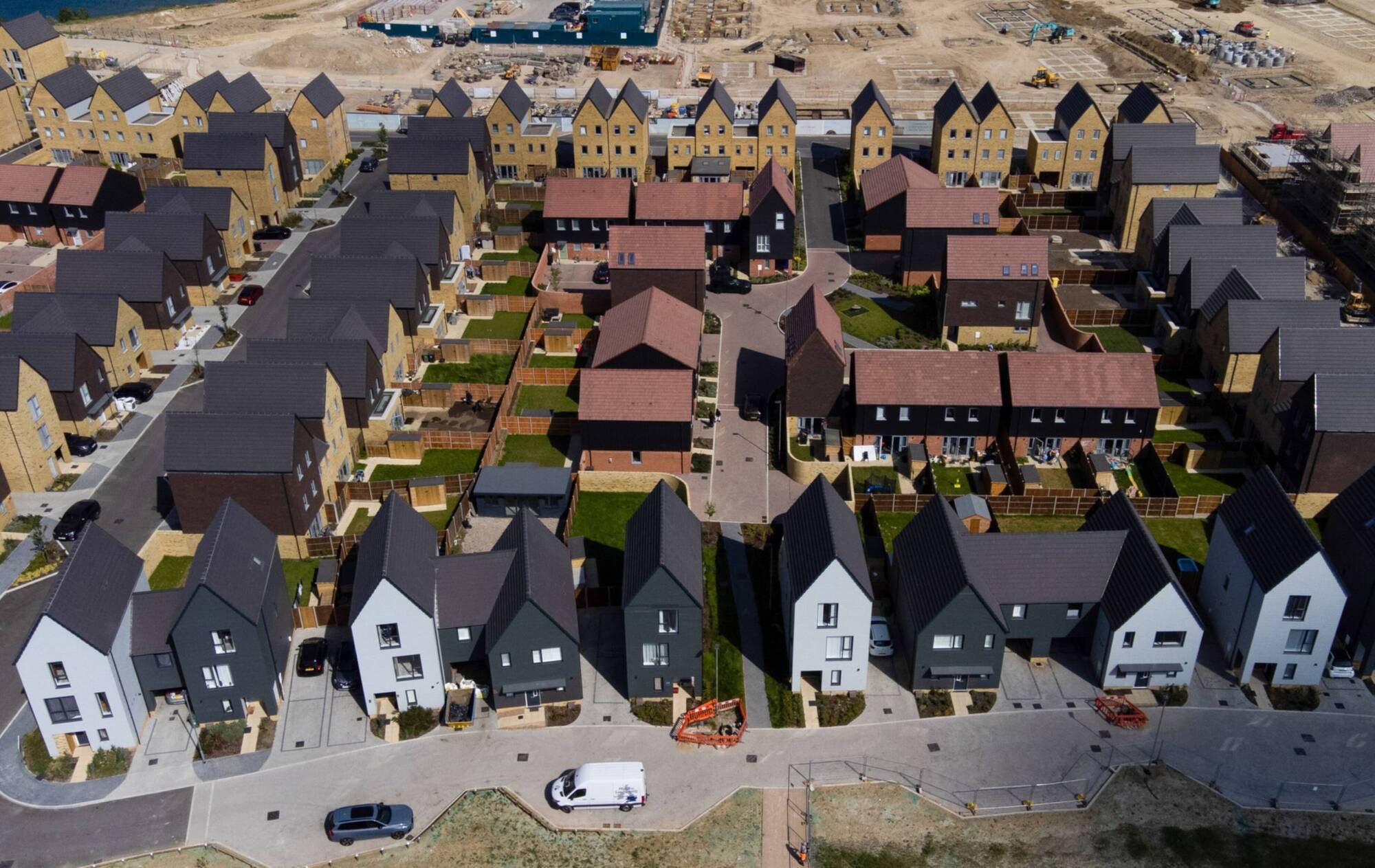
Other indicators have pointed to continued growth for property prices, with demand improving from buyers and sellers also putting more places up for sale.
UK house prices slipped for the first time in six months in March, lender Halifax said in data that confirmed a setback in the property market’s recovery.
Halifax said that the average house price dropped 1% to £288,430 (€336,320) last month. That followed a 0.3% gain in the month of February and small increases in each of the previous four months.
It chimes with an unexpected slide in prices in Nationwide Building Society’s measure earlier this week, which economists interpreted as an interruption in the overall trend toward little change or mild gains in the market this year until the Bank of England cuts interest rates. From a year ago, Halifax said prices have risen 0.3%.
“The direction of travel for the property market is currently sideways,” said Tom Bill, head of UK residential research at Knight Frank. “Once a rate cut appears firmly on the horizon, we expect stronger demand to push UK prices 3% higher this year.”
Other indicators have pointed to continued growth for property prices, with demand improving from buyers and sellers also putting more places up for sale. The market is responding to a dip in mortgage costs and the expectation that interest rates will fall later this year. Mortgage approvals surged to the highest level in 17 months in February.
“That a monthly fall should occur following five consecutive months of growth is not entirely unexpected particularly in view of the reset the market has been going through since interest rates began to rise sharply in 2022,” Kim Kinnaird, director of Halifax Mortgages, said in a report Friday.
“Despite this house prices have shown surprising resilience in the face of significantly higher borrowing costs.”
Meanwhile, the UK economy’s rebound from recession appeared to be gathering momentum in March, with a key industry survey showing growth across all three main sectors for the first time in almost two years.
S&P Global’s construction purchasing managers’ index edged up to 50.2 in March from 49.7 the previous month, ending a six-month period of falling output. Readings above 50 signals growth, and the score was slightly stronger than the 49.9 expected.
The report was the last of the major sectors covered by the PMI — services, manufacturing and construction — to show growth and marked the first time since June 2022 that they expanded together.
It supports the idea that the UK bounced back from last year’s recession and was picking up at the end of the first quarter. Even so, it will take time for official data to register a firm upswing — and even then the expectation is for only a marginal pace of expansion not far above the stagnation.
“Improving real wages and expected interest rate cuts are proving to be the right medicine to end the construction downturn, with all major sectors of the industry now showing flat or marginally rising output,” said Rob Wood, chief UK economist at Pantheon Macroeconomics.
“Renewed falls in mortgage rates in the coming months should keep builders upbeat.”
-

CONNECT WITH US TODAY



Be the first to know the latest news and updates