Shipping giants warn Red Sea disruption could last for months
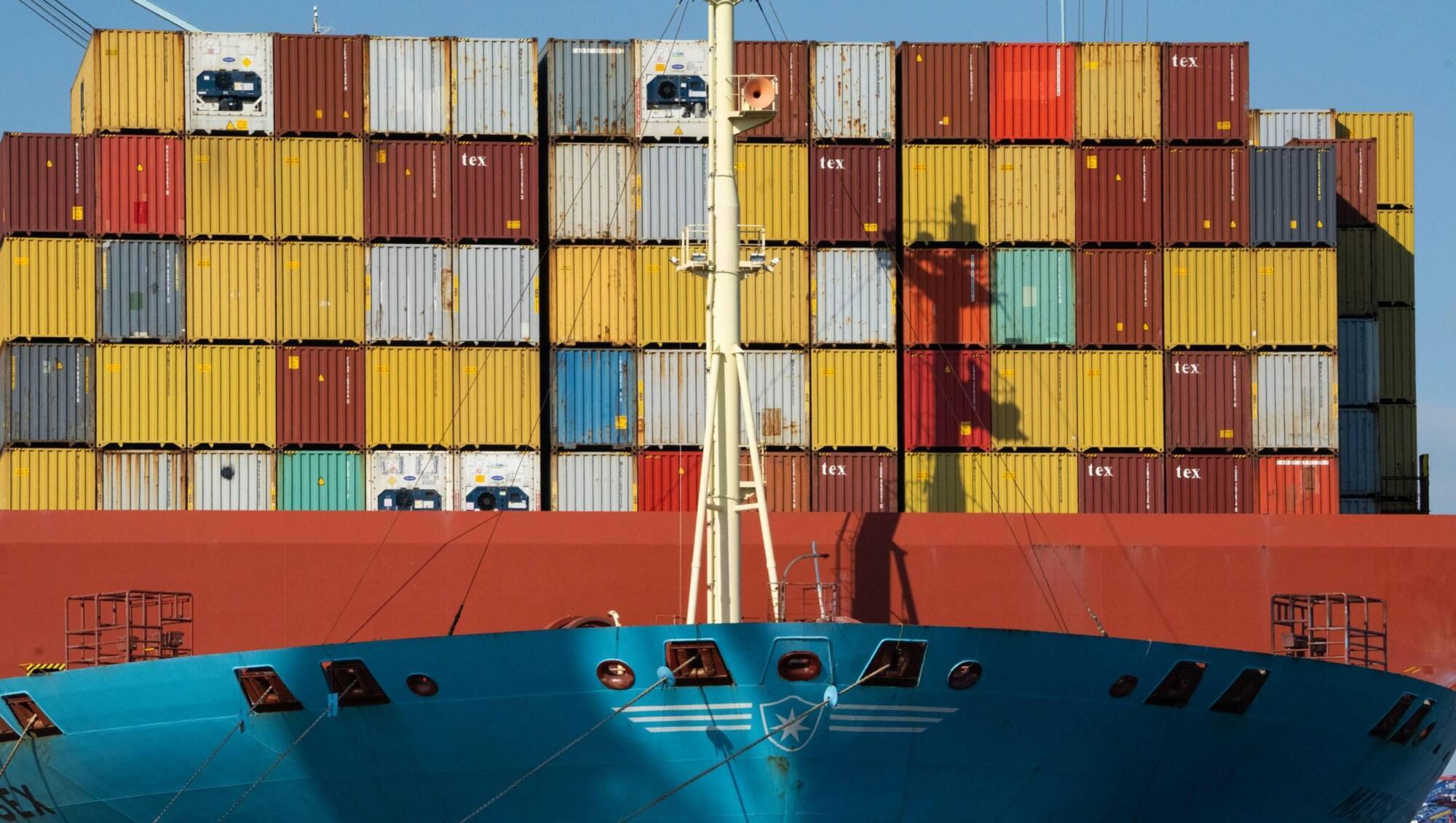
Rerouting of ships from the Suez Canal is leading to imbalances in container capacity.
The bosses of two leading shipping giants said they expect Red Sea threats to disrupt shipping for weeks or months longer, extending delays and higher transport costs for companies dependent on goods flowing along trade lanes that link the world’s largest economies.
“For us, this will mean longer transit times and probably disruption of supply chains for a few months at least,” Vincent Clerc, the chief executive of Maersk, said on a panel at the World Economic Forum in Davos.
While Mr Clerc said he hopes the unrest will end sooner than that, he said “it could also be longer because it’s so unpredictable how this situation is developing”. He called the situation in the Red Sea “extremely disruptive”.
Also speaking at Davos, DHL chief executive Tobias Meyer said the rerouting of ships around southern Africa instead of the shortcut through the Suez Canal was leading to imbalances in container capacity. As a result, shortages might start to occur in about two weeks, hitting Asia in particular, he said.
“The back-flow is currently not happening at the pace people were planning for, so that’s something to monitor,” Mr Meyer said.
Among the other leaders watching the renewed threats to supply chains was European Central Bank president Christine Lagarde. The things “I’m watching carefully” are “wage bargaining, profit margins, energy prices, and — hopefully not, but — the coming back of supply bottlenecks”, she told an event in Davos.
Central bankers appear to be wary: Disruptions to supply chains that began during the pandemic were partly behind an initial bout of inflation that occurred before energy prices spiked in the wake of the Russian invasion of Ukraine.
Global trade faces a major challenge in the Red Sea, where Iran-backed Houthi rebels have been escalating attacks on commercial ships for the last months over the war in Gaza.
Faced with longer journeys, the shipping industry has scrambled to raise spot rates for containers between Asia and Europe in recent weeks, leading to tripling of costs for cargo owners that is also affecting importers in the US.
According to Bloomberg Intelligence’s Lee Klaskow, transpacific shipping rates surged 58% to $4,375 per 40-foot container in the past week.
Meanwhile, Hapag-Lloyd and Maersk have signed an agreement for a new long-term collaboration as they strive to transport a combined 3.4 million containers via 290 vessels more reliably and sustainably, the two shipping companies have said.
The shared pool, involving the world's fifth- and second-largest container ship operators respectively, will consist of 290 vessels of which Maersk will deploy 60% and Hapag-Lloyd 40%. As part of the so-called Gemini Cooperation which starts in February 2025, the pair have set a target of delivering schedule reliability of above 90%.
Rolf Habben Jansen, chief executive of Hapag-Lloyd, said his company would benefit from efficiency gains in operations and joint efforts to accelerate the decarbonisation of the wider industry.
Mr Clerc at Maersk said the deal will make services more reliable. The current arrangement of operational responses to attacks on ships in the Red Sea was not a factor in the deal, Mr Habben Jansen said.

CONNECT WITH US TODAY



Be the first to know the latest news and updates