Crude oil price surges 4% on fears over Middle East conflict
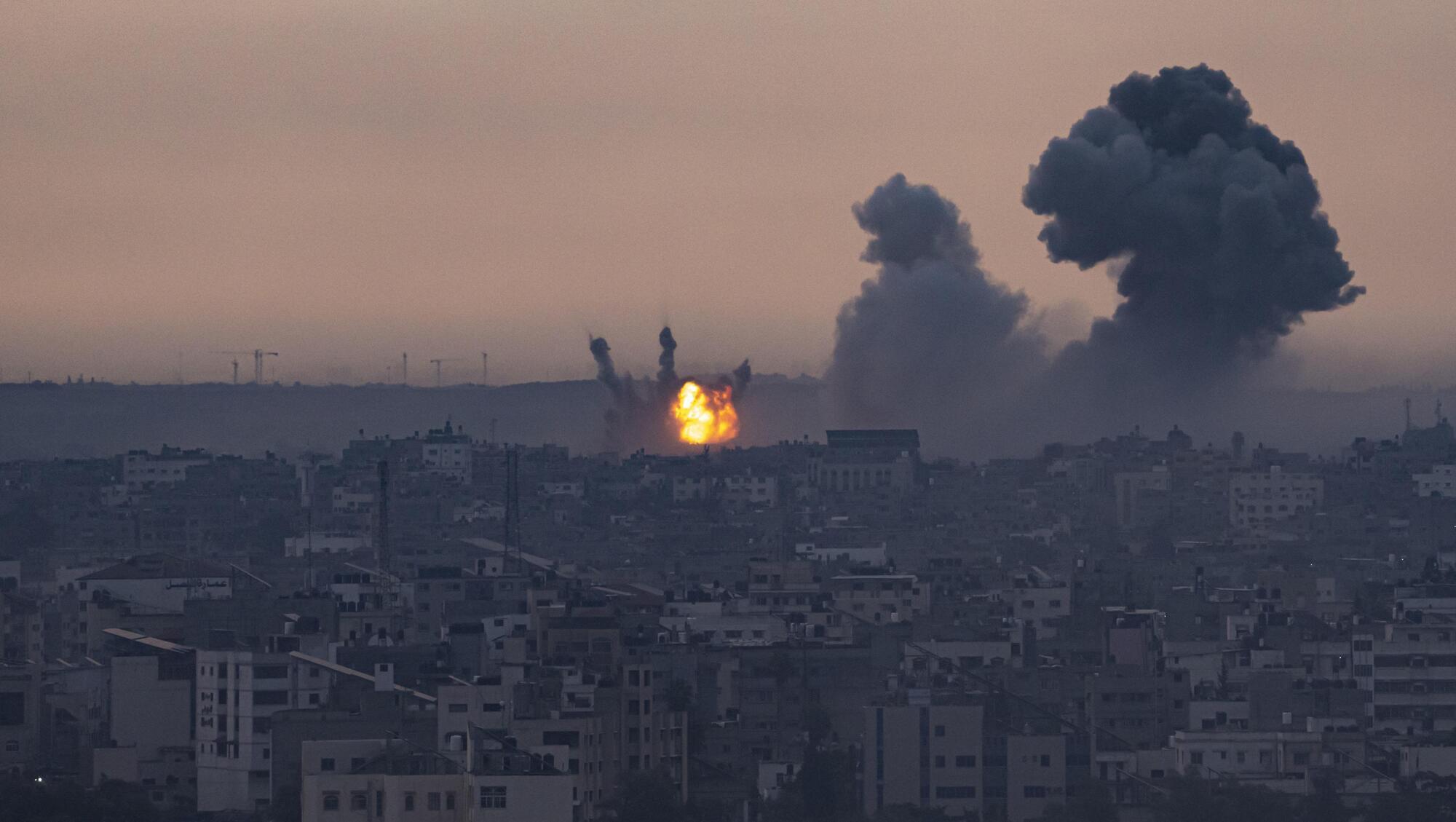
Smoke rises after the Israeli airstrike in the Gaza Strip.
Oil prices have surged 4%, recouping some of the steep losses last week, as military clashes between Israel and Hamas ignited fears that a wider conflict could affect oil supply from the Middle East.
The price of Brent crude oil climbed $3.24, or 3.8%, to $87.85 a barrel. West Texas Intermediate crude rose by over 4%. Both benchmarks spiked by more than $4, or over 5%, earlier in the session.
The surge reversed last week's downtrend — the largest weekly decline since March — in which Brent fell about 11% and West Texas Intermediate crude retreated more than 8% as a darkening macroeconomic outlook intensified concerns about global demand.
"[An] attack on Israel by Hamas may push the region to war, increasing geopolitical risk bid into crude," said Tudor Pickering and Holt analyst Matt Portillo.
Eurozone government bond yields, or interest rates, fell as the conflict sent investors toward safe-haven assets. Italian bonds fell less sharply than their German peers, causing the closely watched spread between the two countries' 10-year bond yields to rise to its widest since January.
Germany's 10-year bond yield, the benchmark for the eurozone, traded down to below 2.76%, while the Irish 10-year bond traded at 3.22%.
"The coming days are likely to be driven by geopolitical risks rather than fundamentals," said Mohit Kumar, chief economist for Europe at Jefferies.
European Central Bank vice-president Luis de Guindos said inflation was expected to stay on its downward trend, but urged caution due to uncertainty over oil-price moves in the wake of events in the Middle East.
The eruption of violence threatens to derail US efforts to broker a rapprochement between Saudi Arabia and Israel, in which the kingdom would normalise ties with Israel in return for a defence deal between Washington and Riyadh.
Saudi officials had reportedly last week told the White House that they were willing to raise output next year as part of the proposed Israel deal.
Analysts suggested the implications of the conflict could include a potential slowdown in Iranian exports, which have grown significantly this year, despite US sanctions.
Iran's production has risen by close to 600,000 barrels per day during the past year while crude stored on and offshore has been sold into market, mitigating some of the tightness being orchestrated by Saudi Arabia and Russia, said Saxo Bank's Ole Hansen.
"If the US were to judge that Iran is involved in Hamas' attack, this could lead it to 'turn the screws' on Iran's oil exports by enforcing sanctions more strictly," said Caroline Bain, chief commodities economist at Capital Economics.
Any production and export disruption would exacerbate supply tightness as most analysts expect markets to be in a deficit in the second half of the year.
Major international air carriers have suspended or reduced flight services to or from Tel Aviv after the surprise attack.

CONNECT WITH US TODAY



Be the first to know the latest news and updates