Britain's offshore wind plans 'hit by soaring costs and delays'
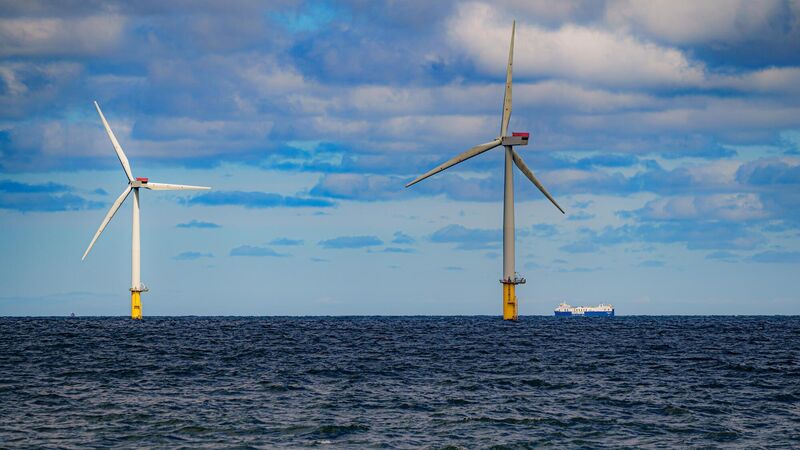
Across Europe, wind developers are dealing with a toxic mix of challenges including higher costs for turbines, supply-chain bottlenecks, and international competition.
The UK’s once-booming offshore wind industry faces years of pain, including project delays and possible cancellations, due to soaring costs and higher interest rates.
That’s the view of Per Lekander, chief executive of Clean Energy Transition, a London-based hedge fund that manages €2.4bn in assets in sectors including renewables, utilities, oil and gas.
“The industry needs a complete reset,” he said. “It’s going to be a very long period with very disappointing growth, where projects might be delayed or not even built.”
Across Europe, wind developers are dealing with a toxic mix of challenges including higher costs for turbines, supply-chain bottlenecks, and international competition, while facing difficulty securing financing for new projects. In Britain, the situation has been compounded by an auction system that hasn’t guaranteed adequate return on investment, threatening to bring new offshore construction to a halt.
During a prolonged period of low-interest rates before the pandemic, investment in UK wind capacity did in fact surge — to the point where it has surpassed natural gas as the primary source of power connected to the grid. Sustained inflation, and the effort to stop it, now threatens to stop that growth in its tracks.
This should have been wind’s moment in Britain, which is blessed with thousands of miles of coastline and offshore energy potential. Climate change is forcing a shift away from fossil fuels, and the UK government is seeking to become carbon neutral by mid-century, even as British prime minister Rishi Sunak backtracks on the short-term steps needed to reach that goal.
The difficulties for offshore wind accompany uncertainty over the growth outlook for other clean-energy technologies, from heat pumps to electric vehicles.
Most of the money needed to reach the British government’s net-zero goal will need to come from the private sector, said Emma Pinchbeck, chief executive of industry group Energy UK. “At a time when other countries are stepping up their efforts to attract green investment, we cannot risk that money going elsewhere,” she added.
The UK’s wind-energy investment boom came to an abrupt halt in the wake of the pandemic, as costs surged for everything from freight to labour, according to Mr Lekander.
“The world came out of covid-19 and suddenly this 15 years of deflationary situation rapidly changed,” he said.
Many companies that secured projects during an industry growth spurt in 2019-2021 are “now dramatically out of money".
Swedish state-owned utility Vattenfall is in early-stage talks to sell one of the UK’s largest offshore projects, which it halted in July. The company is “evaluating all options to determine the best way forward for the whole Norfolk Offshore Wind Zone”, a spokesperson said.
Mads Nipper, chief executive of Denmark’s Orsted, said in a recent interview that a final investment decision on its Hornsea-3 wind project in the North Sea is “not a given” due to higher rates. Together, the Vattenfall and Orsted projects could provide power for more than 4.5 million British homes.
CLIMATE & SUSTAINABILITY HUB
CONNECT WITH US TODAY



Be the first to know the latest news and updates