As layoffs increase, Ireland's well-paid tech workers are rushing to join trade unions
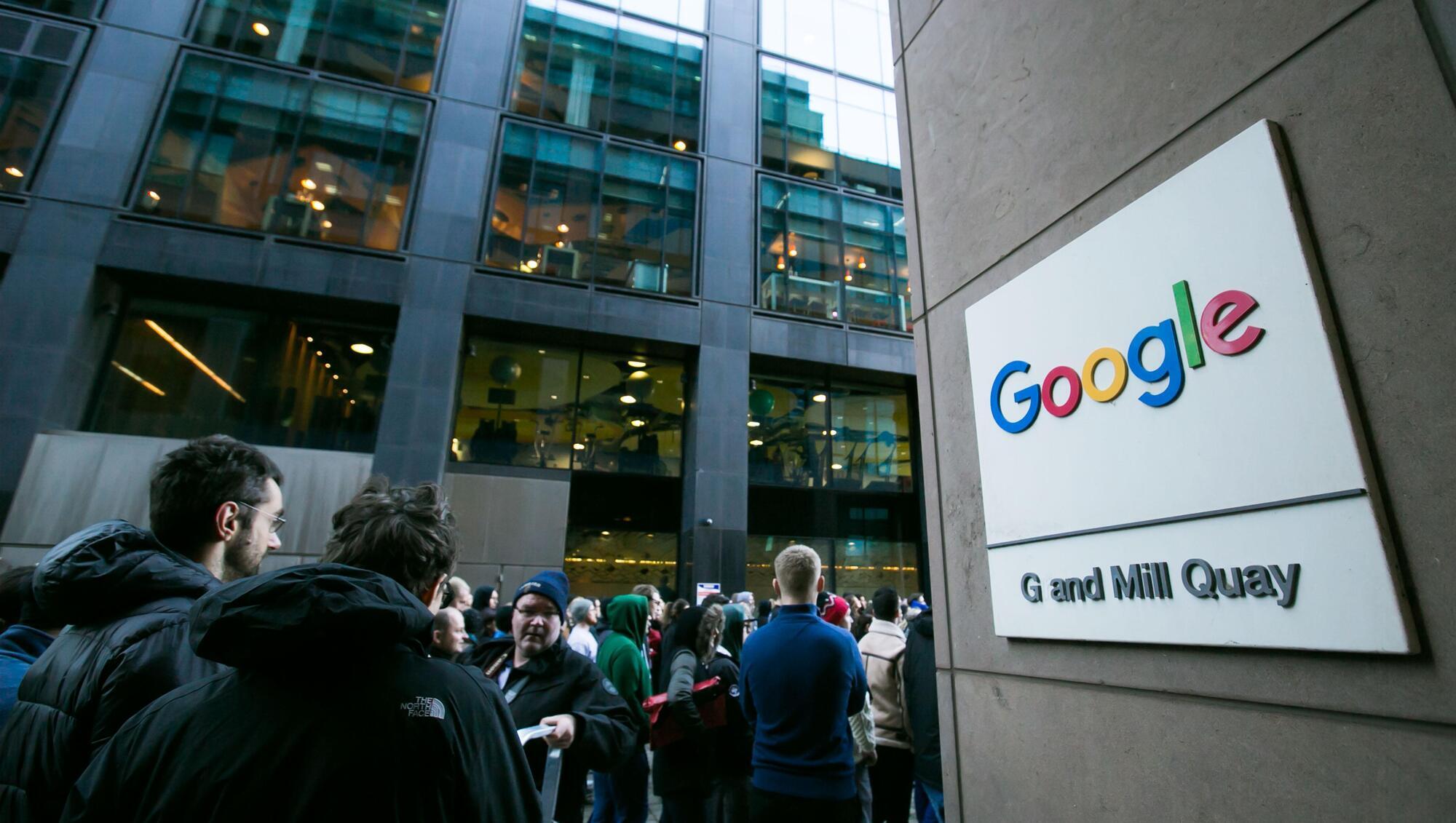
Since 2020, Ireland's top 10 companies, many of which operate in the tech sector, have collectively paid more than half of all corporate tax. Picture: Sam Boal/RollingNews.ie
For many, the tech sector is considered the shining star among Ireland's industries, employing the most educated workforce, contributing the most in taxes, and paying the highest salaries to its employees.
As demand for tech products skyrocketed even further following numerous lockdowns and a shift to remote working, companies announced mass hiring sprees throughout the pandemic, with Ireland's ICT sector employing 29% more people now compared to 2019.Â
In its era of growing demand and salaries, the idea of collective bargaining was, for many, contained to just a passing thought, with the presence of trade unions ranging from minor to completely absent among the sector's main players.
In the last six months, however, a shift has taken place throughout the industry, with more than 2,300 tech workers out of a job since the end of last year following a wave of mass layoffs across the sector's largest companies including Meta, Twitter, Microsoft, Google, Indeed, and more.
As tech companies both big and small pursue vast restructuring plans, up to 3,000 more redundancies are expected throughout the year, with multiple waves of layoffs hitting some of the industry's largest players since October 2022.Â
During this time, a shift in business has been met with a shift in attitude, with trade union membership among Ireland's tech workers more than doubling in just six months.
"This has been a wake-up call for tech workers," says Gareth Murphy, head of industrial relations at the Financial Services Union (FSU) — the trade union representing Ireland's fintech, tech, and finance sectors.

"Redundancy is one of the most difficult situations a worker can ever be in," Mr Murphy told the  "It's a moment when you need your employer to treat you with respect and dignity, and I think workers have, by and large, seen that their employers are not treating them that way when times get tough."
Since 2020, Ireland's top 10 companies, many of which operate in the tech sector, have collectively paid more than half of all corporate tax, with new figures published by the Department of Finance revealing that Ireland's top 10 now pay €1 in every €7 of all tax collected, leaving Ireland’s economy exposed if multinationals face a downturn.
At the same time, unionisation among Ireland's tech workers remained significantly low, with just 8% of workers part of a trade union in 2021.
"These companies have become too powerful," said Mr Murphy. "So much so that they don't need to care about the impact of redundancy on individuals.Â
As tech companies recognise their power, so too are the workers. In 2018, the FSU was involved in just 40 companies, with this number more than tripling to over 140 in 2023, with the last six months seeing particular growth in the union's overall coverage. In addition, the FSU's technology and services sector has twice the number of members it had six months ago,
Tech workers who never unionised before are considering the benefits of collective action, with employees from smaller companies including Irish cloud computing firm Workhuman and IBM-owned software development company Red Hat joining the FSU amid the current wave of layoffs.
Speaking to the an employee working for Red Hat, which is largely based in Cork and Waterford, said: "The company announced layoffs targeting 4% of its global workforce despite Red Hat's and IBM's continued profitability.Â
"Employees in the US were terminated immediately. We know that layoffs are on their way — it's not a matter of 'if' but 'when'.
"I think being part of a union will allow us to have more power in those redundancy negotiations.
As union membership rises, calls for renewed legislation have grown louder, with Irish laws surrounding trade unions considered notably weak in an EU context.
Currently, trade unions are not authorised to attend collective meetings, meaning that during the redundancy process, employee representatives may consult with their union beforehand, but are forced to negotiate severance packages on their own.Â
In addition, the mandatory 30-day consultation period that companies must engage with during a collective redundancy has been deemed by many as too short, with Mr Murphy warning that some employers "intentionally wind the clock down and refuse to effectively engage".
"Right now, employers don't need to recognise trade unions," said Mr Murphy. "Neither the Labour Court nor the Workplace Relations Commission can legally oblige private companies to act a certain way, and unions are not allowed in collective meetings.
And right now, they are.
At the end of last year, the European Parliament adopted a directive on minimum wages and collective bargaining, which has since been signed into law.Â
The directive — which must be implemented into Irish law by November 2024 — assigns a significant role to collective bargaining, recognising "the right of all workers and employers to organise in local, national, and international organisations for the protection of their economic and social interests and the right to bargain collectively".
Owen Reidy, general secretary of the Irish Congress of Trade Unions, told  : "This will require governments to strengthen collective bargaining like never before.

Once it is legislated for — which Ireland must do by the end of next year — it will remove the impediments of joining a union, allowing workers to do so in a more coherent way."
In addition, the directive aims to achieve collective bargaining coverage of 80% across all member states, affirming that countries with more than 80% coverage are more likely to have "a small share of low-wage workers and high minimum wages".
Countries below this figure will be asked to provide a framework to further enable conditions for collective bargaining, and to establish an action plan to promote collective bargaining and increase its coverage rate. Right now, the average coverage rate for the EU lies just above 50%. In Ireland, that number is just 34%.
"Our aim is not to compel those who don't want to join a union to join one, but it's clear that there are enough people out there who do want to join, and they need to be facilitated," says Mr Reidy.
In an Irish context, 44% of non-union members are in favour of joining one. Among young people, that number rises to 68%. In an era of mass layoffs and changing attitudes, for Mr Reidy, this directive could not come at a better time.
"Post-pandemic, people value workers more," he said. "We saw during covid how many essential workers were needed, and how many sectors they spread across.
"This is our once-in-a-generation opportunity to transform Ireland's industrial landscape.