The planet's difficulty is Ireland's business opportunity
Global venture capitalists are already seeing the returns from ESG investments. Colm Greaves follows the money trail
The planet's difficulty is Ireland's business opportunity

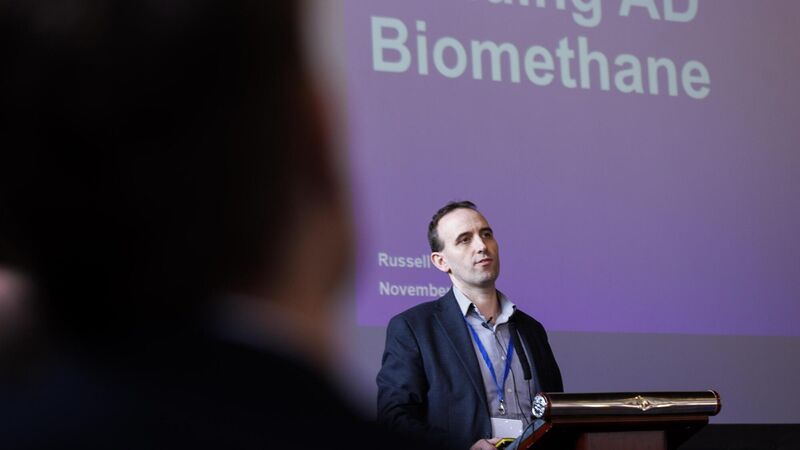
Russell Smyth, Head of Sustainable Futures, KPMG is pictured speaking at the Gas Networks Ireland, 'Request for Information from Biomethane Producers' event at the Clayton Hotel, Ballsbridge, Dublin. 

Sometimes it seems that trying to figure out the intricacies of climate change will fry our brains faster that all that nasty carbon dioxide will fry our planet.

Finding the relevant information isn’t the problem. It overwhelms us from every communications channel known to mankind, seven days a week, twenty-four hours a day, everything, everywhere, all at once. The problem is that there is just so much of it that it loses almost all semblance of clarity, like the pre-flight safety announcement on a budget airline.


But as a wise man was once reported to have said; ‘if you must eat an elephant, then do it in small bites.’ Ireland is a small bite in the global context of climate change but this doesn’t mean that we shouldn’t search for opportunities that may lie in a threat, even an existential one like this. 

It's only little more than a century since our national catch cry was ‘that England’s difficulty is Ireland’s opportunity’ and as we are all being urged to recycle, so why not a slogan?

The puzzle for the futurists is to feed forward to that joyful day when all the current global behavioural changes have worked, the planet is back in balance and the climate is unchanging. So why not take a bite of that piece of the elephant marked with a green shamrock.

Some numbers to start. They are unavoidable in this context, so put down your earphones, lock your tray table in the upright position and pay attention, even if you have heard all this before.

In the Irish Government’s most recent climate action plan (CAP 23),  we are legally bound to reduce carbon emissions by 51% by 2030 (Baseline 2018). In specific, sectoral targets for this will mean reducing electricity production emissions by 75%, building emissions by 45% and agriculture by 25%. 

  • Recent investments in the Irish renewable sector
  • April 2021: Ørsted a Nordic company with a majority of shares owned by the Danish government acquired 100% of Brookfield Renewable Ireland (BRI) for €571. BRI, headquartered in Cork, was a developer, owner, and operator of onshore wind farms. The investment represented Orsted’s first venture into on shore wind farms.
  • February 2022: GLIL Infrastructure (“GLIL”) a Manchester-based €3 billion pension fund that invests in core infrastructure projects acquired a majority interest in Invis Energy’s portfolio of 11 operational onshore wind farms that provide around 11% of the Republic of Ireland’s installed wind capacity. The farms are based in Cork, Kerry, Clare, Galway and Mayo. It was GLIL’s first investment outside the UK.
  • September 2022: Corio, a portfolio company of the Edinburgh-based Green Investment Group joins with Gaeltacht-based Fuinneamh Sceirde Teoranta to develop the first commercial-scale offshore wind project on Ireland’s west coast.

Every aspect and action in our society that causes harm, no matter how remote or insignificant has a call-to-action plan under CAP23. 

Clarity number one: achievement of CAP 23 targets will cause structural, economic political and societal disruption on a scale rarely seen since the foundation of the state.

Russell Smyth, head of sustainable futures at KPMG, Ireland has run the numbers, carefully. 

“The estimated investment requirement to deliver the Irish Climate Action Plan is in excess of €125 billion,” Russell reckons. “Investment in electric vehicles represents the largest single capital component, followed by €37 billion in renewable energy and grid investment and €35 billion in decarbonising Ireland’s house and building stock.” 

Clarity number two: There is going to chunks of money sloshing around in our economy over the next ten years or, as Smyth describes it, “a wall of capital". 

Most of this money will find it’s way to ESG investment vehicles. Simply put, ESG investing is placing funding where environmental, social and governance issues have been considered in the decision-making process. Conscientious capital. Profit with a purpose.

Each of the three ESG pillars has a number of identified areas indicating where capital is best employed and there are few surprises. Build renewable energy sources. Don’t employ children in your factories. Stop bribing corrupt buyers etc. 

Clarity number three: This would be a good time for to channel Irish ESG investment into assets that the world will need into the long term, assets we can sell for centuries. With forensic and granular precision Every year, Ernst and Young undertakes a global survey to measure Ireland’s attractiveness as a location for foreign direct investment. 

The good news is that we are still a desirable location for international mobile capital. The more challenging news is that the criteria in the decision chains are changing and investment in the decarbonisation of Ireland’s energy system to accelerate progress towards a net-zero economy was highlighted as a necessary area of policy focus.

Any policy missteps now, or worse still, state complacency could be regressive to the dependable flow of this investment in future years.

A significant potential misstep was identified in a recent Government policy announcement regarding offshore wind farms, which effectively redirected about 20% of commercial output to green hydrogen production. 

Another mandate in the document was that all future offshore wind farms are built in designated marine areas which have yet to be identified and may not be for at least another year. Noel Cunniffe, CEO of Wind Energy Ireland, greeted the announcement as a “radical change in policy from Government” and one that would cause “massive levels of uncertainty” among those considering buying into our tendency for windy weather.

Russell Smyth puts it this way: “Ireland is increasingly having to compete against other global nations going on the same decarbonisation journey and it must provide consistent, long-term and predictable government policy to remain internationally competitive and attractive.” 

Clarity number four: The planet’s difficulty is Ireland’s opportunity. Our brand as a sustainable economy is positive in the international investment community and it’s not immoral to make some profit if it has a purpose. 

But ‘careful now.’ The wind can alter direction with suddenly and unexpectedly.

x

More in this section

The Business Hub

Newsletter

News and analysis on business, money and jobs from Munster and beyond by our expert team of business writers.

Cookie Policy Privacy Policy Brand Safety FAQ Help Contact Us Terms and Conditions

© Examiner Echo Group Limited