Wind auction signals better days for electricity consumers
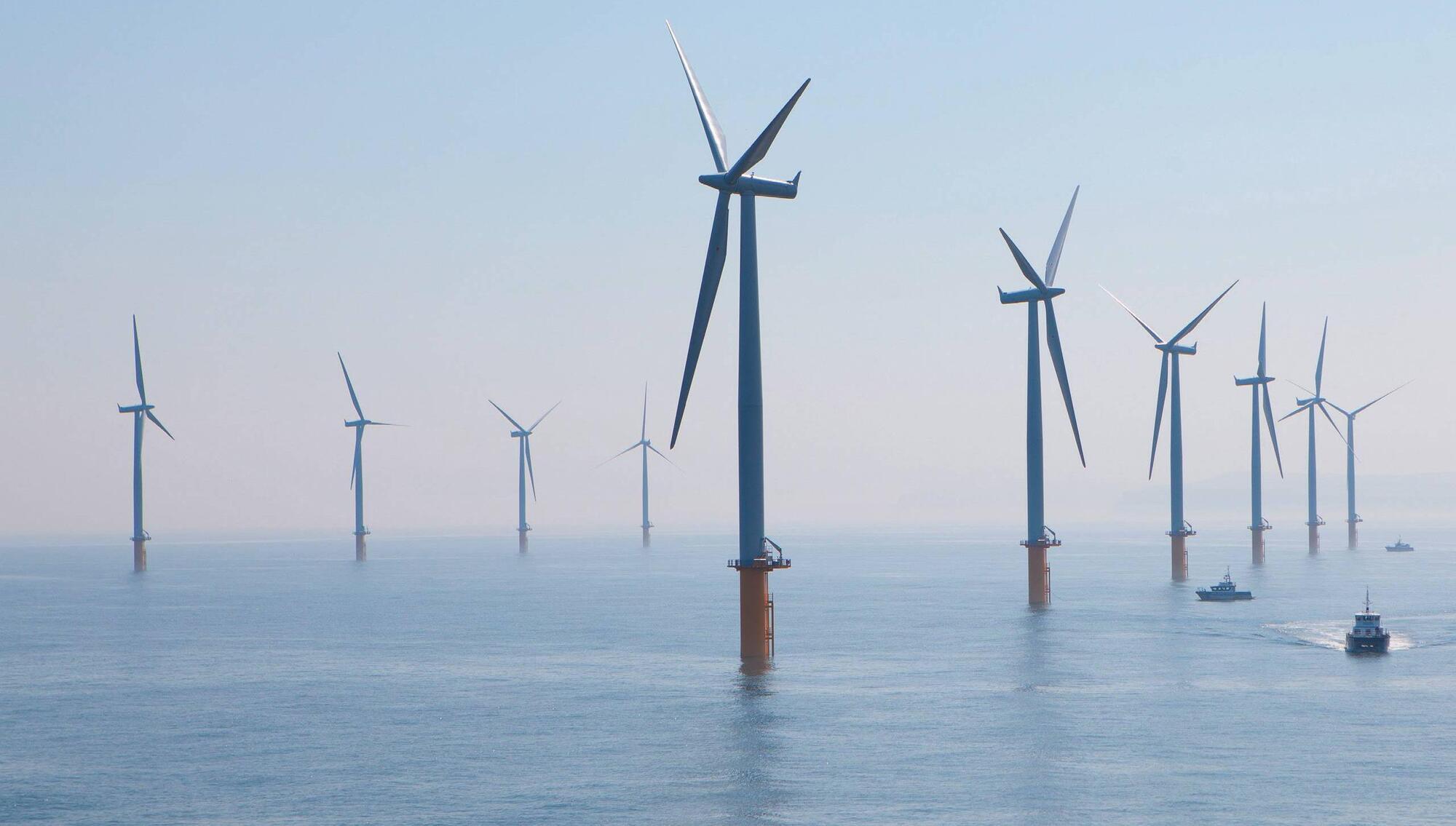
Huge potential in offshore wind energy: The developers of Codling Wind Park say that its expected capacity of up to 1,300 MW could supply the equivalent of over one million Irish homes with low-carbon, low-cost electricity.
Ireland’s ambitions towards achieving a national target of 80% renewable energy have been frustratingly slow for many in the sector up to now — but this month, a sudden and unexpected shot in the arm has galvanised most.
The results of the country’s first-ever offshore wind auction on May 11 was described as “a landmark day for renewable energy”, with the average price at €86.05 coming in significantly lower than some had predicted.
According to the Department of Environment, ORESS is an auction-based process that invites renewable energy projects to compete against each other, by bidding as low as possible, in order to win contracts to provide electricity at the bid price for a 20-year period.
Some 3.1 giga-watts (GW) of capacity will be gained from four projects given the go-ahead, more than half the Government’s target of 5GW of offshore wind energy for connection to the grid by the end of 2030.
It is the equivalent of 2.6 million Irish homes being powered, according to industry body Wind Energy Ireland.
North Irish Sea Array and Dublin Array off the coast of Dublin, Codling Wind Park off the coast of Wicklow, and Sceirde Rocks off the coast of Galway are the four projects.
CEO of Wind Energy Ireland, Noel Cunniffe, said: “This is a landmark day in Ireland’s response to the climate emergency. These projects are leading an Irish energy revolution that will deliver clean, secure, Irish energy to our homes, businesses and communities. This is the day offshore wind energy in Ireland became more than just a good idea and took its place as the future cornerstone of Irish energy independence.
“We are immensely proud of our members in getting this far and it is important to acknowledge the huge volume of work that has been put into making this happen over the last three years by Minister Ryan’s department, EirGrid, ESB Networks and the CRU. This has been a real example of how industry and Government can work together effectively.”
The auction price, at €86.05 per megawatt-hour (MW/h), compares to an average wholesale electricity price in April of €126/MWh — and more than €200/MWh over the last 12 months.
It had renewable energy academics, business leaders, industry experts, and even consumer bodies in an excited state, with most believing up to the moment of truth that it could be almost double the price.
This achievement is all the more impressive when projects did not have planning permission or clarity on what ports might be available for construction, Wind Energy Ireland said.
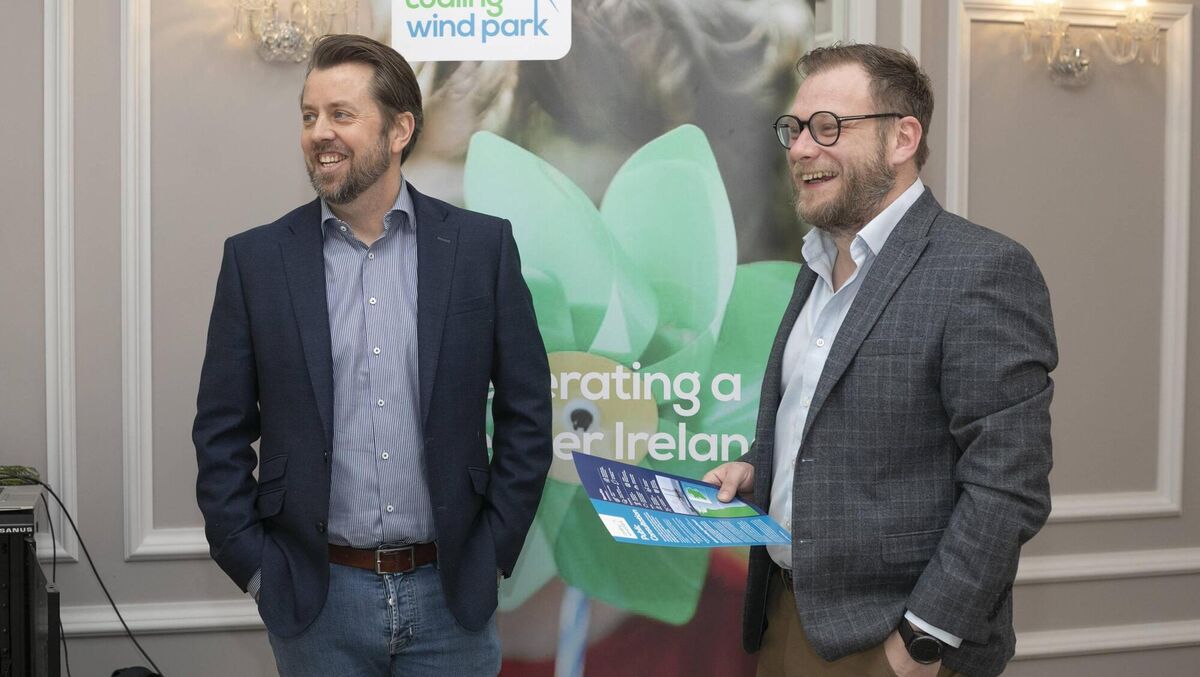
For its part, Codling said it would be Ireland’s biggest offshore wind farm.
Codling Wind Park, is a 50:50 joint venture between EDF Renewables and Fred. Olsen Seawind, said that with an expected capacity of up to 1,300 MW, it has the potential to supply the equivalent of over one million Irish homes with low-carbon, locally produced, low-cost electricity, and to save almost two million tonnes of carbon emissions every year.
Codling Wind Park co-project directors Scott Sutherland and Thomas Gellert said: “This is a great day in the fight against climate change, and for Ireland’s plans to become energy self-sufficient. With Codling Wind Park’s successful bid, Ireland’s largest Phase 1 offshore project of 1,300MW capacity, moves a considerable step closer to reality.”
There is an immense wealth of low-carbon, potential power available in the seas around this country, they said.
“Today’s successful auction results will increase confidence in Ireland’s ability to realise the opportunities of offshore energy. We look forward to working with the government, state agencies and most of all local communities to ensure that the significant benefits of Irish offshore energy can be delivered to the people of Ireland.”
Environment Minister Eamon Ryan described the auction results as a “breakthrough moment for Ireland’s offshore wind future”.
“The provisional results of the ORESS 1 auction are not just a hugely positive story for Irish energy consumers, but for Ireland as a whole. The results are further evidence of what many of us have known for a long time; that we, as a nation, can develop and produce enormous quantities of clean energy — securely and at low cost.
“My Department is developing further offshore wind auctions to bring us closer to this energy-independent future, while also chairing the whole-of-Government Offshore Wind Delivery Taskforce to maximise the benefits to the economy, local communities, and the environment,” he said.
There was, however, a notably cautious welcome from consumer website Bonkers.ie.
Bonkers.ie's Daragh Cassidy said: "The average price, at just over €86, has also come in much lower than anticipated which is good news. However, this is still a relatively high price compared to other energy sources.

"In 2020, before the energy crisis kicked off, the average price of electricity on the Irish wholesale market was around €40 per MWh. This left our retail prices around the third highest in all of Europe (not just the EU) and the most expensive in all of Europe when you exclude VAT and government levies.
"The wholesale price today, although having dropped in recent months, is still near record levels and is averaging around €150 per MWh over the first four months of the year, which is largely why consumers' electricity bills have not come down."
The Government needs to be honest with consumers, he said.
"There is a narrative that offshore wind energy will help us drastically lower our electricity costs. This is unlikely in the short term. It is also important that the proposed offshore wind farms now proceed through planning as quickly as possible."
Offshore wind, while a major component, is not the only show in town when it comes to the Climate Action Plan.
In March, the Department released what it called an “annex of actions” to be taken to progress its targets to 2030.
Ireland must meet legal obligations to reduce our emissions by 51% by 2030 and reach net zero by no later than 2050.
The plan details actions across a number of areas, including six vital, high-impact sectors — powering renewables, building better, transforming how we travel, making family farms more sustainable, greening business and enterprise, and changing our land use, the Department said.
According to Donal O'Sullivan of Statkraft Ireland, it will be a tight squeeze to reach Ireland's 2030 targets the way things are going currently.
Statkraft Ireland is the Irish arm of a globally leading firm that produces hydropower, wind power, solar power, gas-fired power and supplies district heating.
Mr O’Sullivan, a vice president for development and offshore with Statkraft Ireland, said that even with the best-laid plans, our 2030 targets may be beyond our reach.
“It was encouraging to see that CAP 2023, and the recently released Annex of Actions to measure progress, focus on measures that can be delivered by 2025 — underscoring the importance of decarbonising sooner rather than later to help meet our carbon budgets.

“A report by the SEAI, also published in December 2022 and entitled Energy in Ireland, reveals the decarbonisation challenges facing us as a society. The electricity sector’s 2030 emissions must be cut by 70% compared to its 2018 levels, with the interim 40% reduction by 2025 now more important because of the sectoral ceiling nature of the carbon budget.”
Every sector experienced a bounce in Ireland’s post-Covid economy, Mr O'Sullivan cautioned.
“This is why, I suspect, that we are now seeing a bigger emphasis in CAP 2023 on what measures can be deployed by 2025 — a key milestone missing from previous iterations. In other words, while every renewable megawatt generated for the grid is important, any renewable energy delivered before 2025 is significantly more valuable than a post-2025 megawatt,” he said.
On the electricity front, the Government should be commended for achieving so many of the actions set out in previous CAPs, he said.
“Progress has been made in offshore wind, with the establishment of the Maritime Area Regulatory Authority (MARA), the passing of the Maritime Area Planning Bill and the announcement of the recent Offshore Phase 2 Policy Statement.”
However, cracks are beginning to show, he warned.
“There is much uncertainty around the delivery of this level of capacity amid changing market conditions after Russia’s invasion of Ukraine. The supply chain for all renewables, particularly solar, has been severely impacted. In situations where inflation and the cost of materials have been locked in at the time of auction, the delivery of committed volumes will inevitably hurt some developers. Even if all the capacity is achieved — which I believe is highly unlikely — we are going to require a lot more onshore wind and solar to meet the 2025 targets set out in the latest CAP.”


CONNECT WITH US TODAY



Be the first to know the latest news and updates