McGrath's forecasts raise election temptation to spend unwisely and cut taxes, experts warn
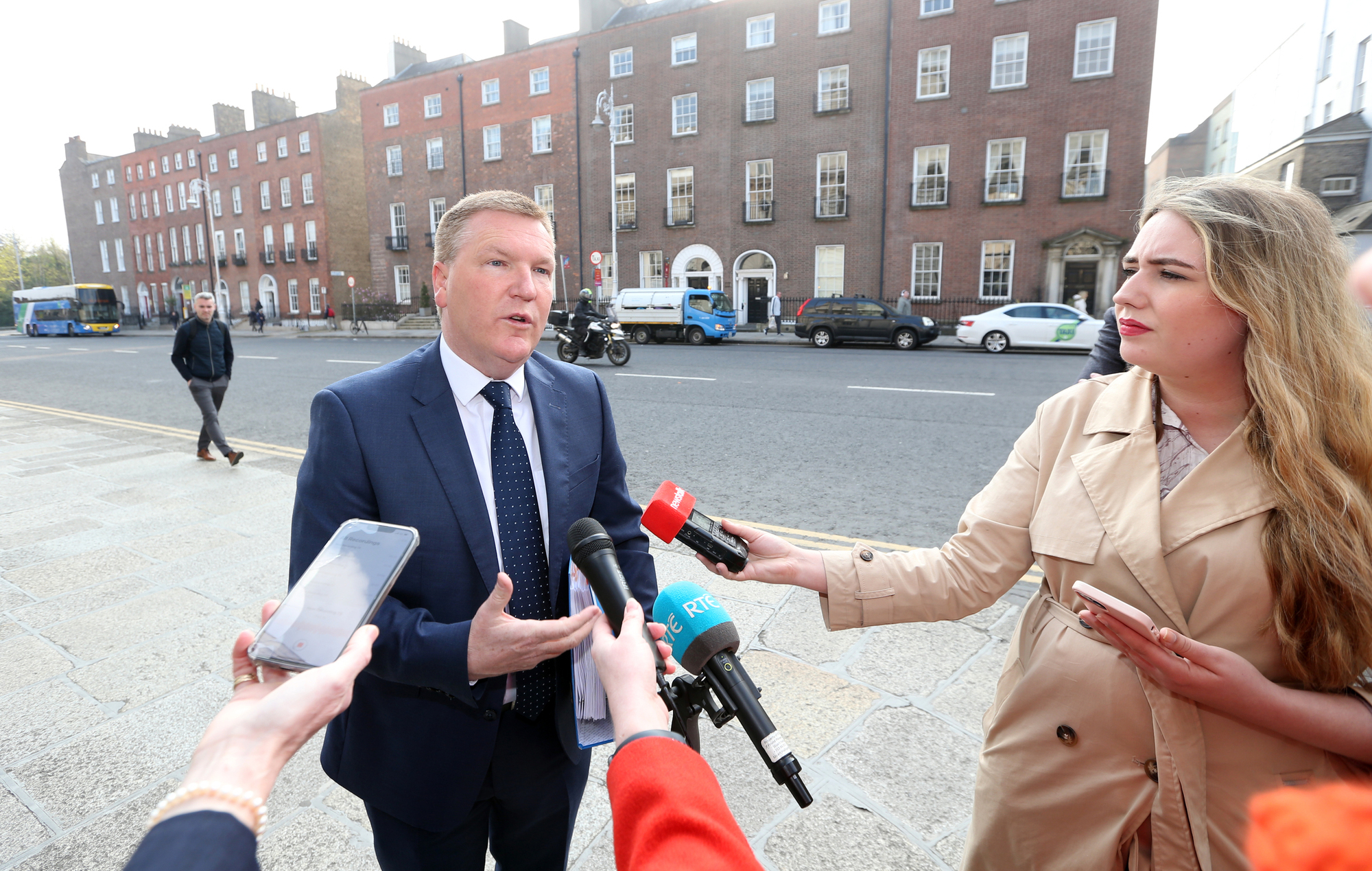
Finance Minister Michael McGrath outlined something of the tax riches flowing into the coffers: Strip out the "windfall" tax revenues, and the State still ends up sitting on on a €4.4bn budget surplus next year.
The latest economic projections from Finance Minister Michael McGrath confirm record levels of tax revenues are set to flow the Government's way, marking the Irish exchequer as among the wealthiest in Europe.
The question is whether the coalition can resist the dangerous temptation to spend big and cut taxes before the next election.
The new forecasts show that exports-driven Irish economy will be again the fastest growing in Europe, having weathered the pandemic, the cost-of-living crisis, and other global economic storms, in remarkable shape.
Mr McGrath outlined something of the tax riches flowing into the coffers: Strip out the "windfall" tax revenues, and the State still ends up sitting on on a €4.4bn budget surplus next year.
The forecasts, prepared every year for the Brussels budgetary oversight, have in the past been conservative, meaning the surplus could likely be worth billions of euros more. However, the election cycle has also increased the temptation to spend unwisely, leading experts have warned.
Kieran McQuinn, research professor at the Economic and Social Reserve Institute, said there was "no doubt" the Government now has the resources to tackle the deep scars, including housing and the spending demands entailed by climate change, but an economy growing "at full tilt" nonetheless demands very wise spending decisions.
Cutting income taxes, in particular, at the present time would fuel inflationary pressures, the professor said.
Economist Austin Hughes said budget surpluses raise the danger that the huge resources "will be frittered" in the absence of urgent plans over how best to spend the money over the next five years.
How the Government gets the maximum benefit from the massive revenues to tackle the "really immediate economic, political, and social problems" is the pressing issue, Mr Hughes said. "This shows we have the financial wherewithal to do it. The question is whether we have the management capacity and delivery capacity," he said.
Neil McDonnell, chief executive of business group Isme, said that giving into temptation would lead to wasteful spending, and cited the huge needs for Government to prepare to fund social and retirement spending.
Isme doesn't want the Government to take more people out of the tax net, doesn't support "costly" cuts to income tax rates, but favours adjustments benefitting people earning the average industrial wage, Mr McDonnell said.
Economist Jim Power said the election cycle will present an obvious temptation. "I do not believe that it is a priority to make significant cuts in taxation at this juncture," Mr Power said.
"The only priority that the electorate could possibly reward the Government for is housing", he said, which "by far is the biggest challenge to our economic wellbeing and to our social wellbeing".

CONNECT WITH US TODAY



Be the first to know the latest news and updates